
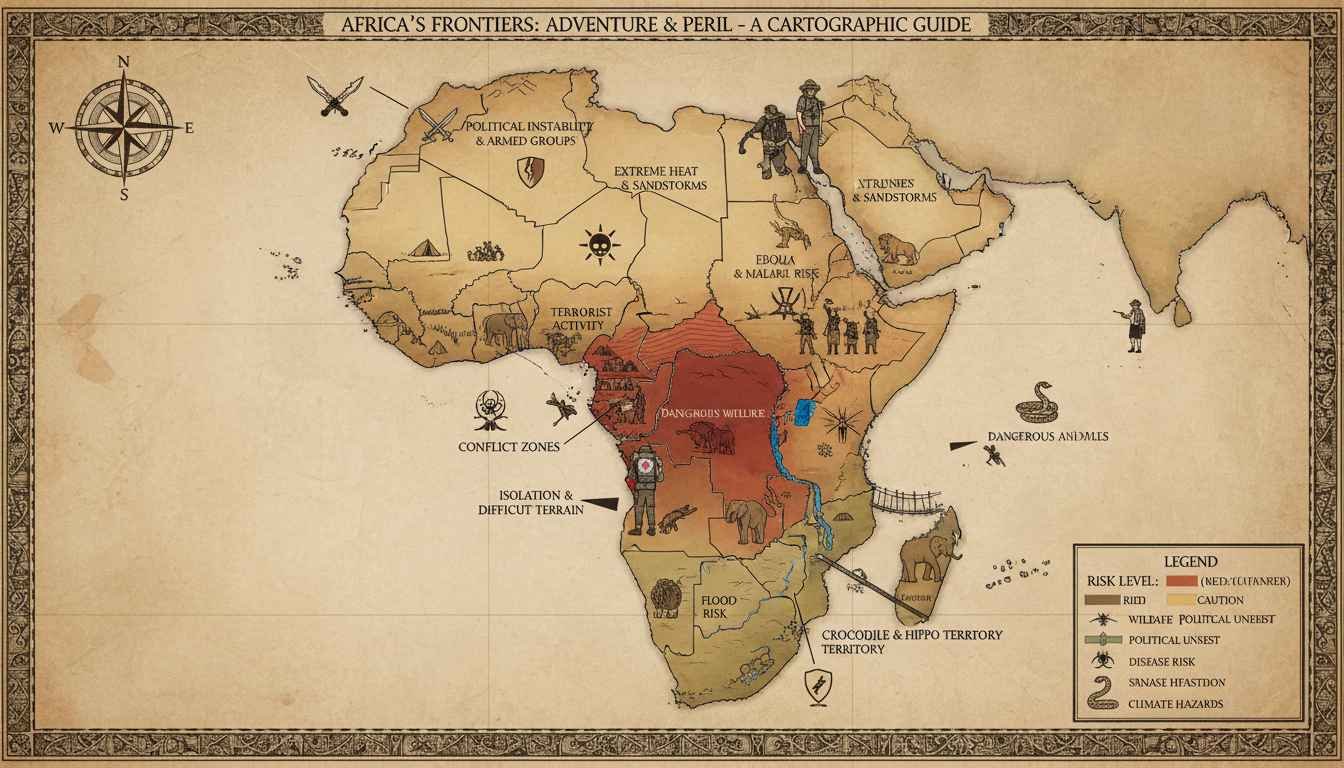
It is important to remember that safety can vary dramatically within the same country. A country may contain popular tourist destinations that receive visitors regularly while other regions face significant security challenges. Travelers should therefore research the specific city, region, border area, and route they plan to use rather than treating an entire country as equally dangerous.
If you are researching destinations across the continent, you may also want to explore our guide to the best places to visit in Sub-Saharan Africa and our broader collection of travel tips for exploring the world.
What Makes a Place Dangerous for Travelers?
There is no single definition of a dangerous travel destination. Different locations can present different types of risks, and conditions can change quickly.
Common factors include armed conflict, terrorism, kidnapping, violent crime, civil unrest, political instability, poor road conditions, health emergencies, natural hazards, and limited infrastructure. Remote areas can be particularly challenging because medical facilities, reliable transportation, and communications may be difficult to access.
Travelers should also distinguish between a country’s overall reputation and the situation in a particular area. A destination known for security problems may still contain locations that are regularly visited by tourists, while an apparently peaceful destination can have isolated areas where additional caution is necessary.
Regions That May Require Extra Caution
1. Sahel Region
Parts of the Sahel have experienced serious security challenges involving armed groups, political instability, terrorism, and kidnapping. Countries across this broad belt of Africa can have very different security conditions, so travelers should examine current regional information before planning an overland journey.
Border areas and remote regions may require particularly careful planning because security conditions can differ significantly from those in major cities.
2. Sudan and Conflict-Affected Areas
Sudan has experienced severe conflict and humanitarian challenges. For travelers, armed conflict can create risks that go far beyond ordinary tourism concerns, including disrupted transportation, limited medical care, damaged infrastructure, and unpredictable security conditions.
Travelers researching African destinations should not assume that historic attractions or major cities are automatically accessible simply because they were popular tourist destinations in the past.
3. Somalia and High-Risk Border Regions
Parts of Somalia and neighboring border areas have faced longstanding security concerns involving terrorism, armed groups, kidnapping, and political instability. Remote areas can be particularly difficult for visitors because assistance may be limited.
Anyone considering travel to a high-risk region should carefully assess whether the trip is necessary and whether appropriate professional security arrangements are available.
4. Parts of Nigeria
Nigeria is a large and diverse country, and security conditions vary substantially by region. Some areas have experienced concerns involving violent crime, kidnapping, terrorism, and civil unrest.
This does not mean that every part of Nigeria presents the same level of risk. Travelers should research the exact state and city they intend to visit rather than relying on a countrywide generalization.
5. Parts of the Democratic Republic of the Congo
The Democratic Republic of the Congo offers remarkable landscapes and biodiversity, but some regions have experienced armed conflict and instability. Remote areas can also create logistical challenges because transportation and emergency services may be limited.
Visitors interested in African nature and wildlife should carefully distinguish between established tourist routes and areas affected by active security problems.
6. Parts of Ethiopia
Ethiopia is known for ancient history, dramatic landscapes, and distinctive cultural traditions. However, security conditions can vary considerably between regions. Areas affected by conflict, unrest, or border tensions may present very different conditions from established tourist centers.
For travelers interested in African destinations, checking conditions at the regional level is much more useful than relying solely on the country’s overall reputation.
7. Parts of Cameroon
Cameroon has attractions ranging from wildlife areas to cultural destinations, but some regions have experienced security problems, including unrest, terrorism, and kidnapping risks.
Travelers should pay particular attention to border areas and regions where security conditions can change quickly.
8. Parts of Kenya Near High-Risk Borders
Kenya is one of Africa’s best-known safari destinations, but security conditions are not identical throughout the country. Some border areas and remote regions can carry higher risks than established tourist locations.
Visitors planning safaris or independent road trips should understand their route, transportation arrangements, and local security conditions before departure.
Crime and Personal Safety in Tourist Destinations
Dangerous travel does not always mean armed conflict. In some destinations, travelers are more likely to encounter risks associated with theft, robbery, scams, vehicle crime, or unsafe transportation.
Basic precautions can reduce exposure to common problems. Avoid displaying expensive electronics or large amounts of cash, keep important documents secure, use reputable transportation, and be cautious when walking alone at night.
Travelers can also learn from destination-specific guides. For example, our articles about places to visit at night and places to visit in Lahore at night demonstrate how travel planning can focus on location and timing rather than simply looking at a destination as a whole.
How to Research a Destination Before Traveling
Good preparation is one of the most important parts of responsible travel. Start by researching the specific destination rather than searching only for information about the continent or country.
- Check current government travel advisories.
- Research the specific city, province, or region you plan to visit.
- Understand whether border areas have additional restrictions or security concerns.
- Research transportation options before arriving.
- Identify reputable hotels and tour operators.
- Keep emergency contacts available offline.
- Check whether travel insurance covers the planned destination and activities.
- Have a backup communication and transportation plan.
Planning becomes even more important when visiting remote areas. Travelers interested in scenic destinations can also explore some of the best places for seeing nature while considering how accessibility and infrastructure affect a trip.
Do Not Judge All of Africa by High-Risk Destinations
One of the biggest mistakes in travel planning is treating an entire continent as though every destination has identical conditions. Africa contains dozens of countries and an enormous range of environments, cities, cultures, and tourism infrastructure.
For example, travelers can explore destinations featured in our guides to tourist places in South Africa, places to visit in Egypt, Alexandria, Egypt, and tourist destinations in Saudi Arabia.
These destinations illustrate why travelers should evaluate a specific itinerary rather than applying a single safety label to an entire region.
Safety Tips for Visiting Africa
Regardless of the destination, a few practical habits can make travel more organized and reduce avoidable problems.
Keep Important Documents Secure
Keep your passport, identification, travel insurance information, and emergency contacts secure. Digital copies stored safely can also be useful if original documents are lost.
Choose Transportation Carefully
Research transportation before arrival. In unfamiliar destinations, reputable taxis, established tour operators, and organized transfers can be easier to manage than accepting transportation from unknown individuals.
Avoid Unnecessary Night Travel
Nighttime can increase risks in unfamiliar areas, particularly where street lighting, public transportation, or emergency services are limited. Plan routes before leaving your accommodation and avoid isolated locations.
Respect Local Rules and Customs
Understanding local laws and cultural expectations can help travelers avoid unnecessary problems. Dress appropriately for the destination, follow photography restrictions, and respect instructions from local authorities.
Stay Flexible
Conditions can change because of weather, demonstrations, transportation disruptions, or security incidents. Avoid building an itinerary that leaves no room for adjustments.
Other Travel Destinations to Explore
If your goal is to discover destinations rather than focus specifically on high-risk locations, PathVoice has a wide selection of travel guides. You can explore places to visit in Norway, the best places to visit in New Zealand, places to visit in Switzerland, and the best places to visit in Argentina.
You can also discover more places across Sub-Saharan Africa and compare different types of destinations before building your itinerary.
Final Thoughts
The phrase “most dangerous places to visit in Africa” can be useful for starting travel research, but it should not be treated as a permanent ranking. Security conditions change, and risk can vary dramatically between countries, cities, provinces, border areas, and even individual neighborhoods.
The safest approach is to research your exact destination, understand the risks that apply to your planned route, check current travel information, and remain prepared to change your plans when conditions require it.
Africa remains a vast continent with extraordinary travel opportunities. By focusing on accurate destination-specific information and responsible planning, travelers can make better-informed decisions about where to go, what to avoid, and how to prepare for their journey.