
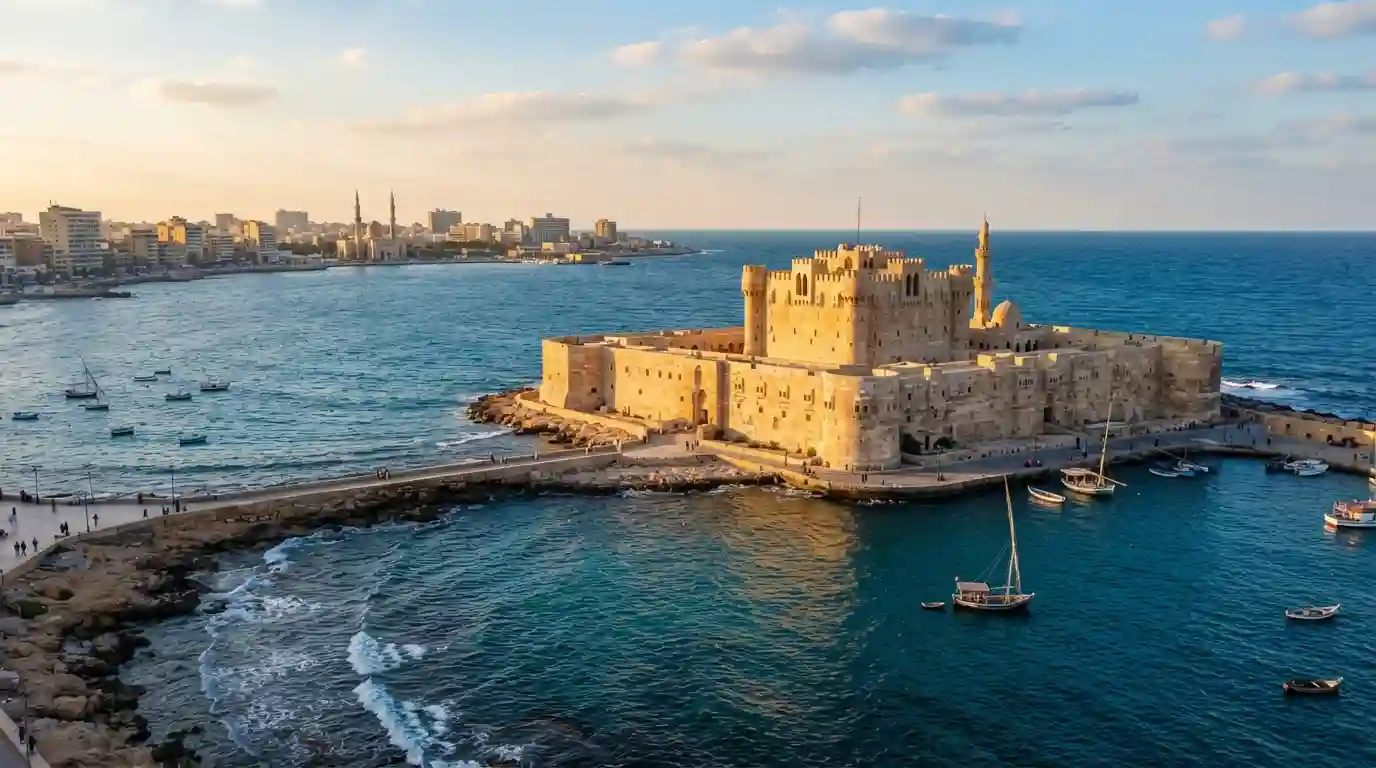
Founded by Alexander the Great in 331 BC, Alexandria became one of the most important cities of the ancient Mediterranean world. Although many famous monuments from antiquity have disappeared, the city still preserves remarkable archaeological sites and cultural landmarks.
If you are planning an Egypt itinerary, Alexandria deserves serious consideration. This guide explores the top places to visit in Alexandria, Egypt, including historic landmarks, museums, waterfront attractions, gardens, and places where you can experience the city’s distinctive character.
Travelers interested in broader international destinations can also explore our guides to top places to visit in Egypt, the best places to visit in Egypt, and Egypt travel destinations when building a longer trip.
1. Bibliotheca Alexandrina
The Bibliotheca Alexandrina is one of Alexandria’s most recognizable modern landmarks. Built near the location associated with the ancient Library of Alexandria, the striking circular structure reflects the city’s long-standing connection with learning, literature, science, and culture.
The complex is more than a library. Visitors can find exhibition spaces, museums, cultural programs, and educational facilities within the wider complex. Its architecture is particularly impressive from the outside, with the large tilted disc-like form creating a dramatic presence beside the Mediterranean.
For first-time visitors, the Bibliotheca Alexandrina is an excellent starting point because it connects modern Alexandria with the intellectual reputation of its ancient predecessor.
2. Qaitbay Citadel
Qaitbay Citadel is one of the most famous historic landmarks in Alexandria. Standing beside the Mediterranean at the eastern harbor, the fortress offers an opportunity to combine history with spectacular coastal views.
The citadel was constructed in the 15th century during the reign of Sultan Qaitbay. Its location is especially significant because it occupies the area associated with the ancient Pharos Lighthouse, one of the celebrated wonders of the ancient world.
Inside, visitors can explore the fortress’s stone corridors, towers, chambers, and defensive architecture. The surrounding waterfront also makes the area particularly enjoyable for photography and sightseeing.
3. Catacombs of Kom El Shoqafa
The Catacombs of Kom El Shoqafa are among the most fascinating archaeological attractions in Alexandria. This ancient underground necropolis demonstrates how Egyptian, Greek, and Roman cultural traditions became intertwined in Alexandria.
The complex contains underground burial chambers, decorative elements, sculptures, and architectural details that reveal the city’s multicultural history. The combination of Egyptian religious imagery with Greco-Roman artistic influences makes the site especially distinctive.
Travelers interested in ancient civilizations should place the catacombs high on their Alexandria itinerary. They provide a very different experience from the city’s open-air waterfront attractions.
4. Kom El Dikka Archaeological Site
Kom El Dikka is another important archaeological area located in the heart of modern Alexandria. The site preserves remains from the Roman and Byzantine periods, including a Roman theater, baths, lecture halls, mosaics, and other architectural remains.
The Roman theater is particularly interesting because it gives visitors a glimpse into the public and cultural life of ancient Alexandria. The surrounding ruins help explain how the city developed long after its original Hellenistic foundation.
Kom El Dikka is an excellent addition to an itinerary focused on Alexandria’s ancient history and is especially worthwhile for travelers who enjoy archaeological sites.
5. Pompey’s Pillar and the Serapeum
Pompey’s Pillar is one of the most recognizable ancient monuments in Alexandria. Despite its commonly used name, the massive column was not actually erected in honor of Pompey. It is associated with the Roman period and stands among the remains of the ancient Serapeum.
The surrounding archaeological area provides a window into Alexandria’s religious and political history. Visitors can see the enormous granite column alongside surviving remains and archaeological features connected with the ancient sanctuary.
The site is particularly worthwhile when combined with the nearby Catacombs of Kom El Shoqafa, allowing travelers to explore several major archaeological attractions in the same general area.
6. Montaza Palace and Gardens
Montaza Palace and its surrounding gardens offer a completely different side of Alexandria. Located toward the eastern end of the city, the expansive grounds combine royal history, landscaped gardens, coastal scenery, and elegant architecture.
The area was associated with Egypt’s royal family and became a favored summer retreat. Today, the gardens provide a relaxing environment for walking, photography, and enjoying views of the Mediterranean.
Montaza is an especially good choice for visitors who want to balance Alexandria’s archaeological attractions with green spaces and a slower sightseeing experience.
7. Alexandria Corniche
The Alexandria Corniche is one of the best places to experience the city’s relationship with the Mediterranean. The waterfront stretches along the coast and passes through busy neighborhoods, restaurants, cafés, beaches, and historic areas.
A walk along the Corniche can be enjoyable at different times of the day. Morning offers a calmer atmosphere, while late afternoon and evening bring cooler temperatures and a livelier local scene.
Rather than treating the Corniche as simply a route between attractions, set aside time to enjoy the sea views, watch local life, and stop for Egyptian food or coffee.
8. Abu al-Abbas al-Mursi Mosque
Abu al-Abbas al-Mursi Mosque is one of Alexandria’s most important Islamic landmarks. Located in the Anfushi area near the waterfront, the mosque is known for its impressive architecture, ornate interior details, and religious significance.
The mosque reflects another important chapter in Alexandria’s history, showing that the city is not defined solely by its Greek, Roman, and Hellenistic heritage. Its Islamic architectural traditions add another layer to the city’s cultural identity.
Visitors should dress respectfully and be mindful of prayer times when planning a visit.
9. Graeco-Roman Museum
The Graeco-Roman Museum is an excellent destination for travelers who want deeper context about Alexandria’s ancient past. Its collections focus on the long period when Greek and Roman culture played a major role in Alexandria and Egypt.
Museum visits can make archaeological sightseeing more meaningful because they help explain the objects, artwork, religious traditions, and everyday life associated with the ruins found throughout the city.
If your trip focuses heavily on history, consider visiting the museum before exploring sites such as Kom El Dikka, the Serapeum, and the catacombs.
10. Alexandria National Museum
Alexandria National Museum provides a broader overview of Egyptian history. Its collections cover different periods of the country’s past, making it useful for travelers who want to understand Alexandria within the larger story of Egypt.
The museum is housed in a historic building and presents archaeological objects associated with ancient Egyptian, Greco-Roman, Coptic, and Islamic periods.
For visitors with limited time, the museum can help create a stronger historical framework before exploring the city’s individual monuments.
11. Royal Jewelry Museum
The Royal Jewelry Museum is a strong choice for travelers interested in Egypt’s royal history, decorative arts, and historic collections. The museum is housed in a former royal palace and contains an impressive range of jewelry and objects associated with Egypt’s monarchy.
The elegant surroundings make the museum different from Alexandria’s archaeological attractions. Instead of ancient ruins, visitors can explore the lifestyle and artistic tastes associated with Egypt’s modern royal era.
12. Stanley Bridge
Stanley Bridge is one of Alexandria’s recognizable coastal landmarks. Its position along the Mediterranean makes it a popular place for views of the sea and surrounding coastline.
The bridge is particularly attractive for photography, especially around sunrise or sunset when the changing light creates a different atmosphere along the waterfront.
It can easily be included as part of a longer Corniche outing rather than treated as a standalone destination.
13. Maamoura Beach
Travelers looking for a more relaxed coastal experience can consider Maamoura Beach. The area offers a break from museums and archaeological attractions and gives visitors more time to enjoy Alexandria’s Mediterranean setting.
Beach conditions and crowd levels can vary by season, so travelers should plan accordingly. During warmer months, coastal areas can become significantly busier.
If your idea of an Egypt vacation includes both cultural sightseeing and time beside the sea, adding a beach stop can make an Alexandria itinerary more balanced.
14. Anfushi and the Historic Waterfront Districts
Alexandria’s historic waterfront neighborhoods are worth exploring for travelers who want to experience the city beyond its major monuments. Areas around Anfushi combine older streets, local businesses, seafood restaurants, religious landmarks, and views toward the harbor.
This part of the city can feel more atmospheric than a conventional sightseeing route. Walking through historic neighborhoods allows visitors to see how Alexandria’s Mediterranean identity continues to shape everyday life.
Food lovers should consider adding a seafood meal to their itinerary because Alexandria is particularly well known for its coastal cuisine.
15. The Mediterranean Waterfront at Sunset
One of the simplest and most rewarding things to do in Alexandria is spend time beside the Mediterranean around sunset. You do not need a major attraction or elaborate tour to appreciate the city’s coastal character.
The combination of sea views, historic buildings, waterfront traffic, cafés, and evening activity creates an atmosphere that is difficult to replicate elsewhere in Egypt.
For travelers planning a short visit, a sunset walk along the Corniche can be an ideal way to finish the day after visiting Alexandria’s museums and archaeological sites.
How Many Days Do You Need in Alexandria?
One full day can cover several of Alexandria’s major attractions, especially if you prioritize the Bibliotheca Alexandrina, Qaitbay Citadel, Catacombs of Kom El Shoqafa, and a waterfront experience.
However, staying overnight is often more comfortable. Two days allow you to explore the major historical attractions without rushing while also making time for Montaza, museums, neighborhoods, and the Mediterranean waterfront.
If you are building a longer international itinerary, you can also compare Alexandria with other destinations featured in our guides to places to visit in Sub-Saharan Africa, tourist places in South Africa, places to visit in Saudi Arabia, and safe places to visit in the Middle East.
Best Time to Visit Alexandria
Alexandria has a Mediterranean coastal climate, so the experience can differ considerably between summer, winter, and the transitional seasons.
Spring and autumn are generally attractive periods for sightseeing because temperatures are often more comfortable for walking and exploring outdoor archaeological sites. Summer can bring higher temperatures, humidity, and heavier domestic tourism along the coast.
Winter is milder than many European destinations but can be wetter and windier. Travelers should check the forecast before planning long outdoor sightseeing days.
For seasonal travel inspiration, see our guides to places to visit during the rainy season, European places to visit in winter, top places to visit in spring, and places to visit in the USA during winter.
Tips for Visiting Alexandria, Egypt
- Start early: Begin with major archaeological attractions before the busiest part of the day.
- Wear comfortable shoes: Several historic areas involve walking across uneven surfaces.
- Allow extra time: Traffic can affect travel between different parts of the city.
- Respect religious sites: Follow local expectations regarding clothing and photography.
- Keep the waterfront flexible: Weather and coastal conditions can influence your experience.
- Try local seafood: Alexandria’s Mediterranean setting makes seafood an important part of the local food culture.
- Consider an overnight stay: Staying after the day-trippers leave gives you more time to experience the city.
Alexandria can also be a useful starting point for travelers researching broader destinations. If you are comparing international itineraries, explore places to visit in Sri Lanka, the Philippines, Mustang, Nepal, and other Egyptian destinations.
Final Thoughts
The top places to visit in Alexandria, Egypt, reveal a city shaped by thousands of years of cultural exchange. From the modern Bibliotheca Alexandrina and the Mediterranean Corniche to Qaitbay Citadel, ancient catacombs, Roman ruins, museums, mosques, and royal gardens, Alexandria offers far more than a quick stop on an Egypt itinerary.
What makes the city particularly appealing is its combination of history and atmosphere. You can spend the morning exploring ancient archaeological remains, visit a museum in the afternoon, enjoy seafood near the harbor, and finish the day watching the Mediterranean at sunset.
Whether you are planning a dedicated Alexandria trip or adding the city to a wider Egypt vacation, prioritizing its historic landmarks, cultural attractions, and coastal experiences will give you a much richer understanding of this remarkable Mediterranean city.
For more destination inspiration, continue exploring our guides to Norway, Switzerland, New Zealand, Kerala, and Argentina.