
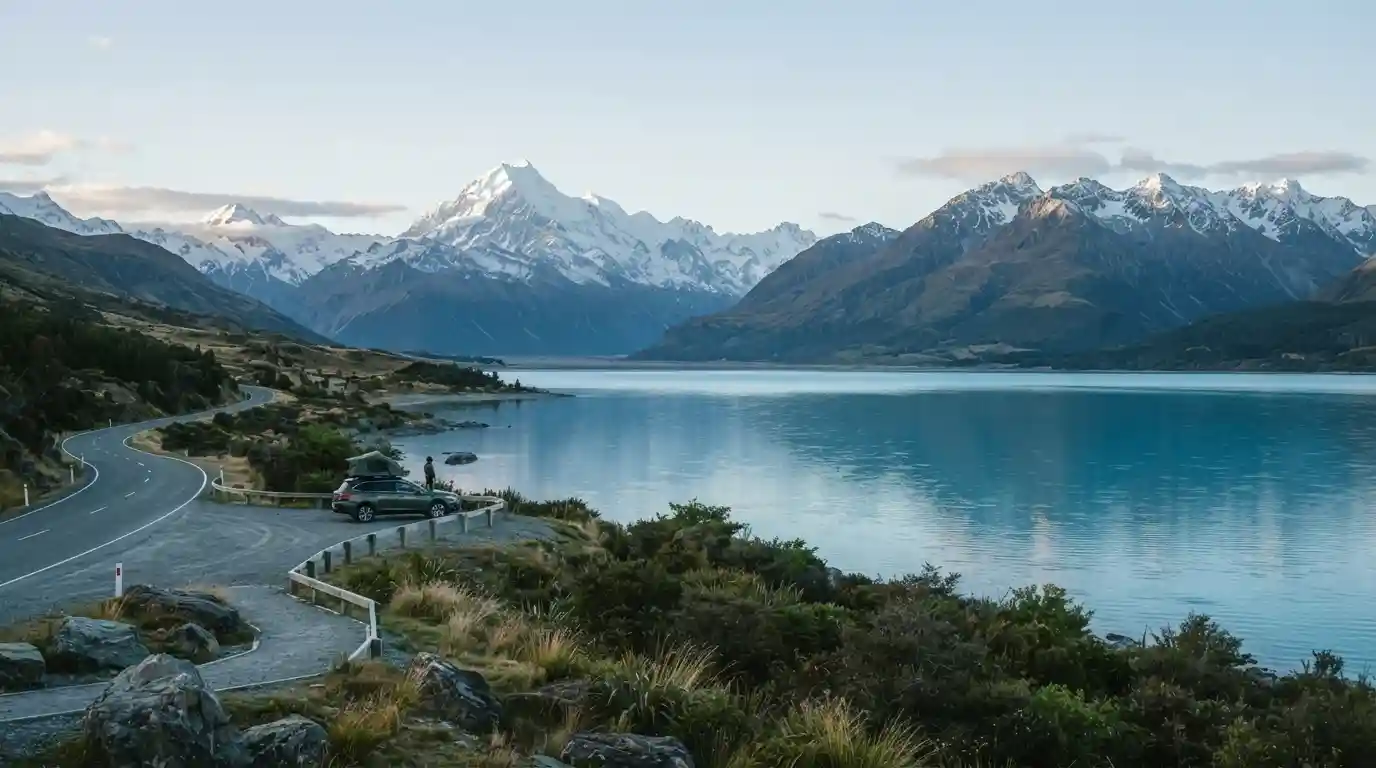
Choosing where to go can be difficult because New Zealand’s North and South Islands offer very different experiences. Auckland provides an easy introduction to city life and harbour scenery, while Rotorua is known for geothermal attractions and Māori cultural experiences. Further south, Queenstown delivers adventure and alpine scenery, while places such as Milford Sound, Aoraki/Mount Cook, and Lake Wānaka showcase some of the country’s most spectacular natural landscapes.
This guide explores the best places to visit in New Zealand, including major cities, scenic destinations, national-park areas, islands, and lesser-known stops worth adding to your itinerary.
Why New Zealand Should Be on Your Travel List
New Zealand appeals to many different types of travellers because it combines compact travel routes with an extraordinary range of landscapes. You can spend a morning exploring a lively city, drive through mountain scenery in the afternoon, and finish the day beside a quiet lake or coastline.
Outdoor enthusiasts can choose from hiking, kayaking, skiing, scenic drives, wildlife experiences, cycling, and water-based adventures. Travellers looking for relaxation can enjoy beaches, wineries, lakeside towns, and peaceful countryside.
If you enjoy discovering destinations around the world, you may also want to explore our guide to the coolest places to visit in the world for more inspiration.
1. Auckland
Auckland is one of the best places to begin a New Zealand trip. Built around a large natural harbour and surrounded by beaches, islands, volcanic landscapes, and neighbourhoods with distinct personalities, the city offers a convenient combination of urban attractions and outdoor experiences.
Spend time exploring the waterfront, visiting local neighbourhoods, enjoying harbour views, or taking a trip to one of the nearby islands. Waiheke Island is particularly appealing for travellers interested in beaches, vineyards, food, and a slower pace away from the city centre.
Auckland also works well as the starting point for a longer North Island road trip. From here, travellers can continue toward the Coromandel Peninsula, Rotorua, Taupō, or Wellington.
2. Rotorua
Rotorua is one of New Zealand’s most distinctive destinations. The region is famous for geothermal activity, bubbling mud pools, hot springs, volcanic landscapes, and strong Māori cultural traditions.
The geothermal environment gives Rotorua a completely different atmosphere from coastal cities and alpine destinations. Travellers can explore geothermal parks, enjoy thermal pools, experience Māori culture, or venture into surrounding forests and countryside.
Rotorua is especially attractive for visitors who want a destination where nature, adventure, relaxation, and culture come together in one location.
3. Queenstown
Queenstown is one of the most popular destinations in New Zealand for adventure seekers. Surrounded by mountains and Lake Wakatipu, the town combines spectacular scenery with an enormous choice of outdoor activities.
Depending on the season, visitors can enjoy hiking, skiing, mountain biking, jet boating, scenic flights, and other adrenaline-focused experiences. Those looking for something more relaxed can explore the lakefront, enjoy local restaurants, take scenic drives, or simply admire the surrounding mountains.
Queenstown is also an excellent base for exploring nearby destinations in the lower South Island.
4. Milford Sound
Milford Sound is one of the most visually impressive places in New Zealand. Located within Fiordland, the destination is characterised by steep mountains, dramatic cliffs, waterfalls, dark waters, and dense native vegetation.
The journey to Milford Sound is part of the experience. The surrounding landscape changes dramatically as roads pass through valleys, mountains, forests, and alpine environments.
A boat cruise is one of the most popular ways to experience the fiord, allowing visitors to see towering cliffs and waterfalls from the water. Travellers who enjoy remote landscapes should give Milford Sound plenty of space in their itinerary.
If peaceful scenery is your priority, compare this destination with some of the most peaceful places to visit in the world.
5. Aoraki / Mount Cook
Aoraki / Mount Cook is the perfect destination for travellers who want dramatic alpine scenery. The area features enormous mountains, glaciers, clear rivers, hiking trails, and some of the most impressive landscapes on New Zealand’s South Island.
You do not have to be an experienced mountaineer to appreciate the region. Several walks provide access to spectacular scenery without requiring advanced climbing skills.
The destination is particularly rewarding for photographers and anyone who enjoys mountain landscapes. Sunrise and sunset can create exceptional views when weather conditions cooperate.
6. Lake Wānaka
Lake Wānaka offers a quieter alternative to some of New Zealand’s busier alpine destinations. The town sits beside a beautiful lake surrounded by mountains, creating an ideal setting for outdoor activities and relaxation.
Visitors can enjoy hiking, cycling, boating, sightseeing, and scenic drives. The surrounding region also provides access to mountain landscapes and outdoor adventures.
Wānaka is an excellent choice for travellers who want the beauty of an alpine destination without making their entire trip about adrenaline activities.
7. Christchurch
Christchurch is an important gateway to the South Island and a worthwhile destination in its own right. The city combines urban attractions with easy access to mountains, coastline, vineyards, and other parts of Canterbury.
Visitors can explore gardens, museums, restaurants, markets, and the central city before using Christchurch as a base for wider South Island adventures.
Its location makes it particularly useful for travellers planning a road trip that includes Aoraki / Mount Cook, the West Coast, or other southern destinations.
8. Wellington
Wellington, New Zealand’s capital, offers a very different experience from Auckland. The city is compact, creative, cultural, and surrounded by hills and coastline.
Travellers can explore museums, galleries, waterfront areas, cafés, restaurants, and nearby natural attractions. Wellington is also an important transport connection between the North and South Islands.
For travellers who enjoy city breaks combined with nature, Wellington can be an excellent addition to a New Zealand itinerary.
9. Abel Tasman National Park
Abel Tasman National Park is an excellent choice for travellers who prefer beaches, coastal scenery, hiking, and kayaking. The park is known for its golden beaches, clear water, forested hills, and coastal walking routes.
The combination of beaches and walking trails makes it especially attractive during warmer months. Visitors can explore sections of the coastline at a relaxed pace or plan longer outdoor adventures.
If you are especially interested in nature-focused travel, our guide to the best places for seeing nature provides additional destination inspiration.
10. Bay of Islands
The Bay of Islands in the North Island is a beautiful region for travellers interested in beaches, islands, marine activities, and history. The area contains numerous islands and sheltered waters that are ideal for boating and sightseeing.
Paihia is a popular base for exploring the region. From here, travellers can take boat trips, explore nearby coastal areas, or simply enjoy the relaxed atmosphere.
The Bay of Islands is particularly appealing for visitors who want to include coastal scenery in a North Island itinerary.
11. Taupō
Taupō sits beside one of New Zealand’s most impressive lakes and is surrounded by mountains, forests, rivers, and volcanic landscapes. The region provides opportunities for sightseeing, hiking, fishing, boating, and other outdoor activities.
Its central North Island location also makes it a useful stop between Auckland and Wellington. Travellers can use Taupō as a base for exploring nearby natural attractions while enjoying the lakefront setting.
12. The Coromandel Peninsula
The Coromandel Peninsula is an excellent option for travellers searching for beaches and relaxed coastal scenery. Its combination of forested hills, beaches, small communities, and scenic roads makes it ideal for a road trip.
Hot Water Beach is one of the area’s best-known attractions, while Cathedral Cove and the surrounding coastline offer beautiful scenery.
Coromandel works particularly well for travellers who want to slow down after visiting New Zealand’s larger cities.
13. Dunedin
Dunedin offers a distinctive combination of Scottish heritage, historic architecture, rugged coastline, and wildlife experiences. Located in the lower South Island, it provides a different perspective on New Zealand compared with Queenstown or Christchurch.
The city is also a useful base for exploring the Otago Peninsula, where travellers can encounter dramatic coastal scenery and wildlife.
14. Nelson and the Upper South Island
Nelson is a strong choice for travellers who enjoy art, beaches, food, wine, and outdoor activities. The wider Nelson Tasman region provides access to coastal landscapes and national-park areas.
The region can easily be combined with Abel Tasman National Park and other destinations in the upper South Island, making it a useful stop for travellers exploring the island by road.
15. Fiordland
Fiordland is one of the best areas in New Zealand for travellers seeking remote and dramatic wilderness. The region contains enormous mountains, deep fiords, forests, waterfalls, and hiking opportunities.
Milford Sound is the most famous attraction, but the wider Fiordland area rewards travellers who have more time to explore. The scenery is particularly impressive for anyone interested in photography, hiking, wildlife, and road trips.
16. Stewart Island
For travellers who want to go beyond New Zealand’s most familiar destinations, Stewart Island offers a quieter and more remote experience.
The island is known for its natural environment, walking opportunities, coastline, and wildlife. It is a strong option for visitors who prefer slower travel and less-developed surroundings.
17. Hawke’s Bay
Hawke’s Bay is worth considering for travellers interested in food, wine, architecture, beaches, and countryside. The region provides a relaxed alternative to New Zealand’s major adventure destinations.
It can also be included in a wider North Island road trip, especially for visitors travelling between central and southern parts of the island.
18. The West Coast
New Zealand’s West Coast offers a rugged combination of mountains, rainforest, glaciers, rivers, and coastal scenery. The region is ideal for travellers who enjoy dramatic landscapes and road trips through less urbanised areas.
The West Coast can be particularly rewarding when included as part of a South Island itinerary connecting Christchurch, the Southern Alps, and destinations farther south.
19. Northland
Northland is an excellent choice for travellers who want beaches, coastal scenery, history, and a warmer-feeling northern landscape. The region stretches north of Auckland and offers numerous places to stop along the way.
Travellers can explore beaches, coastal communities, historic sites, and scenic areas while experiencing a slower pace than in the country’s major cities.
20. The Waitaki Region
The Waitaki region is a worthwhile addition for travellers exploring the South Island. It provides access to mountains, lakes, rivers, heritage attractions, and scenic landscapes.
Because of its location between central and southern South Island destinations, Waitaki can also work well as a road-trip stop rather than requiring a separate long excursion.
Best Places to Visit in New Zealand by Travel Style
Best for Adventure
Queenstown, Rotorua, Taupō, and the South Island’s alpine regions are excellent choices for active travellers. Hiking, mountain biking, water activities, skiing, and adventure experiences are widely available.
Best for Nature
Fiordland, Milford Sound, Aoraki / Mount Cook, Lake Wānaka, Abel Tasman National Park, and the West Coast are particularly strong choices for dramatic natural scenery.
Best for Couples
Queenstown, Wānaka, the Bay of Islands, Coromandel, and Hawke’s Bay offer a mixture of scenic accommodation, food, nature, and relaxing experiences.
For more seasonal couple-focused inspiration, see our guide to places to visit in summer for couples.
Best for Families
Auckland, Rotorua, Taupō, Christchurch, and the Bay of Islands offer a broad selection of attractions and activities that can work well for families with different interests.
Best for Road Trips
New Zealand is particularly well suited to road trips. The South Island is ideal for combining destinations such as Christchurch, Aoraki / Mount Cook, Wānaka, Queenstown, Milford Sound, and the West Coast.
The North Island can also be explored by road, with Auckland, Coromandel, Rotorua, Taupō, Hawke’s Bay, and Wellington forming a practical travel route.
If you enjoy planning destination-based journeys, you can also explore our tips for traveling the world before building a longer itinerary.
Best Time to Visit New Zealand
The best time to visit New Zealand depends on what you want to do. Summer generally offers longer daylight hours and favourable conditions for many outdoor activities, while winter is especially attractive for skiing and snow-covered mountain scenery.
Spring can bring blooming landscapes and changing weather, while autumn is known for colourful foliage in many areas.
Travellers planning a seasonal holiday may also enjoy our guide to the top places to visit in spring and our wider collection of winter travel destinations.
How Long Do You Need in New Zealand?
A short trip of around one week can cover one region or part of one island, but longer trips allow you to experience New Zealand more fully.
With around 10 to 14 days, travellers can create a focused North Island or South Island itinerary. With two to three weeks, it becomes more realistic to combine major destinations across both islands.
Travellers with a month or more can take a slower road-trip approach and include smaller towns, national parks, scenic detours, and less-visited areas.
Tips for Planning a New Zealand Trip
- Choose your main island first: Avoid trying to cover everything if your trip is short.
- Allow driving time: Mountain roads and scenic routes can take longer than expected.
- Plan around the season: Weather can significantly affect outdoor activities.
- Book popular destinations early: Queenstown and other major tourist areas can become busy during peak periods.
- Leave room for flexibility: Some of New Zealand’s best experiences come from scenic stops and unexpected detours.
- Balance cities and nature: Combining urban destinations with national parks and smaller towns creates a more varied trip.
More Destination Inspiration
New Zealand is only one part of a much larger world of travel possibilities. If you are still deciding where to go next, explore our guides to the best places in the world to visit with friends, most peaceful places to visit, and best places for seeing nature.
You can also compare New Zealand with destinations such as New Zealand travel ideas, Switzerland, British Columbia, and Argentina if you are choosing between scenic international destinations.
Frequently Asked Questions
What is the best place to visit in New Zealand for first-time travellers?
Queenstown, Auckland, Rotorua, and Christchurch are strong choices for first-time visitors because they provide access to major attractions while connecting easily with surrounding destinations.
Is the North Island or South Island better?
Neither island is universally better. The North Island is particularly strong for cities, geothermal landscapes, Māori culture, beaches, and varied coastal scenery. The South Island is especially impressive for mountains, lakes, glaciers, fiords, and large-scale wilderness.
What is the most scenic part of New Zealand?
Many travellers consider areas around Fiordland, Aoraki / Mount Cook, Queenstown, Wānaka, and the West Coast among the country’s most spectacular scenic regions.
Is New Zealand good for a road trip?
Yes. Road trips are one of the best ways to experience New Zealand because many destinations are connected by scenic routes and travellers can stop at viewpoints, towns, lakes, beaches, and natural attractions along the way.
How many days are enough for New Zealand?
Seven days can work for a focused regional trip, while 10 to 14 days allows a more substantial itinerary. Three weeks or longer gives travellers more flexibility to explore both islands.
Conclusion
The best places to visit in New Zealand depend on the kind of journey you want to create. Auckland and Wellington are excellent for city experiences, Rotorua delivers geothermal and cultural attractions, and Queenstown provides a combination of adventure and alpine scenery.
For dramatic landscapes, destinations such as Milford Sound, Fiordland, Aoraki / Mount Cook, Lake Wānaka, Abel Tasman, and the West Coast are difficult to beat. Meanwhile, the Bay of Islands, Coromandel, Hawke’s Bay, Northland, and smaller South Island destinations offer slower and often more intimate travel experiences.
Rather than trying to see everything in one trip, choose destinations that match your interests and allow enough time to enjoy the journey between them. That approach can turn a New Zealand holiday from a checklist of attractions into an unforgettable travel experience.










