
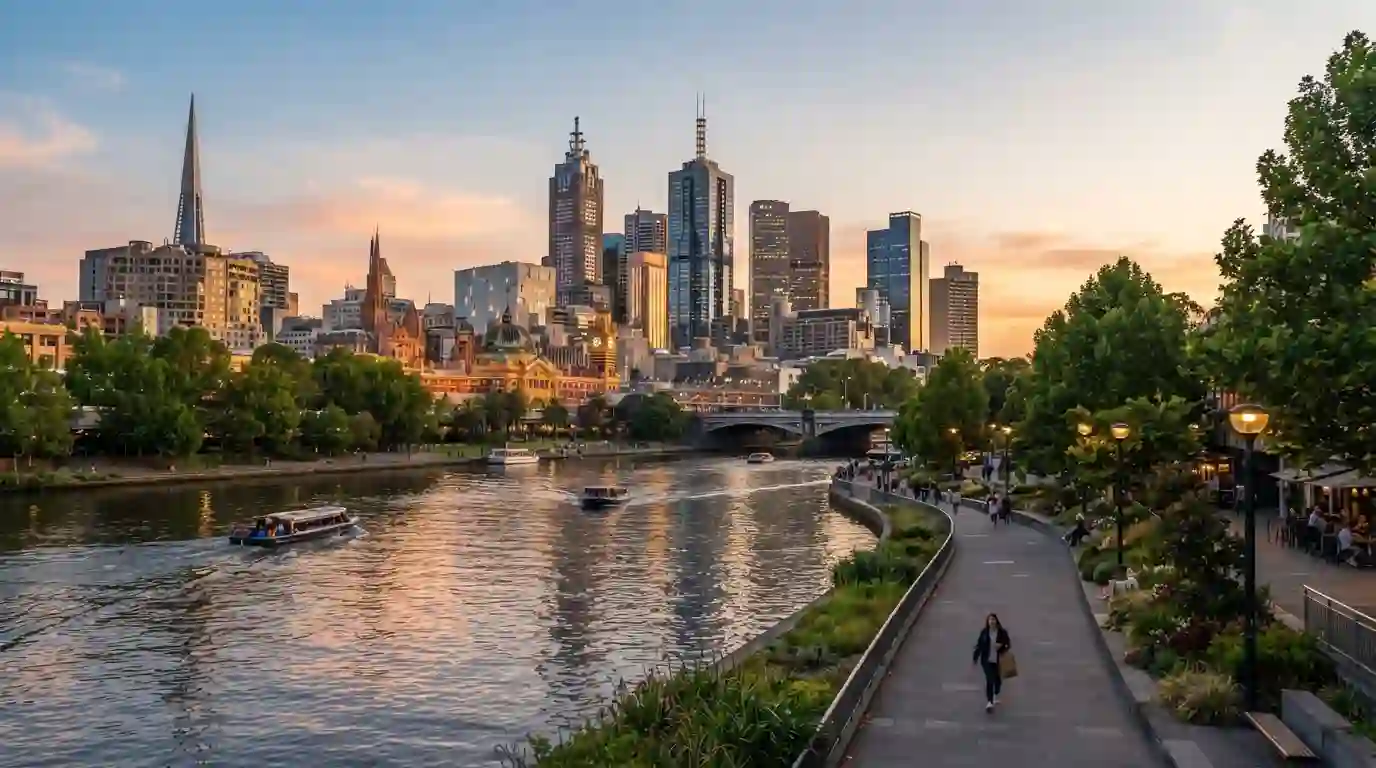
The city is particularly appealing because different experiences are close together. You can explore historic streets in the morning, visit a major cultural attraction in the afternoon, enjoy a riverside walk around sunset, and finish the evening in one of Melbourne’s lively dining districts.
Melbourne can also be a convenient starting point for exploring Victoria. Travelers interested in broader Australian adventures can compare it with destinations featured in our guides to must-visit places in Upstate New York, California RV destinations, and the best places to visit in the USA during winter when planning future trips.
Why Melbourne Is Worth Visiting
Melbourne has a distinctive personality that blends culture, history, sport, nature, and modern city life. Its famous laneways are filled with street art and independent businesses, while grand public buildings and historic arcades provide a glimpse into the city’s past.
Nature is never far away either. Parks and gardens provide peaceful places to slow down, while the Yarra River creates a natural corridor through the city. For visitors who enjoy sports, Melbourne’s sporting culture is another major attraction.
If you enjoy combining city exploration with seasonal travel, you may also like our guides to top places to visit in spring, places to visit in the Midwest in fall, and West Virginia in fall.
Best Places to Visit in Melbourne Victoria
1. Federation Square
Federation Square is one of the easiest places to begin exploring central Melbourne. Located near Flinders Street Station and the Yarra River, the square provides a convenient base for discovering the city’s cultural attractions, restaurants, galleries, and surrounding streets.
Its modern architecture contrasts with Melbourne’s older buildings, making the area especially interesting for visitors who enjoy urban photography. From Federation Square, you can continue toward the river, nearby cultural institutions, or the city’s famous laneways.
2. Flinders Street Station
Flinders Street Station is one of Melbourne’s most recognizable landmarks. Its distinctive historic façade and prominent clocks make it a natural stop for first-time visitors.
The station is also useful from a practical travel perspective because it sits close to several major attractions. After taking photographs, you can easily continue toward Federation Square, the Yarra River, Southbank, or central shopping areas.
3. Royal Botanic Gardens Victoria
For travelers who want a break from the city’s busy streets, the Royal Botanic Gardens Victoria is one of the most appealing places to visit. Large lawns, mature trees, landscaped gardens, water features, and extensive plant collections create a peaceful environment close to central Melbourne.
The gardens work well for a relaxed morning or afternoon. They are also a strong choice for couples, families, photographers, and anyone looking for an outdoor experience without leaving the city.
4. Melbourne Cricket Ground
Sport is deeply connected with Melbourne’s identity, and the Melbourne Cricket Ground, commonly known as the MCG, is one of the city’s most important sporting landmarks.
If there is a major sporting event taking place during your trip, attending can add an unforgettable local experience to your itinerary. Even when there is no event, visitors interested in sports history can explore the venue through available visitor experiences.
Travelers who enjoy active adventures can also explore our guide to awesome daring sports for inspiration beyond traditional sightseeing.
5. National Gallery of Victoria
The National Gallery of Victoria is an excellent choice for visitors interested in art and design. Its exhibitions span different periods and artistic traditions, making it possible to spend several hours exploring without relying entirely on outdoor sightseeing.
It is particularly useful on days when Melbourne’s weather is less predictable. Instead of allowing rain or cooler temperatures to disrupt your itinerary, you can move indoors and continue exploring the city’s cultural side.
6. Melbourne Museum
Melbourne Museum provides another opportunity to understand the history, culture, science, and natural environment of Victoria. It is a good choice for families and travelers who want more educational experiences during their trip.
The museum can also complement outdoor attractions. After spending time in gardens or exploring historic streets, a museum visit provides a different perspective on Melbourne and its wider region.
7. Queen Victoria Market
Queen Victoria Market is one of the city’s classic places for visitors who enjoy food, shopping, local atmosphere, and browsing stalls. It offers a very different experience from Melbourne’s formal museums and galleries.
Give yourself enough time to walk through the different sections rather than treating the market as a quick photo stop. It can be an enjoyable place to look for food, souvenirs, fresh products, and locally distinctive items.
8. Hosier Lane and Melbourne’s Laneways
Melbourne’s laneways are among the city’s most recognizable urban experiences. Hosier Lane is particularly well known for street art, while other nearby lanes offer cafés, restaurants, bars, boutiques, and unexpected architectural details.
The best way to experience this part of Melbourne is to walk rather than rush from one attraction to another. Allow yourself time to look upward, explore side streets, and discover smaller businesses along the way.
9. Southbank and the Yarra River
Southbank offers a combination of riverside scenery, restaurants, entertainment, and views across central Melbourne. A walk along the Yarra River can be especially enjoyable around sunset when the city begins to light up.
This is also a useful area to include between other attractions because it connects several parts of central Melbourne. Travelers who enjoy waterfront environments can use it as a slower section of an otherwise busy itinerary.
10. Melbourne Skydeck
For panoramic city views, Melbourne Skydeck is a strong option. The elevated viewpoint gives visitors a different perspective on Melbourne’s skyline and surrounding urban landscape.
Consider visiting around late afternoon if you want to experience changing light and the transition from daytime to evening. Clear weather can make a major difference to visibility, so flexibility is useful when planning this part of your trip.
11. Fitzroy Gardens
Fitzroy Gardens provides another peaceful green space within easy reach of central Melbourne. Its historic character, mature landscaping, walking paths, and distinctive features make it an enjoyable addition to a city sightseeing itinerary.
It is particularly suitable for travelers who want to combine heritage, architecture, and outdoor scenery. A visit can also provide a welcome break after spending several hours exploring busy central streets.
12. St Kilda
St Kilda offers a change of atmosphere from central Melbourne. The seaside district is known for its beach, waterfront walks, cafés, restaurants, and relaxed recreational environment.
It can be a good choice when you want to combine sightseeing with time outdoors. Travelers with several days in Melbourne can dedicate part of a day to St Kilda rather than limiting their trip entirely to the central business district.
13. Brighton Beach
Brighton Beach is another appealing destination for travelers who want coastal scenery. Its colorful bathing boxes have become one of the area’s most recognizable visual features.
Brighton works particularly well for visitors interested in photography, seaside walks, and a slower pace. It can be combined with other Melbourne coastal experiences for a day focused on the city’s waterfront side.
14. Melbourne Zoo
Melbourne Zoo is a useful addition to a family-friendly itinerary. Visitors can spend several hours exploring animal habitats and learning about wildlife in an environment that offers a change from traditional museums and city landmarks.
If your wider travel plans include wildlife and nature destinations, you may also enjoy our guide to the best nature places to visit in Ontario and our article covering great places for seeing nature.
15. Old Melbourne Gaol
History enthusiasts should consider visiting Old Melbourne Gaol. The historic site provides insight into Melbourne’s early criminal justice history and offers a very different experience from the city’s galleries, markets, and gardens.
It can be especially interesting for visitors who enjoy heritage architecture and stories connected to the development of historic cities.
16. Arts Centre Melbourne
Arts Centre Melbourne is a natural choice for travelers interested in theatre, performance, and culture. Its distinctive architecture and location near the Yarra River make it an important part of Melbourne’s cultural landscape.
Check what is happening during your visit before arriving. A performance can turn a standard sightseeing day into a memorable evening experience.
17. Melbourne’s Arcades
Historic arcades offer another way to experience Melbourne’s architectural character. Places such as the Block Arcade combine heritage details with shops, cafés, and elegant interiors.
Arcade walking is particularly useful when the weather is wet or cold because it allows you to continue sightseeing while spending more time indoors.
18. Carlton and Lygon Street
Carlton and Lygon Street are worth considering if food is an important part of your Melbourne trip. The area has long been associated with Italian culture and provides opportunities to enjoy restaurants, cafés, desserts, and relaxed neighborhood exploration.
Rather than treating dining as something separate from sightseeing, build food stops into your route. Melbourne’s neighborhoods often reveal as much about the city’s personality as its major attractions.
19. Dandenong Ranges and Puffing Billy
If you have additional time beyond central Melbourne, consider exploring destinations outside the city. The Dandenong Ranges offer a greener setting, while Puffing Billy provides a classic heritage railway experience through the surrounding landscape.
This type of excursion is ideal for travelers staying in Melbourne for several days and wanting to experience more of Victoria without abandoning the city as their base.
If day trips are part of your travel style, you can also explore our articles on places to visit for a long weekend, places to visit near Milan by train, and places to visit near Turin by train for additional itinerary ideas.
20. Phillip Island
Phillip Island is another popular option for travelers extending their Melbourne adventure. Wildlife experiences, coastal scenery, and the island’s famous penguin viewing experience make it particularly attractive to visitors who want something beyond city sightseeing.
It is better approached as a dedicated day trip rather than squeezed into an already packed city itinerary. If wildlife and unusual destinations appeal to you, you may also enjoy our guide to places to visit in Pokémon GO, which explores travel from a gaming and exploration perspective.
Best Places to Visit in Melbourne for Different Travelers
Best for First-Time Visitors
First-time visitors should prioritize Federation Square, Flinders Street Station, the Yarra River, Melbourne’s laneways, Queen Victoria Market, the Royal Botanic Gardens, and at least one major museum or gallery.
Best for Families
Families can combine Melbourne Zoo, Melbourne Museum, the Royal Botanic Gardens, waterfront areas, and other attractions that allow children to alternate between learning, outdoor activity, and entertainment.
Best for Couples
Couples may prefer a slower itinerary built around the Royal Botanic Gardens, Yarra River, Southbank, Melbourne’s laneways, St Kilda, and evening dining.
For more couple-focused travel inspiration, see our guides to places to visit in summer for couples, Key West for couples, and San Diego for adults.
Best for Nature Lovers
Nature lovers should make time for the Royal Botanic Gardens, Fitzroy Gardens, St Kilda, Brighton Beach, and destinations outside the city such as the Dandenong Ranges and Phillip Island.
Best for History and Culture
Travelers interested in heritage and culture should explore Old Melbourne Gaol, historic arcades, Flinders Street Station, Melbourne Museum, the National Gallery of Victoria, and Arts Centre Melbourne.
How Many Days Do You Need in Melbourne?
Two days: Focus on central Melbourne, including Federation Square, Flinders Street Station, the laneways, Queen Victoria Market, the Yarra River, and one or two major cultural attractions.
Three days: Add the Royal Botanic Gardens, Melbourne Cricket Ground, Fitzroy Gardens, St Kilda, or Brighton Beach.
Four to five days: Use the extra time for a day trip to destinations such as Phillip Island, the Dandenong Ranges, or other parts of Victoria.
Travelers with more time can build a broader Australia itinerary. Our guides to New Zealand, Switzerland, and Argentina can also provide inspiration if Melbourne is one stop within a larger international trip.
Best Time to Visit Melbourne
Melbourne can be visited throughout the year, but the ideal timing depends on what you want to do. Warmer months are appealing for gardens, beaches, walking, and outdoor sightseeing, while cooler periods can be excellent for museums, galleries, cafés, shopping, and cultural attractions.
Because Melbourne’s weather can change quickly, flexible planning is helpful. Keep a mixture of indoor and outdoor attractions on your itinerary so that an unexpected weather change does not ruin your day.
If seasonal travel is important to you, compare your Melbourne plans with our guides to Greece in summer, New Jersey in spring, and Toronto in winter.
Tips for Exploring Melbourne
- Combine nearby attractions: Melbourne’s central attractions are easier to enjoy when grouped geographically.
- Leave time for walking: Some of the city’s best experiences are found between major attractions.
- Mix indoor and outdoor activities: This is particularly useful because Melbourne weather can be changeable.
- Explore beyond the CBD: Neighborhoods such as St Kilda and Carlton offer a different side of Melbourne.
- Plan at least one regional excursion: If you have three or more days, consider exploring somewhere beyond central Melbourne.
- Do not overpack your itinerary: Melbourne rewards travelers who leave room for cafés, markets, galleries, and spontaneous discoveries.
Sample Melbourne Itinerary
Day 1: Central Melbourne
Start around Flinders Street Station and Federation Square. Walk through the nearby laneways, visit a major gallery or museum, and finish the afternoon around the Yarra River and Southbank.
Day 2: Gardens, Sport and Markets
Spend the morning at the Royal Botanic Gardens, explore the sporting precinct around the MCG, and then visit Queen Victoria Market. Finish the day with dinner in one of Melbourne’s lively neighborhoods.
Day 3: Coast and Culture
Explore St Kilda or Brighton Beach during the day, then return toward central Melbourne for an evening performance, gallery visit, or riverside dinner.
Day 4: Regional Victoria
Use your fourth day for a regional excursion. Depending on your interests, wildlife, heritage railways, coastal landscapes, or food and wine experiences can all provide a different perspective on Victoria.
Final Thoughts
The best places to visit in Melbourne Victoria are not limited to a short list of famous landmarks. Melbourne’s appeal comes from the way its museums, gardens, sporting venues, markets, laneways, neighborhoods, waterfront spaces, and cultural attractions fit together.
For a first visit, concentrate on central Melbourne before adding destinations such as St Kilda, Brighton, or the Dandenong Ranges. With additional days, use the city as a base for exploring more of Victoria. The result is a trip that combines major attractions with the smaller experiences that give Melbourne its distinctive character.
If you’re still building a wider travel bucket list, continue exploring our guides covering the best places to visit in Asia, Scotland, Ireland, and European destinations in winter.