If you are planning a winter trip and wondering about the best places to visit in Toronto in winter, you have plenty of options. You can skate beneath the illuminated arches of Nathan Phillips Square, explore the Distillery District, warm up inside world-class museums, enjoy the city’s underground PATH network, or escape downtown for a peaceful winter walk.
The key is planning around the weather. Toronto winters can be cold, so the best itinerary combines outdoor attractions with indoor experiences. That way, you can enjoy the city without spending your entire day outside.
Why Visit Toronto in Winter?
Winter gives Toronto a special atmosphere that is easy to miss during warmer months. The city becomes quieter in some areas, holiday lights brighten the early evenings, and popular attractions can feel more comfortable when you plan your visits strategically.
Winter is also a good time to experience Toronto’s museums, restaurants, shopping areas, theatres, historic districts, and indoor attractions. Outdoor activities such as skating and winter walks add another dimension to the trip.
If you are comparing Canadian destinations, you may also enjoy exploring winter destinations in Nova Scotia, places to visit in New Brunswick, or the best nature places to visit in Ontario.
Best Places to Visit in Toronto in Winter
1. Nathan Phillips Square
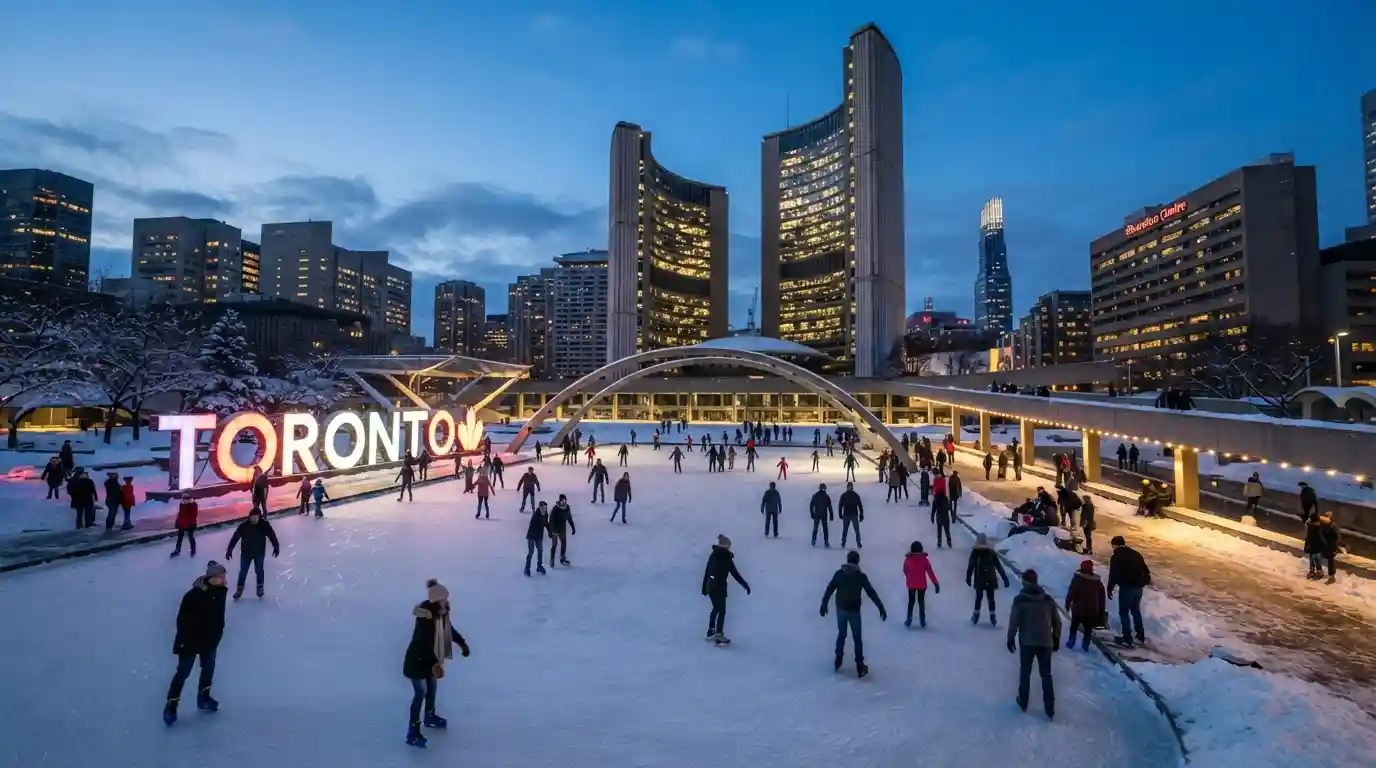
Nathan Phillips Square is one of the best places to begin a winter visit to Toronto. Located directly in front of Toronto City Hall, the square becomes particularly atmospheric when temperatures drop and the reflecting pool transforms into an outdoor skating rink.
The famous Toronto sign provides an excellent photo opportunity, while the surrounding buildings create an impressive urban backdrop. During the holiday season, the area can become even more appealing with seasonal lighting and winter programming.
Visit during the evening if you want to experience the square when the city lights create a dramatic winter setting. During the daytime, it is also convenient for combining with nearby shopping, restaurants, museums, and other downtown attractions.
2. Distillery Historic District
The Distillery Historic District is one of Toronto’s most atmospheric neighbourhoods in winter. Its historic brick buildings, cobblestone streets, cafés, restaurants, galleries, and independent shops create a setting that feels especially inviting when decorated for the colder months.
During the holiday season, the district is particularly popular for festive lights and seasonal experiences. Even outside the holidays, it remains an excellent place for photography, dining, shopping, and a relaxed winter stroll.
Wear comfortable waterproof footwear because cobblestones can become slippery after snow or freezing temperatures.
3. Harbourfront Centre
Toronto’s waterfront takes on a dramatic appearance during winter. Harbourfront Centre is a great place to experience the city’s relationship with Lake Ontario while enjoying seasonal activities and cultural attractions.
The waterfront can be cold and windy, so dress in layers. On suitable winter days, walking along the lake can provide beautiful views of the skyline, while nearby indoor venues give you a convenient place to warm up.
Harbourfront also works well as part of a downtown itinerary because it is close to several other major attractions.
4. The Bentway
The Bentway offers a different way to experience Toronto’s winter landscape. Located beneath the Gardiner Expressway, this urban space combines public art, community programming, and seasonal activities.
Its winter skating experience can be especially memorable because the setting is unlike a traditional city rink. The contrast between the elevated highway structure, winter lighting, and skaters creates a distinctly modern Toronto scene.
It is a good choice for travellers who want something beyond the city’s most traditional tourist attractions.
5. CN Tower
The CN Tower is one of Toronto’s most recognizable landmarks and remains a strong attraction during winter. On a clear day, the observation levels provide expansive views across the city and Lake Ontario.
Winter can sometimes bring crisp visibility, although weather conditions can change quickly. Check the forecast before planning a visit if panoramic views are a major priority.
The CN Tower is also useful when you need an indoor attraction after spending time outside. You can combine it with nearby entertainment, restaurants, and waterfront attractions.
6. Royal Ontario Museum
The Royal Ontario Museum, commonly known as the ROM, is one of the best choices for a cold or snowy day in Toronto.
Its extensive collections cover natural history, world cultures, art, science, and historical objects. You can easily spend several hours exploring the galleries, making it particularly useful when winter weather makes outdoor sightseeing uncomfortable.
The museum’s central location also makes it easy to combine with other attractions around Bloor Street and Queen’s Park.
7. Art Gallery of Ontario
The Art Gallery of Ontario is another excellent winter destination for travellers interested in art and culture.
Instead of worrying about snow or freezing temperatures, you can spend several hours exploring exhibitions and collections in a comfortable indoor environment.
The AGO is particularly convenient for a winter itinerary because it is surrounded by restaurants, cafés, shops, and other downtown attractions. This makes it easy to create an indoor-focused afternoon before heading outside for an evening activity.
8. St. Lawrence Market
St. Lawrence Market is an excellent place to experience Toronto’s food culture during winter. A visit here allows you to explore local food vendors, prepared dishes, baked goods, produce, and other market offerings while staying largely indoors.
It is particularly useful on a cold morning when you want to start your sightseeing day somewhere warm and lively.
After exploring the market, you can continue toward the Distillery Historic District or Toronto’s waterfront, creating an easy downtown walking route when weather conditions are comfortable.
9. Toronto Eaton Centre
When temperatures drop, the Toronto Eaton Centre becomes one of the most practical places to visit in the city.
This major shopping destination offers a warm indoor environment with numerous stores, restaurants, and places to take a break. It is especially useful during winter because you can spend several hours shopping without dealing with snow and wind.
The Eaton Centre also connects naturally with downtown sightseeing. You can combine it with Nathan Phillips Square, the PATH, nearby restaurants, and other attractions.
10. The PATH
The PATH is one of Toronto’s greatest advantages during winter. This extensive underground pedestrian network connects numerous downtown buildings, shops, restaurants, offices, attractions, and transportation points.
It allows visitors to move through parts of downtown while avoiding much of the winter weather above ground.
For travellers visiting Toronto during particularly cold weather, learning how the PATH works can make an enormous difference to the overall experience. It is especially useful around the Financial District, Union Station, Eaton Centre, and nearby downtown attractions.
11. Casa Loma
Casa Loma is one of Toronto’s most distinctive attractions and becomes especially atmospheric during the winter season.
The historic castle-like building provides visitors with an opportunity to explore grand rooms, passageways, towers, and exhibits while escaping the cold outside.
Seasonal programming can also make Casa Loma particularly appealing around the holidays. Even without special events, the architecture and interior spaces make it worthwhile for visitors interested in history, photography, and unusual attractions.
12. Toronto Islands
The Toronto Islands offer a very different winter experience. Instead of visiting for beaches and summer recreation, winter visitors can enjoy peaceful waterfront scenery, open landscapes, and views back toward the Toronto skyline.
Winter conditions can make the islands feel dramatically quieter than during peak summer. However, weather and ferry schedules should be considered carefully before making the trip.
If you enjoy quieter outdoor destinations, you can also explore our guide to peaceful places to visit around the world for additional travel inspiration.
13. Toronto’s Winter Neighbourhoods
Toronto’s neighbourhoods are worth exploring during winter because each offers a different atmosphere.
Yorkville is a good option for upscale shopping, cafés, restaurants, and stylish architecture. Queen West is popular for independent shops, street art, cafés, and creative culture. Kensington Market provides a more eclectic experience with independent businesses and international food.
If you enjoy exploring cities after dark, you can also compare the experience with our guide to places to visit in Toronto at night.
14. Evergreen Brick Works
Evergreen Brick Works is a strong option for travellers who want to experience Toronto’s natural side without leaving the city.
The former industrial site has been transformed into a community and environmental destination with trails, public spaces, educational activities, and seasonal programming.
Winter can create a completely different atmosphere here, especially after fresh snowfall. It is a good choice for visitors who want a break from downtown buildings and crowded attractions.
For more nature-focused travel ideas, explore our guide to the best places for seeing nature.
15. High Park
High Park is one of Toronto’s best-known green spaces and can be enjoyable during winter when trails and trees take on a snowy appearance.
A winter walk here can provide a refreshing contrast to the city’s busy downtown streets. Conditions vary throughout the season, so sturdy footwear is recommended after snowfall or freezing temperatures.
High Park is especially suitable for visitors who want to slow down and enjoy Toronto’s outdoor environment without travelling far from the city centre.
16. Hockey Hall of Fame
For sports fans, the Hockey Hall of Fame is an obvious winter destination. Hockey is deeply connected to Canadian culture, and the museum provides an indoor way to explore the sport’s history.
The attraction works particularly well during winter because it can be combined with other downtown locations such as Union Station, the PATH, St. Lawrence Market, and the waterfront.
It is also a good option when the weather makes a long outdoor itinerary less appealing.
17. Toronto’s Theatre District
Winter is an excellent time to enjoy Toronto’s theatre scene. The city’s theatre district provides a warm indoor alternative to outdoor sightseeing, particularly during long winter evenings.
A theatre performance can easily become the final part of a winter day after visiting museums, shopping districts, or downtown attractions.
If you are building a broader travel itinerary around major cities, our best places to visit with friends guide can provide additional ideas for future trips.
18. Queen’s Park and the University Area
Queen’s Park and the surrounding university district offer a more relaxed urban experience. The area is particularly convenient when combined with the Royal Ontario Museum and nearby cafés.
A short winter walk through the area can give you a glimpse of Toronto’s architecture and university atmosphere without requiring a long journey across the city.
Because several attractions are located close together, this area is useful when you want to reduce the amount of time spent outdoors.
19. Toronto Zoo
The Toronto Zoo can be an interesting choice for travellers who do not mind spending time outdoors during cold weather. Winter changes the experience considerably, with fewer crowds and a different environment for viewing some animals.
Because the zoo covers a large area, however, comfortable footwear and warm clothing are essential. Check seasonal opening arrangements before travelling because winter operations can differ from the summer schedule.
20. Winter Food and Café Experiences
Not every memorable winter experience needs to be a major attraction. Toronto’s restaurants, bakeries, cafés, food halls, and neighbourhood dining spots are part of what makes a winter trip enjoyable.
After spending time outside, finding a warm café for coffee, hot chocolate, tea, or a meal can become part of the experience itself.
Toronto’s multicultural food scene means visitors can easily turn a cold-weather afternoon into a food-focused adventure, whether that means exploring St. Lawrence Market, trying restaurants around Kensington Market, or finding a cozy café in Yorkville or Queen West.
Best Free Places to Visit in Toronto in Winter
You do not need to spend a lot of money to enjoy Toronto during winter. Several experiences can be enjoyed with little or no admission cost, depending on the activity and season.
- Nathan Phillips Square
- Toronto Sign
- Winter walks through High Park
- Distillery Historic District
- Toronto waterfront walks
- Selected public skating opportunities
- Neighbourhood exploration
- Window shopping at major downtown districts
If you enjoy budget-friendly travel, you may also want to explore free places to visit in Minnesota and free places to visit in Copenhagen for inspiration beyond Toronto.
Best Places to Go Ice Skating in Toronto in Winter
Ice skating is one of the most enjoyable ways to experience Toronto during winter. Nathan Phillips Square is the city’s most recognizable skating location, but it is not the only option.
Depending on the season and operating conditions, visitors can also look for skating opportunities around Harbourfront, The Bentway, neighbourhood parks, and other public rinks.
Outdoor skating conditions can change because of temperature, snowfall, and maintenance, so check the operating status before making a special trip.
Best Winter Day Trips From Toronto
If you have more than a few days in Toronto, consider adding a winter day trip to your itinerary.
Niagara Falls can be particularly striking during winter, when cold temperatures can transform parts of the landscape into an icy scene. Other destinations around Ontario can also provide opportunities for winter scenery, outdoor activities, and small-town exploration.
For more Ontario travel inspiration, see our guides to unique places to visit in Ontario and the best nature places in Ontario.
Travellers interested in Canadian winter destinations can also explore Nova Scotia in winter, winter destinations in the Poconos, or the best places to visit in the USA during winter.
Best Time to Visit Toronto in Winter
The best time depends on the experience you want.
December is ideal if you want holiday lights, seasonal markets, festive decorations, and a lively atmosphere.
January is a good choice for travellers who want a classic Canadian winter experience and do not mind colder temperatures.
February can be appealing for winter activities while daylight gradually increases. It can also be a good month for combining outdoor experiences with museums, restaurants, shopping, and cultural attractions.
Early winter is generally better for holiday atmosphere, while the middle of winter can provide the strongest chance of snow and traditional winter scenery.
What to Wear in Toronto During Winter
Good clothing can make the difference between enjoying Toronto and simply trying to survive the weather.
- Wear a properly insulated winter coat.
- Use layers so you can adjust your clothing indoors.
- Bring gloves or mittens.
- Wear a warm hat or toque.
- Choose waterproof boots with good traction.
- Use warm socks, especially for outdoor attractions.
- Carry a scarf or neck warmer for windy days.
Water-resistant footwear is particularly useful because winter conditions can alternate between snow, ice, slush, and wet pavement.
Tips for Visiting Toronto in Winter
Plan Indoor and Outdoor Activities Together
Instead of spending an entire day outdoors, combine outdoor attractions with indoor experiences. For example, you could visit Nathan Phillips Square before heading to the Eaton Centre, or explore the waterfront before spending several hours inside a museum.
Check Weather Conditions Before Leaving
Toronto’s winter weather can change quickly. Check the forecast before choosing outdoor activities, particularly if you plan to visit the waterfront or Toronto Islands.
Use Public Transportation Strategically
Toronto’s public transportation system can make it much easier to move between winter attractions. During poor weather, allow extra time for surface travel and consider routes that reduce long outdoor walks.
Take Advantage of the PATH
The PATH can be extremely useful during cold weather, especially when moving around downtown. However, not every connected section operates in exactly the same way at all times, so plan accordingly.
Start Outdoor Sightseeing Earlier
Winter daylight is limited compared with summer. Starting earlier gives you more comfortable daylight hours for waterfront walks, parks, photography, and other outdoor attractions.
Where to Stay for a Toronto Winter Trip
Choosing the right neighbourhood can make your winter trip much easier.
Downtown Toronto is convenient for first-time visitors because many major attractions are close together.
Yorkville works well for travellers interested in upscale hotels, shopping, restaurants, and museums.
Entertainment District is useful for visitors who want easy access to theatres, sports venues, restaurants, and nightlife.
Old Toronto and the St. Lawrence area are convenient for travellers who want historic surroundings, markets, restaurants, and access to downtown attractions.
Choosing accommodation near public transportation can be especially valuable during winter because it reduces the amount of time you need to spend walking outside.
Toronto Winter Itinerary for One Day
If you only have one day, focus on attractions that are relatively close together.
- Start the morning at St. Lawrence Market.
- Walk toward the waterfront if weather conditions are comfortable.
- Visit the Hockey Hall of Fame or another nearby indoor attraction.
- Use the PATH to explore downtown while staying warm.
- Visit the Toronto Eaton Centre.
- Head to Nathan Phillips Square in the afternoon.
- Enjoy an evening meal in the downtown area.
- Finish the day with skating or another evening experience if conditions allow.
Toronto Winter Itinerary for a Weekend
With a full weekend, you can spread your attractions out and avoid rushing.
Day One
Explore downtown Toronto, including St. Lawrence Market, the waterfront, the Hockey Hall of Fame, the PATH, Toronto Eaton Centre, and Nathan Phillips Square.
Day Two
Spend the morning at the Royal Ontario Museum or Art Gallery of Ontario, then explore Casa Loma or a nearby neighbourhood before enjoying an evening meal and winter activity.
If you want to expand the trip beyond Toronto, consider adding destinations from our guides to Old Quebec City, British Columbia, and the best places to visit in Sub-Saharan Africa for future travel planning.
Is Toronto Worth Visiting in Winter?
Yes, especially if you enjoy cities that combine indoor culture with outdoor winter experiences.
Toronto does not shut down when temperatures fall. Museums remain active, restaurants continue serving visitors, shopping districts stay busy, public spaces become more atmospheric, and winter activities provide reasons to go outside.
The biggest advantage is variety. You can spend an hour skating outdoors, warm up in a museum, explore a historic neighbourhood, eat at a market, shop downtown, and finish the evening surrounded by city lights.
Final Thoughts on the Best Places to Visit in Toronto in Winter
The best places to visit in Toronto in winter are not limited to traditional tourist attractions. The season gives familiar locations a different personality while also creating opportunities for skating, winter walks, festive events, indoor cultural experiences, and cozy dining.
Nathan Phillips Square, the Distillery Historic District, Harbourfront, the CN Tower, Royal Ontario Museum, Art Gallery of Ontario, St. Lawrence Market, Casa Loma, the Toronto Islands, High Park, and the PATH are among the strongest choices for a winter itinerary.
The best strategy is to balance outdoor and indoor activities, dress for changing conditions, and avoid trying to see everything in one day. With a little planning, Toronto’s coldest season can become one of the city’s most memorable times to visit.