
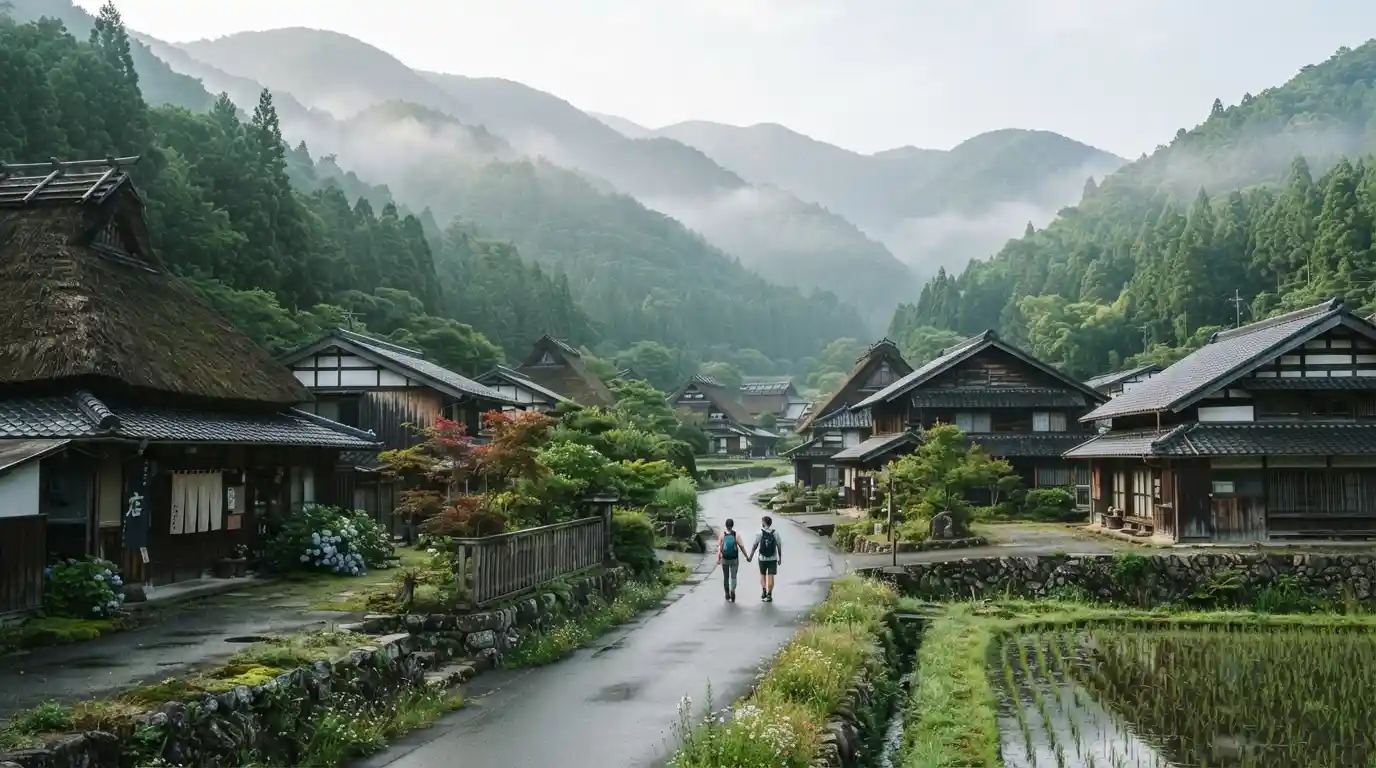
If you are researching the best places to visit in Japan, consider expanding your itinerary beyond the destinations that appear on every first-time travel list. The following places are particularly appealing for travelers seeking scenic views and quieter experiences.
Why Visit Less Popular Places in Japan?
Japan’s most famous destinations are popular for good reasons, but popularity can also mean crowded transportation, busy attractions, limited accommodation availability, and a faster travel pace. Smaller destinations offer another way to experience the country.
Less-visited areas can provide opportunities to walk through traditional neighborhoods, explore nature trails, enjoy coastal scenery, visit smaller temples and shrines, and experience regional food without constantly moving through large crowds.
Travelers interested in nature can also explore ideas from our guide to the best places for seeing nature, especially when planning an itinerary centered on landscapes rather than major city attractions.
1. Ine, Kyoto Prefecture
Ine is a small coastal settlement known for its distinctive traditional boathouses, called funaya. Many of these structures sit directly along the waterfront, creating a memorable landscape that feels very different from central Kyoto.
The village is surrounded by mountains and calm coastal scenery, making it appealing to travelers who want to experience a quieter side of Kyoto Prefecture. Walking along the waterfront, observing the traditional architecture, and taking in the surrounding scenery can be more rewarding than rushing from one major attraction to another.
Ine works particularly well as a slower-paced addition to a broader Japan itinerary. Visitors should allow enough time to appreciate the village rather than treating it as a quick photo stop.
2. Kiso Valley, Nagano and Gifu
The Kiso Valley is an excellent choice for travelers interested in mountain scenery, historic routes, and traditional settlements. The area is associated with the historic Nakasendo route, which once connected Kyoto and Edo, present-day Tokyo.
Historic post towns such as Tsumago and Magome provide an opportunity to walk through preserved streets and experience a slower atmosphere. Forested paths, mountain views, wooden buildings, and traditional inns create a setting that feels far removed from Japan’s largest cities.
The region is especially attractive to travelers who enjoy walking and want their sightseeing to include physical activity. If outdoor exploration is an important part of your travel plans, you can also compare this type of journey with places around the world to visit with friends for broader trip-planning inspiration.
3. Shiretoko Peninsula, Hokkaido
For travelers seeking remote landscapes, the Shiretoko Peninsula in eastern Hokkaido offers an entirely different experience. The region is known for forests, mountains, rugged coastline, lakes, and abundant wildlife.
Its relatively remote character makes it particularly appealing to visitors who want to spend time outdoors rather than moving between urban attractions. Depending on the season and conditions, activities can include hiking, sightseeing, nature observation, and boat excursions along the coast.
Because the region is remote, careful planning is important. Weather can affect transportation and outdoor activities, so travelers should build flexibility into their schedules.
4. Ouchi-juku, Fukushima Prefecture
Ouchi-juku is a historic village surrounded by mountains in Fukushima Prefecture. Its traditional thatched-roof buildings create a distinctive streetscape and provide a glimpse into Japan’s historic travel routes.
The village is particularly atmospheric when surrounded by seasonal scenery. Green landscapes in warmer months, autumn colors, and snow-covered roofs in winter can all create dramatically different visual experiences.
Visitors who appreciate historic destinations and traditional architecture may want to pair Ouchi-juku with other scenic locations rather than concentrating their entire trip around major metropolitan areas.
5. Lake Towada and Oirase Gorge, Aomori
Northern Japan offers some remarkable scenery for travelers willing to venture beyond the country’s most famous cities. Lake Towada and the nearby Oirase Gorge are excellent examples.
Lake Towada is a large mountain lake surrounded by forest, while the Oirase Gorge features a scenic stream flowing through a heavily wooded landscape. Walking routes in the area allow travelers to experience waterfalls, moss-covered rocks, flowing water, and changing seasonal colors.
Autumn can be especially attractive for visitors interested in foliage, while warmer months offer lush greenery. The area’s natural character makes it suitable for travelers who prefer scenic walks to crowded attractions.
6. Kurokawa Onsen, Kumamoto Prefecture
Kurokawa Onsen is a mountain hot-spring town on Kyushu that offers a peaceful alternative to larger urban destinations. Traditional inns, wooded surroundings, stone pathways, and hot-spring baths create a relaxing atmosphere.
The town is particularly suited to travelers who want to slow down. Rather than filling every hour with sightseeing, visitors can spend time exploring the small streets, enjoying regional cuisine, and experiencing traditional Japanese hospitality.
Travelers interested in accommodation-focused journeys can also explore other destination ideas in our guide to cozy forest hotel experiences.
7. Yakushima Island, Kagoshima Prefecture
Yakushima is one of Japan’s most compelling destinations for nature-focused travelers. The island is known for ancient forests, mountainous terrain, waterfalls, and a humid climate that creates exceptionally lush vegetation.
Hiking is one of the main reasons travelers visit Yakushima. Forest trails can lead through landscapes dominated by moss, giant trees, streams, and dense vegetation. The island’s atmosphere is very different from the urban image many visitors associate with Japan.
Because hiking conditions can vary, travelers should choose routes according to their experience, available time, weather, and physical preparation. A slower itinerary also makes it easier to appreciate the environment instead of simply checking landmarks off a list.
8. Tottori Prefecture
Tottori is an excellent option for travelers looking for a less conventional Japanese itinerary. The prefecture is home to the famous Tottori Sand Dunes, but there is much more to discover beyond this major natural attraction.
The wider region combines coastal landscapes, mountains, historic communities, and regional food. Visitors can build an itinerary around nature and local culture without relying exclusively on the country’s largest cities.
For travelers comparing destinations by landscape, Tottori can be considered alongside other scenic regions such as nature-focused destinations around the world.
9. Matsue, Shimane Prefecture
Matsue offers a quieter cultural experience in western Japan. The city is known for its historic castle, waterways, traditional neighborhoods, and proximity to Lake Shinji.
The atmosphere is more relaxed than Japan’s major tourist centers, making it suitable for travelers who want a balance of history, scenery, and everyday local life. Sunset views around Lake Shinji can be particularly appealing to photographers and travelers who enjoy peaceful evening landscapes.
Matsue can also serve as a gateway for exploring other parts of Shimane Prefecture, allowing travelers to build a regional itinerary rather than focusing exclusively on famous cities.
10. Hagi, Yamaguchi Prefecture
Hagi is a historic castle town with preserved streets, traditional residences, and a distinctive coastal setting. Its history is closely connected with the former Choshu domain, and parts of the old town retain a strong sense of place.
Walking is one of the best ways to experience Hagi. The slower pace allows visitors to notice traditional architecture, narrow streets, gardens, and details that can easily be missed during a rushed itinerary.
Travelers looking for historic destinations outside the busiest tourist circuits may find Hagi especially rewarding.
11. Shikoku’s Iya Valley
The Iya Valley in Tokushima Prefecture is surrounded by steep mountains and deep green landscapes. Its winding roads, river valleys, traditional homes, and remote villages give the region a distinctly rural character.
The valley is particularly attractive to travelers who want dramatic scenery without the atmosphere of a major tourist city. Mountain viewpoints and rural roads provide numerous opportunities to appreciate the landscape.
Getting around the valley generally requires more planning than visiting a major city, so travelers should research transportation and accommodation before arriving. That extra planning can be worthwhile for those seeking a slower and more secluded experience.
12. Noto Peninsula, Ishikawa Prefecture
The Noto Peninsula stretches into the Sea of Japan and has long been associated with coastal landscapes, rural communities, traditional crafts, and regional culture.
The peninsula is best approached as a regional journey rather than a single sightseeing stop. Coastal roads, fishing communities, countryside scenery, and local traditions provide a different perspective on Japan.
Because conditions and access can change, travelers should check current local information before planning a visit and confirm which attractions, roads, and services are operating.
13. Sado Island, Niigata Prefecture
Sado Island offers a combination of rugged coastline, mountains, rural scenery, traditional culture, and historical sites. Its island setting naturally creates a slower travel rhythm.
Visitors can explore coastal landscapes, rural communities, and cultural attractions while enjoying a quieter environment than they may encounter in Tokyo, Kyoto, or Osaka.
Sado is particularly interesting for travelers who enjoy destinations with a strong regional identity and who want to spend several days exploring rather than rushing through a checklist of attractions.
14. Matsumoto and the Japanese Alps
Matsumoto is known for its historic castle and mountain setting. While the city itself attracts visitors, the surrounding region provides access to the Japanese Alps and numerous scenic areas.
Travelers can combine cultural sightseeing in the city with mountain landscapes, hiking areas, and rural destinations nearby. This combination makes Matsumoto useful for travelers who want variety without constantly changing accommodation.
Seasonal planning can make a major difference. Mountain scenery changes considerably throughout the year, so visitors should select activities according to the conditions expected during their trip.
15. The San’in Coast
The San’in region along the Sea of Japan provides opportunities to explore coastal scenery, fishing towns, historic communities, and rural landscapes. It is less commonly included in first-time Japan itineraries, which makes it interesting for travelers searching for a quieter route.
The region is particularly appealing for road trips and slower journeys where the objective is to experience changing landscapes rather than simply reach a famous landmark.
Travelers who enjoy scenic road trips can also find inspiration from RV travel and scenic destinations, even though the landscapes and travel style differ considerably.
How to Choose a Quiet Destination in Japan
The best less-popular destination depends on the type of experience you want. Mountain travelers may prefer the Kiso Valley, Iya Valley, or Yakushima. Coastal travelers may enjoy Ine, the Noto Peninsula, Sado Island, or the San’in Coast. Travelers interested in history can consider Ouchi-juku, Hagi, and Matsue.
Season is another important consideration. Some destinations are especially attractive during autumn foliage, while others become dramatically different in winter. If winter landscapes appeal to you, compare your plans with broader guides such as winter destination planning and European winter travel ideas to think about the type of seasonal experience you prefer.
Transportation should also influence your decision. Major cities are generally easier to navigate without a car, while remote valleys, islands, and rural coastal areas may require trains, buses, ferries, rental cars, or a combination of transportation options.
When Is the Best Time to Explore Quiet Japan?
Spring and autumn are popular choices for scenic travel because of comfortable conditions and seasonal landscapes. Summer can be ideal for certain mountain and northern destinations, although heat and humidity can be significant in many parts of the country.
Winter can transform mountain villages and northern regions with snow-covered scenery, but transportation and outdoor access may be affected by weather. Travelers interested in winter travel can also explore quiet winter destination ideas and winter landscape travel for general planning inspiration.
Tips for a Peaceful Japan Itinerary
- Choose smaller towns and rural regions rather than concentrating only on major cities.
- Travel during shoulder periods when practical to avoid the busiest visitor periods.
- Stay overnight in smaller communities instead of returning immediately to major tourist centers.
- Allow extra time for rural transportation and connections.
- Respect local customs, residential areas, temples, shrines, and natural environments.
- Check seasonal conditions before planning hikes or remote excursions.
- Keep your itinerary flexible because rural transportation may operate less frequently.
- Support local restaurants, accommodations, shops, and cultural experiences where possible.
Why Slow Travel Works So Well in Japan
Japan rewards travelers who pay attention to details. A quiet train ride through the countryside, a walk beside a river, a small neighborhood restaurant, or an evening in a mountain town can become one of the most memorable parts of a trip.
Slow travel also gives visitors more opportunities to understand regional differences. Japan is not a single uniform travel experience. Architecture, cuisine, landscapes, traditions, climate, and local culture vary considerably from one region to another.
For travelers who want to broaden their destination planning beyond Japan, our guides to unique places around the world, peaceful places around the world, and traveling around the world offer additional inspiration.
Final Thoughts
The less popular places to visit in Japan can reveal a side of the country that is easy to miss when an itinerary focuses only on Tokyo, Kyoto, Osaka, and other headline destinations. Quiet villages, forested valleys, remote islands, mountain towns, and coastal communities offer opportunities to experience Japan at a slower pace.
Whether you choose the traditional boathouses of Ine, the forests of Yakushima, the mountain landscapes of the Kiso Valley, or the rural character of the Iya Valley, the key is to allow enough time to appreciate the destination rather than simply passing through.
For travelers searching for scenic views, cultural depth, and fewer crowds, exploring Japan beyond its most famous tourist routes can turn a familiar destination into a much more personal journey.