
What Makes a Breakfast Healthy?
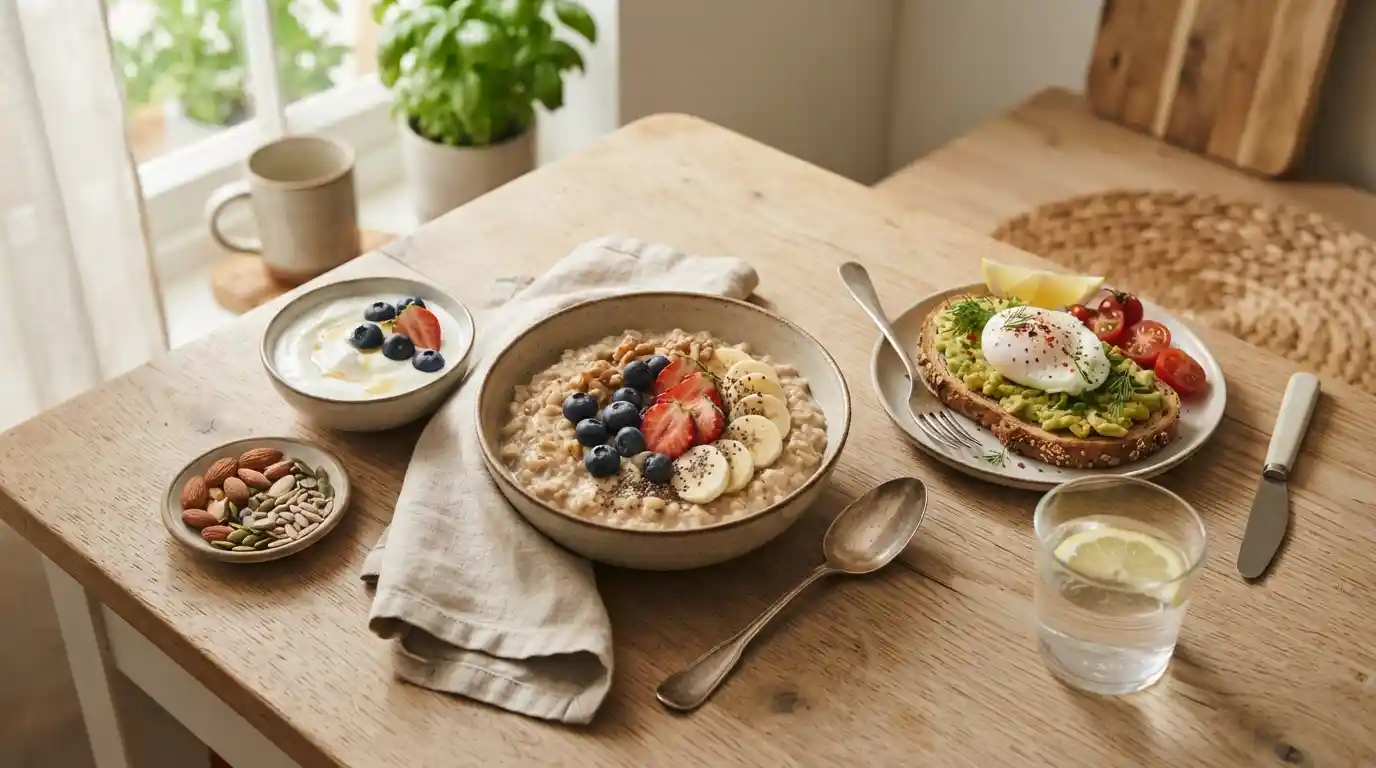
A balanced breakfast usually combines several food groups rather than relying heavily on one ingredient. Protein can help make a meal more filling, while fiber-rich foods can support a satisfying eating pattern. Fruits and vegetables add vitamins, minerals, and other nutrients, while healthy fats can add flavor and staying power.
For practical guidance on everyday eating habits, you can also explore our related article on how to eat in a proper way.
A simple breakfast formula is:
- Protein: eggs, Greek yogurt, cottage cheese, beans, or another protein-rich option.
- Fiber: oats, whole-grain bread, fruit, vegetables, seeds, or legumes.
- Produce: berries, bananas, apples, tomatoes, spinach, peppers, or other fruits and vegetables.
- Healthy fats: nuts, seeds, nut butter, avocado, or similar choices.
- Fluids: water, milk, or another suitable unsweetened beverage.
1. Start With Protein
One of the easiest ways to improve breakfast is to include a meaningful source of protein. Eggs, plain Greek yogurt, cottage cheese, tofu, beans, and nut-based foods can all fit into different breakfast styles.
Protein can also make breakfast more substantial, particularly when paired with high-fiber foods. For people who exercise in the morning, a balanced breakfast can be especially useful as part of an overall eating routine.
If your broader goal is to build healthier habits and improve body composition, our guide to tips for making a lean body provides additional lifestyle ideas.
2. Choose Whole-Grain Carbohydrates
Not all carbohydrates need to be removed from breakfast. Whole-grain options can provide carbohydrates along with fiber and other nutrients. Oatmeal, whole-grain toast, whole-grain cereals with minimal added sugar, and other minimally processed grain choices can work well.
Instead of making breakfast overly restrictive, focus on choosing foods that provide lasting nutritional value. Pairing whole grains with protein and produce can create a more balanced meal.
3. Add Fresh Fruit
Fruit is one of the simplest ways to add flavor and nutrients to breakfast. Bananas, berries, oranges, apples, pears, melon, and seasonal fruit can be served alongside a meal or incorporated directly into it.
For example, you can add berries to oatmeal, sliced banana to whole-grain toast with nut butter, or chopped apple to plain yogurt. Using different fruits throughout the week also keeps breakfast from becoming repetitive.
4. Include Vegetables When You Can
Breakfast does not have to be limited to sweet foods. Vegetables can work particularly well in savory meals such as omelets, breakfast wraps, egg bowls, or whole-grain toast topped with vegetables and avocado.
Spinach, tomatoes, mushrooms, onions, peppers, and other vegetables can make a simple breakfast more colorful and nutrient-dense.
5. Be Careful With Added Sugar
Some breakfast foods can contain a surprising amount of added sugar, especially flavored cereals, pastries, sweetened yogurt products, and heavily sweetened drinks. You do not have to eliminate every sweet food, but making lower-sugar choices more often can help create a more balanced routine.
Plain yogurt can be paired with fruit for natural sweetness, while oatmeal can be flavored with cinnamon, berries, chopped nuts, or a small amount of another preferred topping.
6. Make Oatmeal More Balanced
Oatmeal can be a convenient breakfast base, but a bowl of plain oats does not have to be the entire meal. Add protein and healthy toppings to make it more satisfying.
- Oats with Greek yogurt and berries
- Oatmeal with banana and peanut butter
- Overnight oats with chia seeds and fruit
- Oats with chopped nuts and cinnamon
- Oatmeal topped with fruit and a small amount of unsweetened nut butter
The goal is to build a combination rather than simply adding large quantities of toppings.
7. Try Eggs in Different Ways
Eggs are a versatile breakfast ingredient and can be prepared in many ways. Scrambled eggs with vegetables, a simple omelet, boiled eggs with whole-grain toast, or an egg-and-vegetable breakfast bowl can all provide variety.
For a more substantial weekend meal, you can also explore our chicken grill recipe ideas for inspiration about preparing protein-rich foods at home and planning meals around them.
8. Keep Healthy Breakfasts Simple
A breakfast does not need ten ingredients to be nutritious. In fact, keeping meals simple can make healthy eating easier to maintain.
A few combinations can become reliable breakfast staples:
- Eggs, whole-grain toast, and fruit
- Greek yogurt, berries, and nuts
- Oatmeal, banana, and nut butter
- Whole-grain toast, avocado, and eggs
- Fruit smoothie with a protein-rich ingredient
Simple meals are particularly useful on busy mornings when elaborate cooking is unlikely to happen.
9. Prepare Breakfast Ingredients Ahead of Time
Preparation is one of the most practical tips for making a healthy breakfast. Washing fruit, portioning nuts, preparing overnight oats, boiling eggs, or chopping vegetables ahead of time can reduce the temptation to skip breakfast or rely on convenience foods.
Choose preparation methods that fit your schedule. Even preparing one or two components the night before can make the morning easier.
10. Keep Convenient Healthy Foods Available
A healthy breakfast becomes much easier when useful ingredients are already available. Keep a basic selection of foods such as oats, eggs, whole-grain bread, fruit, plain yogurt, nuts, seeds, and vegetables.
Having dependable ingredients at home also makes it easier to create a meal without spending excessive time deciding what to eat.
11. Watch Portion Sizes Without Becoming Overly Restrictive
Healthy eating is not simply about labeling foods as good or bad. Portion size, overall dietary pattern, hunger, activity level, and individual nutritional needs all matter.
Instead of trying to make every breakfast extremely small, aim for a satisfying combination that matches your needs. Someone preparing for a physically active morning may require a different breakfast from someone with a sedentary schedule.
12. Choose Drinks Wisely
Breakfast beverages can contribute a significant amount of sugar and calories when they contain sweetened syrups or large amounts of added sugar. Water, unsweetened tea, coffee without excessive additions, or milk can be suitable choices depending on your preferences and nutritional needs.
If you enjoy juice, consider how it fits into the rest of your meal rather than treating it as a replacement for whole fruit.
13. Build Breakfast Around Your Routine
The healthiest breakfast is one you can realistically maintain. A person who has ten minutes in the morning needs different strategies from someone who enjoys cooking before work.
If mornings are rushed, prepare overnight oats or assemble ingredients in advance. If you exercise early, plan a meal that fits comfortably around your workout. If you have more time on weekends, use that opportunity to prepare several components for the coming week.
Regular physical activity can also complement healthier eating habits. For additional inspiration, see our article about how jogging in the morning can support a healthy routine.
14. Make Breakfast Family-Friendly
Healthy breakfast habits can be easier to maintain when the entire household has flexible options. Instead of preparing completely different meals for everyone, offer a few components that people can combine according to their preferences.
For example, a breakfast table might include eggs, whole-grain toast, fruit, yogurt, and nuts. Children can choose suitable combinations while adults can build their own plates.
For more family-focused lifestyle ideas, explore caring for kids and family well-being and brother and sister activities.
15. Avoid Turning Breakfast Into Dessert
Pastries, donuts, sweetened cereals, and heavily frosted baked goods can be enjoyable occasionally, but relying on them as everyday breakfast choices may leave little room for protein, fiber, and produce.
If you enjoy something sweet in the morning, balance it with foods such as fruit, plain yogurt, eggs, nuts, or whole grains. You can also experiment with healthier homemade options rather than depending entirely on packaged treats.
For an occasional homemade dessert idea, see our guide to making homemade cake.
16. Plan Several Breakfast Options
Eating the same breakfast every day can become boring. Create three or four dependable options and rotate them throughout the week.
For example:
| Breakfast Style | Simple Combination |
|---|---|
| Quick | Greek yogurt, berries, and nuts |
| Hot | Eggs, vegetables, and whole-grain toast |
| Make-ahead | Overnight oats with fruit and seeds |
| Portable | Whole-grain wrap with eggs and vegetables |
| Refreshing | Fruit, yogurt, oats, and a protein-rich smoothie |
17. Match Breakfast With Your Activity Level
Your breakfast does not need to look identical every day. On a morning when you plan a workout, you may prefer a meal containing carbohydrates and protein. On a quieter day, a lighter combination may be sufficient.
People who regularly train may also benefit from thinking about breakfast as part of their complete daily nutrition rather than viewing it as an isolated meal. Our guide to finding the best trainer for bodybuilding can provide additional fitness-related context.
18. Use Healthier Cooking Methods
Cooking method matters. Instead of automatically deep-frying breakfast foods, consider grilling, baking, steaming, poaching, or lightly sautéing ingredients when appropriate.
These methods can make it easier to control added fats while still producing flavorful meals. Herbs, spices, citrus, garlic, and fresh ingredients can add plenty of flavor without requiring heavy sauces.
19. Do Not Forget Food Safety
Healthy breakfast preparation also means handling food safely. Eggs, dairy products, cooked meats, and other perishable ingredients should be stored appropriately and handled according to food-safety guidance.
Prepare only as much food as you can safely store and consume. When preparing breakfast for several people, keep hot and cold foods at appropriate temperatures and avoid leaving perishable foods out unnecessarily.
20. Create a Breakfast Habit You Can Maintain
The most useful tips for making a healthy breakfast are the ones that fit your actual life. You do not need to prepare an elaborate meal every morning or completely eliminate foods you enjoy.
Focus instead on a few repeatable habits: include protein, choose fiber-rich foods, add fruit or vegetables, moderate added sugar, prepare ingredients ahead of time, and keep convenient nutritious foods available.
Small changes can make breakfast more balanced without making your routine unnecessarily complicated.
Easy Healthy Breakfast Ideas for Busy Mornings
If you have limited time, keep a short list of meals that require minimal preparation:
- Greek yogurt with fruit and nuts
- Overnight oats with berries
- Whole-grain toast with eggs and avocado
- Banana with nut butter and yogurt
- Vegetable omelet prepared in advance
- Fruit and protein-rich smoothie
- Hard-boiled eggs with fruit and whole-grain toast
The key is preparation. A few minutes of planning can turn a rushed morning into a more organized start.
Healthy Breakfast Mistakes to Avoid
- Skipping protein completely
- Relying heavily on pastries and sugary cereals
- Drinking large amounts of sweetened beverages
- Eating very little and becoming excessively hungry later
- Making breakfast unnecessarily complicated
- Ignoring portion sizes
- Failing to prepare ingredients ahead of busy mornings
- Following restrictive rules that are difficult to maintain
Frequently Asked Questions
What is the best breakfast for a healthy lifestyle?
There is no single breakfast that works for everyone. A balanced meal containing protein, fiber-rich carbohydrates, fruit or vegetables, and an appropriate amount of healthy fat is a practical starting point.
Is oatmeal a healthy breakfast?
Oatmeal can be a nutritious breakfast choice, especially when paired with protein-rich ingredients, fruit, nuts, or seeds rather than relying heavily on added sugar.
What should I eat for breakfast when I am in a hurry?
Choose foods that require little preparation, such as Greek yogurt with fruit and nuts, overnight oats, boiled eggs with whole-grain toast, or a balanced smoothie.
Can eggs be part of a healthy breakfast?
Yes. Eggs can be included in many balanced breakfast combinations. Pairing them with vegetables, whole grains, or fruit can create a more complete meal.
Should I avoid carbohydrates at breakfast?
Not necessarily. Whole grains, oats, fruit, and other carbohydrate-containing foods can fit into a balanced diet. The overall meal and portion matter more than eliminating an entire food group.
How can I make healthy breakfast easier?
Prepare ingredients ahead of time, keep nutritious staples available, create a few repeatable breakfast combinations, and choose recipes that match the amount of time you actually have in the morning.
Final Thoughts
Making a healthy breakfast does not require complicated recipes or a perfect diet. The most effective approach is to build simple meals around protein, fiber-rich foods, fruits or vegetables, and appropriate portions.
Prepare what you can in advance, keep your favorite nutritious ingredients available, and create several breakfast options that fit your schedule. Over time, these small habits can make balanced eating feel much more natural.
For more ideas around an active and enjoyable lifestyle, you can also explore PathVoice’s articles on daring sports, cycling competitions, and relaxing at the beach.