
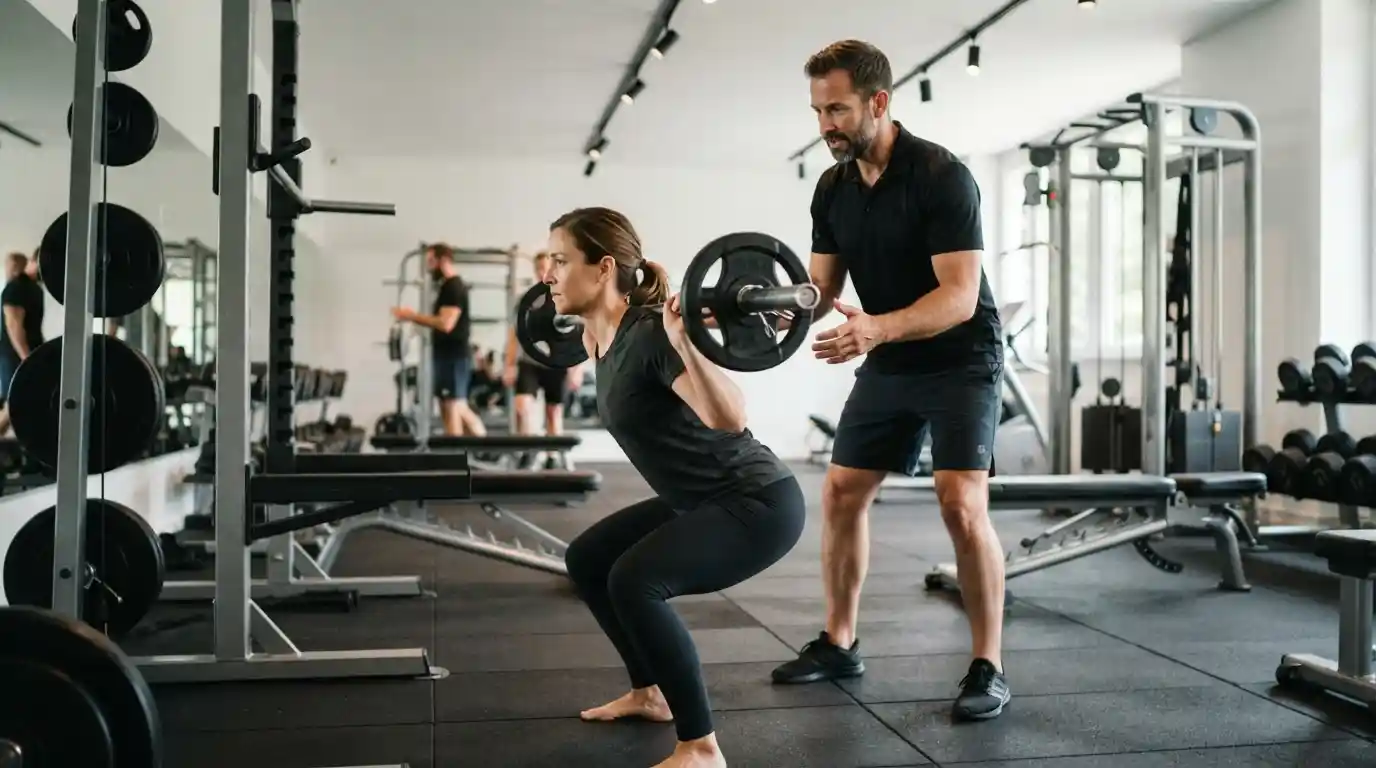
Finding the best trainer for bodybuilding is about more than choosing someone who looks muscular or has years of gym experience. A good bodybuilding coach should understand resistance training, exercise technique, progressive overload, recovery, nutrition fundamentals, and how to adjust a program to your individual goals.
What Does a Bodybuilding Trainer Do?
A bodybuilding trainer helps you develop a structured resistance-training strategy based on your current ability, goals, schedule, and experience. The role can involve much more than demonstrating exercises.
A qualified coach may help you organize your weekly training split, select appropriate exercises, manage training volume, improve lifting technique, track progress, and make adjustments when your performance changes.
For people pursuing a leaner and more muscular physique, a trainer may also coordinate training with general nutrition and recovery habits. Your overall approach to building a lean physique can also benefit from practical guidance such as the strategies discussed in tips for making a lean body.
What Makes the Best Trainer for Bodybuilding?
There is no single trainer who is automatically the best choice for everyone. The right coach depends on your goals, training history, budget, location, and preferred coaching style.
However, strong bodybuilding coaches tend to share several important qualities.
1. Strong Knowledge of Resistance Training
A bodybuilding coach should understand how exercises target different muscle groups and how training variables influence progress. They should be able to explain why a particular movement, rep range, exercise order, or training frequency is being used.
Look for a trainer who understands progressive overload rather than simply giving you a list of exercises. Progress can involve gradually increasing weight, repetitions, training quality, volume, or other appropriate variables while maintaining good technique.
2. Proper Exercise Technique
Good technique is one of the most important parts of productive resistance training. A trainer should watch how you perform movements and provide useful corrections instead of encouraging you to lift heavier at the expense of control.
This is particularly important with compound movements such as squats, presses, rows, deadlift variations, and other exercises that require coordination across multiple joints and muscle groups.
3. Individualized Programming
A quality trainer should not give every client exactly the same program. Your training plan should account for your experience, available equipment, schedule, recovery capacity, current fitness level, and specific objective.
Someone who wants general muscle development may need a different strategy from an experienced lifter preparing for a bodybuilding competition.
4. Understanding of Recovery
Muscle development does not happen simply because you spend more time in the gym. Recovery, sleep, nutrition, stress management, and sensible training volume all influence your ability to make consistent progress.
A trainer who constantly pushes maximum effort without considering recovery may not be the right coach for long-term bodybuilding development.
5. Clear Communication
The best bodybuilding trainer should be able to explain what you are doing and why you are doing it. You should feel comfortable asking questions about your program, exercise technique, progression, and adjustments.
Communication also matters when something is not working. A good coach should be willing to modify a program rather than insisting that every client follow the same approach.
Choose a Trainer Based on Your Bodybuilding Goal
Before hiring a coach, define what you actually want to accomplish. The phrase “bodybuilding” can describe several different goals.
Building General Muscle
If your main objective is to gain muscle and improve your physique, look for a trainer who specializes in resistance training and has experience working with beginners or intermediate lifters.
The coach should emphasize consistent training, appropriate progression, adequate recovery, and realistic expectations.
Getting Leaner While Maintaining Muscle
If you want a more defined physique, your trainer should understand how resistance training fits into a broader body-composition strategy. Strength training can remain important while nutrition and activity levels are adjusted according to your individual needs.
Daily movement can also contribute to an active lifestyle. For example, morning jogging and regular physical activity can complement a broader fitness routine when appropriately managed.
Competition Preparation
Competition preparation requires a more specialized level of coaching. If you plan to compete, look for someone with genuine experience preparing athletes or physique competitors.
Competition-focused coaching may involve detailed training adjustments, posing practice, nutrition coordination, progress monitoring, and preparation for the demands of a specific division.
Improving Strength and Athletic Performance
Some bodybuilding enthusiasts want muscle development while also improving strength or athletic performance. In that case, a trainer with a strong understanding of strength and conditioning may be especially useful.
Your coach should be able to balance muscle-building work with performance-oriented training instead of treating every session as a bodybuilding workout.
Qualifications to Look for in a Bodybuilding Trainer
Certifications do not automatically make someone an excellent coach, but recognized credentials can provide a useful baseline when comparing trainers.
Depending on your location and goals, you may encounter certifications from organizations such as NASM, ACE, ACSM, and NSCA. These organizations provide different educational pathways for fitness professionals, and the appropriate credential depends partly on the type of training environment in which the coach works.
Experience matters too. A trainer should be able to demonstrate practical knowledge without relying entirely on a certificate or impressive social-media presence.
It is also worth asking whether the trainer maintains current CPR/AED training where appropriate and whether they regularly continue their professional education.
Experience Matters More Than a Great Physique
A trainer having an impressive physique can be encouraging, but appearance alone is not evidence of coaching ability.
A successful coach needs to understand how to work with different body types, experience levels, limitations, schedules, and objectives. Someone may have an excellent personal physique while being unable to design an effective program for another person.
Instead of asking only, “Does this trainer look like a bodybuilder?” ask questions such as:
- How long have you coached bodybuilding clients?
- What types of clients do you normally work with?
- How do you measure progress?
- How often do you change a training program?
- How do you handle plateaus?
- How do you adjust training when recovery becomes difficult?
Nutrition Knowledge Is Helpful, but Know the Boundaries
Nutrition plays an important role in bodybuilding, particularly when the goal is to gain muscle, reduce body fat, or prepare for a physique event.
A trainer should understand basic nutrition principles and be able to discuss general habits that support training. For example, learning how to eat properly and build better eating habits can support an overall fitness routine.
Protein-rich foods, adequate calories, carbohydrates for training energy, healthy fats, hydration, and consistent meal patterns can all be relevant considerations.
However, personal trainers should not automatically be treated as substitutes for registered dietitians or medical professionals. If you have a medical condition, complex dietary requirements, or need therapeutic nutrition advice, seek an appropriately qualified healthcare professional.
What Should You Eat When Building Muscle?
A bodybuilding diet should generally support your training objective rather than rely on a collection of extreme food rules.
Meals can be built around nutrient-dense protein sources, vegetables, fruits, whole grains or other carbohydrate sources, and appropriate dietary fats. Practical food preparation also matters because a plan that is impossible to maintain will not be useful for long-term progress.
For ideas about developing better morning eating habits, see these healthy breakfast tips.
Protein-containing meals can also be prepared in simple ways. For example, grilled chicken preparation ideas can be useful for people who regularly include lean protein in their meals.
How a Good Trainer Tracks Your Progress
A bodybuilding trainer should have a clear method for determining whether your program is working.
Progress can be monitored through several measurements, including:
- Strength and performance in key exercises
- Training volume and repetitions
- Body measurements
- Progress photographs
- Body weight trends
- Exercise technique
- Recovery and training consistency
Not every measurement needs to change every week. A good coach understands that progress can be gradual and that short-term fluctuations do not necessarily mean a program has failed.
Personal Training vs. Online Bodybuilding Coaching
Both in-person and online coaching can work, but they provide different advantages.
In-Person Training
In-person coaching can be especially useful for beginners who need direct feedback on exercise technique. A trainer can observe your movement, make immediate adjustments, and help you become more comfortable with gym equipment.
This format can also provide accountability for people who struggle to maintain a consistent training schedule.
Online Coaching
Online bodybuilding coaching may be more flexible for experienced lifters or people who do not live near a suitable specialist.
A coach may provide a customized program, progress reviews, exercise demonstrations, and regular communication without physically being in the gym with you.
The key question is not whether online coaching is automatically better or worse. The important issue is whether the coach provides meaningful individualization, feedback, and accountability.
How Much Should a Bodybuilding Trainer Cost?
Trainer pricing can vary considerably based on location, experience, specialization, session length, facility, and whether the service is delivered in person or online.
Instead of selecting the cheapest option, consider the value of the coaching. A trainer who carefully evaluates your program, tracks your progress, and provides useful adjustments may be more valuable than a low-cost trainer who simply counts repetitions.
Ask about pricing before beginning and clarify exactly what is included. Some coaches charge per session, while others offer monthly packages that include programming and online communication.
Red Flags When Choosing a Bodybuilding Trainer
Knowing what to avoid can be just as important as knowing what to look for.
Guaranteed Results
Be cautious of trainers who promise a specific physique or guaranteed transformation within an unrealistic timeframe. Individual results depend on many factors, including training consistency, nutrition, recovery, genetics, and starting point.
One Program for Everyone
If a trainer gives every client the same workout without considering their goals or experience, look elsewhere. Individual differences should influence program design.
Ignoring Technique
A trainer who focuses entirely on lifting heavier weights while ignoring movement quality may not provide the coaching you need.
Extreme Nutrition Advice
Be cautious about coaches who promote highly restrictive diets, unverified supplements, or extreme eating strategies as universal solutions.
No Progress Tracking
If your trainer never reviews your performance or makes adjustments, you may not be receiving genuinely individualized coaching.
Questions to Ask Before Hiring a Bodybuilding Coach
A short consultation can reveal a lot about a trainer’s approach. Consider asking:
- What type of bodybuilding clients do you usually coach?
- How do you design a new client’s program?
- How do you determine training volume?
- How do you track progress?
- How do you handle plateaus?
- How do you account for recovery?
- What certifications or qualifications do you hold?
- Do you provide in-person, online, or hybrid coaching?
- What is included in your coaching fee?
- Can you explain how you would approach my specific goal?
Bodybuilding and a Balanced Active Lifestyle
Bodybuilding should ideally fit into a broader healthy lifestyle rather than consume every aspect of your routine.
Other forms of movement can provide variety and help maintain general fitness. Cycling, for example, can be an enjoyable activity outside a traditional gym routine, while the cycling competition coverage on PathVoice reflects another side of sports and physical activity.
People interested in different forms of physical challenge can also explore daring sports and athletic activities for inspiration.
Team sports offer another perspective on fitness. Resources covering the women’s hockey championship in the USA highlight the strength, conditioning, coordination, and endurance involved in competitive sport.
Recovery Should Be Part of the Plan
Training harder is not always the answer when progress slows. Sometimes the better solution is improving recovery.
Sleep, rest days, appropriate training volume, hydration, and stress management can all influence how well you perform. If a program constantly leaves you exhausted, your trainer should be willing to examine the overall workload.
Mobility and physical comfort can also matter. People dealing with movement limitations or persistent discomfort should consider appropriate professional guidance rather than attempting to train through pain. A broader look at holistic wellness and physical care can provide additional context around maintaining an active lifestyle.
Mental well-being also deserves attention. Consistent training can become difficult when stress and poor recovery accumulate, so resources such as this discussion of mental health and emotional support can complement a broader wellness perspective.
Can a Trainer Help You Build a Leaner Physique?
Yes, a good trainer can help organize the resistance-training side of a physique goal. The coach can select exercises, establish progression, manage training volume, and help you maintain consistency.
However, physique changes are not created by training alone. Nutrition, sleep, daily activity, stress, and adherence all matter.
This is why a realistic approach to building a lean body should focus on sustainable habits rather than short-term extremes.
Technology Can Support Your Training
Technology can also make progress tracking easier. Depending on your needs, fitness apps, smartwatches, training logs, and other devices can help record workouts or monitor activity.
Before purchasing expensive equipment, compare what you actually need with your budget. General guidance on choosing a gadget that suits your budget can help reinforce the idea of buying based on practical needs rather than marketing claims.
The best technology is the technology you will actually use consistently. A simple training log can be more valuable than an expensive device that you rarely check.
How to Find the Best Trainer for Bodybuilding
Start by identifying your goal. Decide whether you want general muscle growth, improved definition, strength development, competition preparation, or a combination of these objectives.
Then look for trainers with relevant experience and recognized qualifications. Review their coaching approach, ask how they track progress, and have a conversation about your expectations before committing.
If possible, observe how the trainer interacts with clients. Look for coaches who provide constructive feedback, prioritize exercise quality, communicate clearly, and adapt their approach when circumstances change.
Finally, consider personality fit. You are more likely to stay consistent with a coach whose communication style, expectations, and coaching philosophy work well for you.
Frequently Asked Questions
What is the best trainer for bodybuilding?
The best trainer is one who has relevant bodybuilding experience, understands resistance-training principles, communicates clearly, individualizes programs, tracks progress, and matches your specific goals.
Do I need a certified trainer to build muscle?
You do not necessarily need a personal trainer to build muscle, but working with a qualified trainer can be valuable if you are inexperienced, struggling with programming, or want structured accountability.
Should beginners hire a bodybuilding coach?
A beginner can benefit from coaching because a trainer can teach exercise technique, establish sensible progression, and reduce the confusion that often comes with creating a first training program.
Is an online bodybuilding coach worth it?
Online coaching can be worthwhile when the coach provides individualized programming, regular feedback, progress reviews, and meaningful communication. It can be particularly convenient for experienced lifters.
How often should a bodybuilding program change?
A program does not necessarily need to change every week. A good trainer should adjust exercises, volume, intensity, or other variables when your goals, performance, recovery, or circumstances indicate that a change is useful.
What should I look for in a bodybuilding coach?
Look for relevant experience, appropriate qualifications, strong communication, individualized programming, attention to technique, sensible progression, progress tracking, and a clear understanding of recovery.
Final Thoughts
The best trainer for bodybuilding is not necessarily the person with the biggest muscles, the largest social-media following, or the most expensive coaching package. The right trainer is someone who can understand your objective and turn it into a structured, realistic, and adaptable training process.
Look for evidence of coaching skill rather than appearance alone. Ask questions about programming, progression, recovery, qualifications, and progress tracking. Most importantly, choose someone whose coaching style helps you remain consistent.
With the right guidance, realistic expectations, and a sustainable approach to training, bodybuilding can become a structured part of a long-term fitness lifestyle rather than a series of short-lived workout challenges.
In the quest for optimal performance and well-being, both physical training and mental health are inextricably linked. Just as a qualified bodybuilding coach tailors a regimen to enhance muscle growth and strength, understanding the importance of mental clarity and emotional resilience is equally vital. Factors such as stress management, sleep quality, and overall mood can significantly impact your training outcomes. Embracing daily habits that harness natural elements, like benefits of morning sunlight, can enhance energy levels and support recovery. By integrating these holistic approaches, individuals can not only achieve their bodybuilding goals but also foster a sustainable and balanced lifestyle.










