Whether you want a snowy road trip, a romantic weekend, outdoor adventure, scenic photography, or a relaxing coastal escape, there are plenty of best places to visit in Nova Scotia in winter worth adding to your itinerary.
From Halifax and Peggy’s Cove to Cape Breton Island, the Annapolis Valley, and the South Shore, these destinations offer different ways to experience Nova Scotia during the colder months.
Why Visit Nova Scotia in Winter?
Winter brings a quieter atmosphere to Nova Scotia. Popular destinations generally have fewer visitors, while snow adds a completely different character to the province’s forests, waterfronts, villages, and coastal scenery.
Winter travelers can combine sightseeing with skiing, snowshoeing, skating, hiking, storm watching, local dining, cultural attractions, and relaxing accommodations. Some coastal communities become especially atmospheric when snow covers the landscape and waves crash against the rocky shoreline.
If you enjoy seasonal travel, Nova Scotia can also be a useful starting point for comparing different cold-weather destinations. For more seasonal inspiration, explore these guides to the best places to visit in the USA in winter, West Virginia in fall, and Ontario in fall.
1. Halifax
Halifax is one of the easiest places to begin a Nova Scotia winter trip. The provincial capital combines waterfront scenery, museums, restaurants, cafés, shopping, entertainment, and outdoor winter activities.
A winter visit allows you to explore the Halifax Waterfront with fewer crowds before warming up at a restaurant or café. The city is also convenient for travelers who want to enjoy Nova Scotia without spending every day driving through rural winter conditions.
Outdoor skating, museums, historic attractions, live entertainment, and seasonal events can make Halifax a strong choice for a short winter city break. It also works well as a base for day trips to nearby coastal destinations.
2. Peggy’s Cove
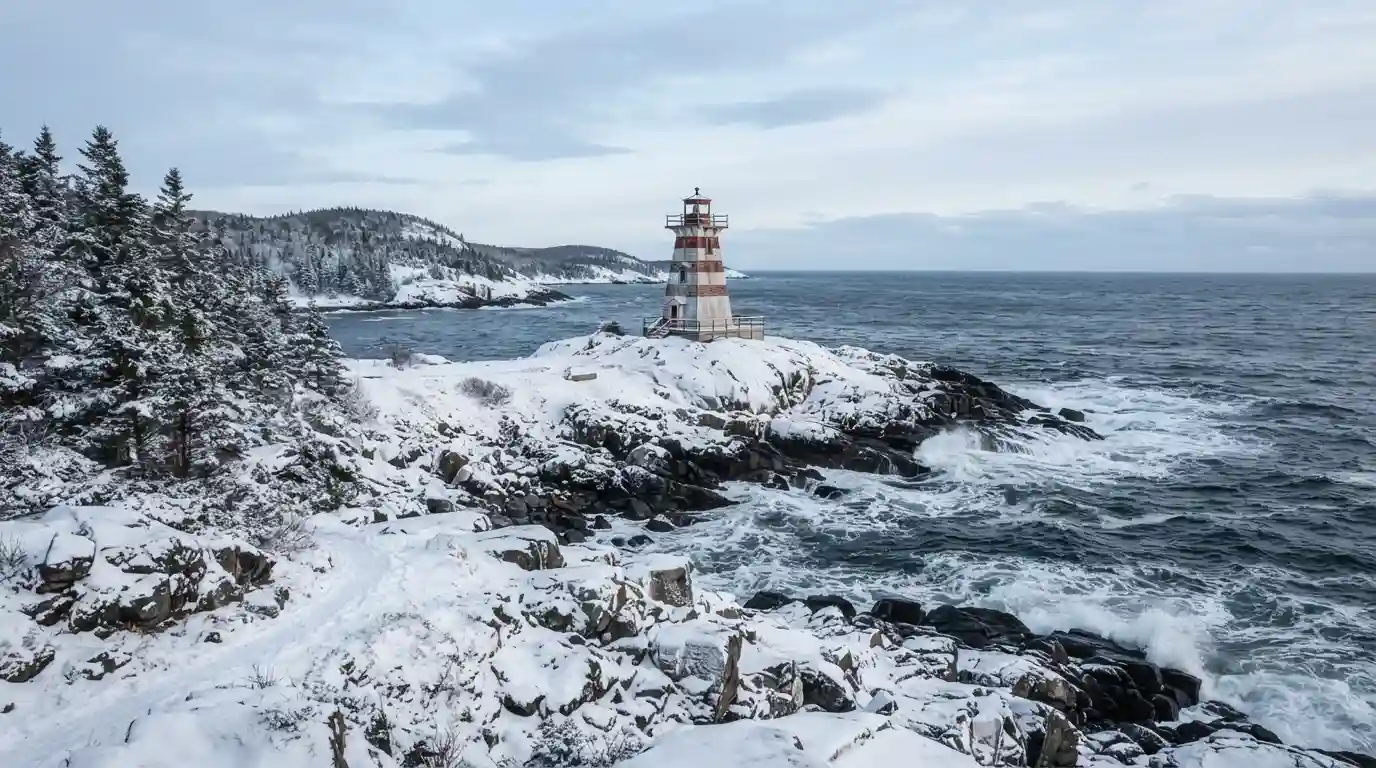
Peggy’s Cove is one of Nova Scotia’s most recognizable destinations, and winter gives its famous coastal scenery a dramatic new appearance. Snow, rocky shorelines, gray skies, and powerful Atlantic waves can create an unforgettable landscape.
The iconic lighthouse is the centerpiece, but the surrounding fishing village and rocky coastline are equally appealing. Winter also tends to bring a quieter atmosphere than the peak summer season.
Photography is particularly rewarding when snow contrasts with the ocean and granite rocks. However, visitors should remain extremely cautious around the shoreline because winter weather can make rocks slippery and ocean conditions unpredictable.
3. Cape Breton Island
Cape Breton Island is one of the strongest choices for travelers looking for a true winter escape. The island combines mountain scenery, coastal landscapes, small communities, outdoor recreation, and scenic drives.
Winter travelers can explore areas around Baddeck, Ingonish, Cape Smokey, and other parts of the island while enjoying snow-covered forests and dramatic coastal views.
If you are planning a broader Canadian trip, you may also enjoy our guide to the best places to visit in British Columbia for another perspective on Canada’s winter scenery.
4. Ingonish
Ingonish is an excellent winter destination for travelers who want mountains and ocean in the same trip. Located along the Cabot Trail, the community provides access to Cape Breton’s highland scenery and winter recreation.
Snowshoeing, skiing, winter walks, photography, and scenic drives can all be part of an Ingonish itinerary. Cape Smokey is particularly appealing for visitors interested in downhill skiing and mountain views.
The combination of snowy hills and the Atlantic coastline gives Ingonish a distinctive winter character that is difficult to replicate elsewhere in the province.
5. Cape Breton Highlands
The Cape Breton Highlands are among the most scenic places to experience Nova Scotia during winter. Snow transforms the forests and mountains into a peaceful landscape, while the coastline remains dramatic throughout the season.
Experienced outdoor travelers can consider winter hiking, snowshoeing, and cross-country skiing where conditions and access permit. Because winter conditions can change quickly, visitors should plan carefully and check local conditions before heading into remote areas.
Travelers who enjoy national parks may also want to compare this experience with the best places to stay when visiting Indiana Dunes National Park.
6. Lunenburg
Lunenburg is one of the most charming towns to visit on Nova Scotia’s South Shore. Its colorful historic buildings and waterfront atmosphere remain appealing even when temperatures fall.
A winter visit can be slower and more relaxed than a summer trip. Travelers can walk through the historic streets, explore local shops and restaurants, and enjoy the waterfront without the same level of seasonal crowds.
Lunenburg is especially attractive for travelers who prefer cultural experiences and picturesque small-town scenery rather than a trip focused entirely on outdoor adventure.
7. Mahone Bay
Mahone Bay is another South Shore destination that works well for a winter getaway. The community is known for its attractive waterfront setting, distinctive architecture, independent businesses, and relaxed atmosphere.
Winter gives the town a peaceful personality. Visitors can combine a stroll around the harbor with local food, cafés, shopping, and nearby coastal sightseeing.
It is also an excellent stop when building a South Shore road trip that includes Lunenburg and Peggy’s Cove.
8. Annapolis Valley
The Annapolis Valley offers a different type of winter experience. Instead of focusing only on rugged coastline and mountains, visitors can explore vineyards, farms, small communities, local food, and scenic countryside.
Winter winery visits, cozy restaurants, local markets, and countryside drives can make the valley appealing for couples and travelers who prefer a slower itinerary.
The region is also worth considering if you are planning a longer seasonal trip that combines outdoor experiences with food and drink.
9. Wolfville
Wolfville is a convenient base for exploring the Annapolis Valley during winter. Its university-town atmosphere brings restaurants, cafés, shops, and cultural experiences to the area.
The town is particularly useful for travelers who want access to valley wineries and countryside attractions while still having a walkable community to explore.
A winter weekend in Wolfville can include local dining, scenic drives, winery stops, and relaxed evenings in comfortable accommodations.
10. Ski Wentworth
For travelers whose priority is skiing, Ski Wentworth is one of the places to consider when planning a Nova Scotia winter trip.
The ski area provides opportunities for downhill skiing and other snow-based recreation. It can work well for both dedicated winter sports travelers and visitors who want to include a day on the slopes within a broader Nova Scotia road trip.
Before traveling, check operating conditions, snow conditions, opening dates, and available services because winter operations can vary with weather.
11. Cape Smokey
Cape Smokey is another standout winter destination, particularly for visitors who want skiing combined with spectacular coastal scenery.
The mountain’s location near the Atlantic creates an unusual combination of snow-covered terrain and ocean views. Skiing, snowboarding, snowshoeing, and scenic mountain experiences can make this an exciting addition to a Cape Breton itinerary.
Travelers looking for more winter-focused destinations can also explore the best places to visit in the Poconos in winter and New Mexico places to visit in winter.
12. Truro
Truro is a practical destination for travelers interested in winter activities, local events, and easy access to other parts of Nova Scotia.
The town can serve as a convenient stop between Halifax and destinations farther north. Winter travelers can look for seasonal skating, local events, restaurants, and nearby outdoor activities.
Its location also makes Truro useful for road-trip itineraries that cover the Bay of Fundy and Annapolis Valley.
13. Bay of Fundy Coast
The Bay of Fundy coastline offers a powerful winter landscape. Snow-covered cliffs, forests, coastal communities, and dramatic tides create scenery that feels very different from the warmer months.
Travelers interested in nature and photography can build a winter road trip around coastal viewpoints and small communities. Weather can be unpredictable, so flexibility is important when planning outdoor activities.
If you enjoy dramatic coastal destinations, you may also want to explore top places to visit on the Oregon Coast and places to visit near Orange County, California.
14. South Shore
Nova Scotia’s South Shore is ideal for a winter road trip combining coastal villages, historic towns, seafood, photography, and scenic viewpoints.
Peggy’s Cove, Mahone Bay, and Lunenburg can all be incorporated into a South Shore itinerary. Rather than rushing between destinations, winter is a good time to slow down and spend more time enjoying individual communities.
The South Shore is particularly appealing to couples and photographers who want dramatic coastal scenery without the crowds associated with peak summer travel.
15. Halifax Waterfront
The Halifax Waterfront deserves separate attention because it provides an easy winter sightseeing experience within the city.
A waterfront walk can be combined with museums, restaurants, cafés, shopping, and other downtown attractions. This makes it a good option for travelers who want winter scenery without committing to a full outdoor adventure.
For travelers planning a wider city-focused vacation, our guides to popular places to visit in New York, places to visit in Toronto at night, and places to visit in Old Quebec City offer additional ideas for North American urban travel.
Best Winter Activities in Nova Scotia
Choosing where to go is only part of planning a winter trip. The right activities can completely change your experience.
Winter Hiking
Snow-covered trails can be beautiful, particularly around Cape Breton and other forested parts of the province. Choose routes that match your experience and equipment, and remember that snow and ice can make familiar trails significantly more difficult.
Snowshoeing
Snowshoeing is a practical way to explore winter landscapes without needing advanced skiing skills. It can be enjoyed in suitable areas across the province when snow conditions are favorable.
Downhill Skiing
Cape Smokey, Ski Wentworth, Ski Martock, and Ski Ben Eoin are among the destinations worth considering for downhill skiing and snowboarding.
Outdoor Skating
Outdoor skating adds a classic Canadian winter experience to a Nova Scotia trip. Halifax and other communities offer seasonal skating opportunities, although schedules can depend on weather and ice conditions.
Coastal Photography
Winter can be one of the most visually rewarding times to photograph Nova Scotia. Snow, fog, dramatic skies, frozen surfaces, and rough Atlantic water create strong compositions around the coast.
Storm Watching
Atlantic winter storms can produce dramatic waves and coastal scenery. Peggy’s Cove and other exposed coastal areas can look spectacular during stormy weather, but safety should always come first. Stay well back from the water and avoid slippery rocks and dangerous shorelines.
Best Places to Visit in Nova Scotia in Winter for Couples
Couples looking for a romantic winter escape can focus on Lunenburg, Mahone Bay, Wolfville, Halifax, or the Annapolis Valley.
A couple’s itinerary could combine a scenic coastal drive with a comfortable stay, local dining, a winery visit, and a quiet winter walk. Halifax works well for couples who prefer restaurants, entertainment, museums, and urban attractions, while the South Shore and Annapolis Valley are better suited to slower countryside and coastal escapes.
For more couple-focused travel inspiration, see our guides to places to visit in summer for couples, places to visit in Key West for couples, and places to visit in San Diego for adults.
Best Places to Visit in Nova Scotia in Winter for Families
Families can choose between city activities, outdoor recreation, scenic drives, skating, skiing, and winter walks.
Halifax is particularly convenient because families can combine indoor attractions with outdoor activities. Cape Breton can provide a more adventurous trip, while destinations such as Truro and the Annapolis Valley can fit well into a road-trip itinerary.
When traveling with children during winter, keep driving distances realistic and leave extra time for weather-related delays. Outdoor plans should also have an indoor backup option.
What to Pack for a Nova Scotia Winter Trip
Winter weather in Nova Scotia can vary considerably, so packing for changing conditions is essential.
- Insulated winter coat
- Warm layers and thermal clothing
- Water-resistant boots with good traction
- Warm gloves or mittens
- Hat and neck covering
- Extra socks
- Snow or rain protection
- Traction aids for icy trails when appropriate
- Winter driving supplies if taking a road trip
- Portable phone charger
If you plan to spend significant time outdoors, prioritize warmth, waterproofing, and traction rather than packing only for appearance.
Getting Around Nova Scotia in Winter
A car provides the most flexibility for exploring Nova Scotia’s smaller communities and coastal destinations. However, winter driving requires more preparation than summer road trips.
Check the forecast before leaving, allow additional travel time, and be prepared for snow, ice, wind, and reduced visibility. Rural and coastal roads can experience rapidly changing conditions.
If you are uncomfortable driving in winter weather, consider basing your trip in Halifax and using organized tours or shorter day trips rather than attempting a long-distance winter road trip.
How Many Days Do You Need in Nova Scotia in Winter?
A long weekend is enough for a focused Halifax and South Shore trip. Four to five days allows you to combine Halifax, Peggy’s Cove, Lunenburg, and part of the Annapolis Valley.
For Cape Breton Island, plan additional time. Winter travel can take longer because of weather, daylight hours, and road conditions. A week or more gives you greater flexibility and allows you to experience both outdoor activities and slower scenic stops.
If you enjoy extended travel planning, our broader guides to traveling the world and the best places to visit around the world with friends can help with additional itinerary ideas.
When Is the Best Time to Visit Nova Scotia in Winter?
December can bring festive events and early winter scenery, while January and February generally provide a stronger chance of experiencing a traditional snowy landscape. March can offer a transition toward spring while still providing opportunities for winter activities.
The ideal month depends on your priorities. Skiers may prioritize periods with reliable snow, while photographers may prefer fresh snowfall or dramatic coastal weather. Travelers seeking a quieter city break can visit whenever suitable accommodations and attractions are operating.
Tips for Planning a Nova Scotia Winter Trip
- Check conditions before every major drive. Weather can change quickly during winter.
- Build flexibility into your itinerary. Avoid scheduling every hour of a road trip.
- Confirm seasonal opening hours. Some businesses operate reduced winter schedules.
- Choose accommodations carefully. A warm, comfortable base makes a major difference after outdoor activities.
- Pack for wet and cold conditions. Winter coastal weather is not always simply snowy.
- Respect coastal safety warnings. Never approach dangerous surf or unstable rocks for photographs.
- Plan around daylight. Winter days are shorter, especially for rural sightseeing.
- Keep alternative activities available. Museums, restaurants, cafés, and indoor attractions can save a trip when weather disrupts outdoor plans.
Final Thoughts
The best places to visit in Nova Scotia in winter depend on what kind of experience you want. Halifax is ideal for a convenient city escape, Peggy’s Cove delivers dramatic coastal scenery, Lunenburg and Mahone Bay offer charming South Shore experiences, while Cape Breton and the Cape Breton Highlands are excellent for mountain landscapes and winter adventures.
The Annapolis Valley adds wineries, countryside, food, and relaxing communities to the mix, while ski destinations such as Cape Smokey and Ski Wentworth give winter sports enthusiasts plenty to explore.
Rather than treating winter as an off-season limitation, think of it as a different way to experience Nova Scotia. With the right clothing, flexible planning, careful winter driving, and respect for coastal conditions, the province can provide a memorable cold-weather getaway filled with snow, scenery, culture, and Atlantic character.
For additional seasonal travel ideas, explore our guides to New England destinations, nature places in Ontario, and places to visit in New Brunswick.