
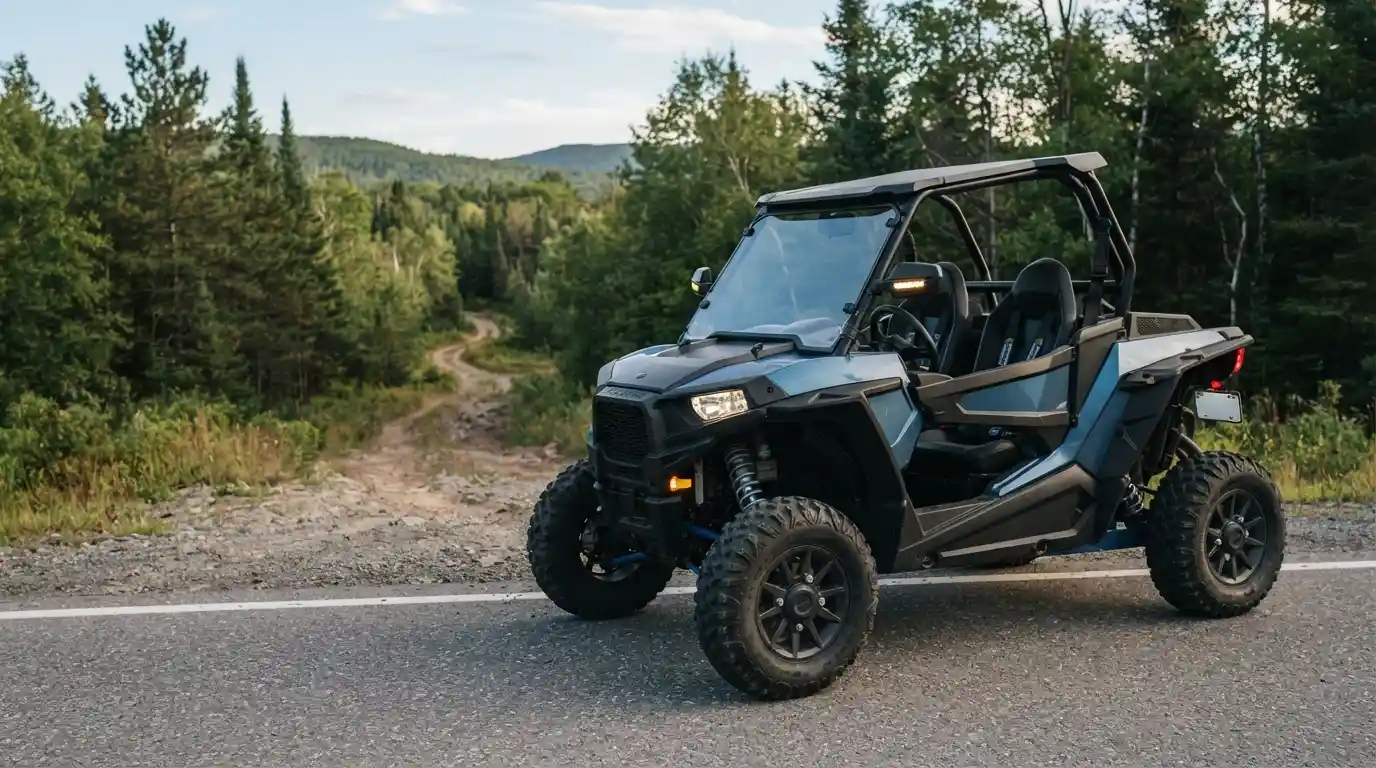
A street legal RZR gives off-road enthusiasts a practical way to enjoy the performance of a side-by-side while also traveling on approved public roads where local laws allow it. Instead of limiting a Polaris RZR to trails, private land, or designated recreation areas, a properly equipped and legally registered machine can provide more flexibility for connecting trails, reaching campsites, exploring rural roads, and handling everyday trips in areas that permit these vehicles.
This guide explains what you should know before attempting to make an RZR street legal, what equipment is commonly required, how registration can work, and how to approach road use safely and responsibly.
What Does Street Legal RZR Mean?
A street legal RZR is a side-by-side utility or recreational vehicle that satisfies the legal requirements necessary to operate on specific public roads in a jurisdiction where such use is permitted.
The important point is that street legal does not necessarily mean legal on every road. A vehicle may qualify for registration but still be prohibited from highways, interstates, urban roads, or roads with posted restrictions.
Before modifying your vehicle, determine exactly how your state classifies the RZR. Some jurisdictions treat certain side-by-sides as off-highway vehicles, while others provide specific pathways for registering qualifying vehicles for limited public-road use.
Understanding the difference between an off-road vehicle and a road-approved vehicle is especially important when planning long-distance adventures. If you are interested in broader travel planning, you can also explore our guide to tips for traveling the world before building an itinerary around your vehicle.
Can You Make a Polaris RZR Street Legal?
In many locations, an RZR can potentially be equipped and registered for some forms of public-road operation. But the answer depends entirely on the laws where you intend to drive.
Some states have specific requirements for side-by-sides, UTVs, and other off-highway vehicles. Other states may restrict them to certain roads or require additional equipment and documentation.
That means there is no single nationwide modification package that automatically makes every RZR street legal.
Before purchasing parts, check the rules that apply to:
- The state where the RZR is registered
- The county or municipality where it will be operated
- The specific roads you plan to use
- The vehicle’s classification
- Whether the vehicle must pass an inspection
- Registration and title requirements
- Insurance requirements
- Driver licensing requirements
Common Street Legal RZR Requirements
Although requirements vary, many jurisdictions look for equipment that makes a side-by-side safer and more identifiable when operating around conventional traffic.
1. Headlights
Functional headlights are commonly required for road operation. Depending on local rules, the vehicle may need specific lighting performance, positioning, or operating capabilities.
Do not assume that factory lighting automatically satisfies every local requirement. Check the applicable rules before modifying or registering the vehicle.
2. Tail Lights and Brake Lights
Rear lighting helps motorists identify the RZR, especially when traffic conditions change quickly. Brake lights are particularly important because a side-by-side can be considerably smaller than many vehicles sharing the road.
3. Turn Signals
Turn signals may be required for street operation. They allow drivers behind and ahead of the RZR to understand your intentions without relying on hand signals or assumptions.
4. Rearview Mirrors
Mirrors can improve situational awareness and may be mandatory under local law. A properly positioned mirror system allows the driver to monitor traffic approaching from behind without repeatedly turning around.
5. Windshield Requirements
Some jurisdictions have specific rules concerning windshields, while others may have different requirements depending on vehicle classification and operating conditions.
If you regularly ride in dusty environments or spend time on trails, visibility becomes even more important. A windshield should provide useful protection without creating unnecessary visibility problems.
6. Horn
A functioning horn may be required for public-road operation. It provides another way to communicate with surrounding traffic when visual signals are not enough.
7. Seat Belts
Seat belts are a fundamental safety feature on a side-by-side. Depending on the jurisdiction, the vehicle may need specific restraint systems for occupants.
Even where regulations differ, properly using the available restraints should be treated as a basic safety practice.
8. License Plate and Registration
If your jurisdiction permits road registration, the RZR may need a properly displayed license plate or registration identifier.
Registration should be completed according to the requirements of the relevant motor vehicle or off-highway vehicle authority. Keep registration documents accessible while operating the vehicle.
9. Insurance
Insurance requirements vary, but coverage may be necessary for legal road operation. Even when insurance is not required for every form of off-road use, road use introduces additional exposure to traffic accidents and property damage.
Confirm that your policy actually covers the intended use rather than assuming an off-road policy automatically covers public roads.
10. Safety Equipment
Additional safety equipment may be required depending on where and how the RZR is operated. Requirements can include items such as reflective equipment, safety belts, lighting, or other vehicle-specific equipment.
For outdoor adventures involving remote areas, safety preparation becomes even more important. Vehicle reliability and emergency preparation should be considered alongside recreational equipment.
Why RZR Owners Choose Street Legal Builds
The biggest advantage of a street legal RZR is flexibility.
Instead of loading the vehicle onto a trailer every time you need to move between nearby areas, legal road access may allow you to travel directly between permitted locations.
This can be useful for:
- Connecting nearby trails
- Accessing campsites
- Exploring rural communities
- Reaching outdoor recreation areas
- Traveling between private properties where permitted
- Supporting hunting and outdoor trips
- Enjoying scenic backroads where legal
For outdoor enthusiasts, vehicle capability is only one part of a successful adventure. Our guide to choosing the latest hunting gear can also be useful when preparing for longer outdoor trips.
Street Legal RZR vs. Off-Road-Only RZR
A standard off-road RZR and a street legal RZR may look nearly identical, but their legal operating environments can be very different.
| Feature | Off-Road RZR | Street Legal RZR |
|---|---|---|
| Trail use | Generally designed for it | Generally designed for it |
| Public-road use | May be restricted | Allowed only where legally permitted |
| Registration | Depends on jurisdiction | Usually requires additional compliance |
| Lighting requirements | Vehicle-dependent | May require additional equipment |
| Insurance | Policy-dependent | May be required for road operation |
| Road restrictions | Often extensive | Still applies based on local law |
How to Build a Street Legal RZR
The safest approach is to treat the project as a compliance process rather than simply an accessory upgrade.
Step 1: Identify Your Local Rules
Start by determining whether your state permits the type of RZR you own on public roads. Then investigate county and municipal restrictions.
Do this before buying equipment because a modification that satisfies one jurisdiction may not satisfy another.
Step 2: Determine the Required Equipment
Create a checklist based on the applicable regulations. Typical areas include lighting, mirrors, brakes, horn, windshield, restraints, reflectors, registration equipment, and other safety requirements.
Step 3: Install Quality Components
Use components that are appropriate for the vehicle and intended environment. Poorly installed electrical equipment, loose mirrors, weak mounts, or badly positioned lighting can create safety problems even if the vehicle technically has the required accessories.
Step 4: Complete Required Inspection
If your jurisdiction requires an inspection, arrange it after the required modifications have been completed.
Keep receipts, documentation, and installation records where appropriate. These records can make the registration process easier and provide evidence of what has been installed.
Step 5: Register and Insure the Vehicle
Complete the applicable registration process and obtain the required documentation. If insurance is required, make sure the policy matches the actual vehicle and intended use.
Step 6: Understand Road Restrictions
Registration does not necessarily provide unlimited road access. Some roads may remain prohibited, including certain controlled-access highways or roads with local restrictions.
Can You Drive a Street Legal RZR on the Highway?
This is one of the most important questions to answer before planning a trip.
Street legal does not automatically mean highway legal.
Even where a state allows registered side-by-sides on selected public roads, higher-speed roads may remain restricted. Interstates and controlled-access highways can have separate rules.
Always determine the legal route before beginning a trip. A navigation app may recommend a road without understanding every restriction that applies to an off-highway vehicle.
If your route involves a long-distance journey, planning stops and vehicle support is equally important. A major travel stop such as Fleetway Travel Center on I-55 illustrates the type of roadside planning that can matter during extended travel, although the specific legality of reaching any destination in an RZR must always be verified locally.
Street Legal RZR Safety Tips
Legal compliance is only the starting point. A side-by-side behaves differently from a passenger car, and its smaller size can make it less visible to other motorists.
Stay Visible
Use required lighting and keep the vehicle clean enough that lights, reflectors, and signals remain visible.
Watch Following Distance
Leave more space than you might normally leave when driving a conventional vehicle. This provides additional reaction time when traffic slows suddenly.
Avoid Unnecessary High-Speed Roads
Even when a road is technically permitted, it may not be the safest environment for a side-by-side. Choose lower-speed routes whenever practical and legal.
Use Seat Belts
Every occupant should use the available restraint system correctly. Never treat a short road trip as an exception to basic safety practices.
Check Tire Condition
RZR tires designed primarily for off-road terrain can behave differently on pavement. Inspect tread, pressure, sidewalls, and overall condition before transitioning from trails to roads.
Routine vehicle care matters just as much for a modified RZR as it does for a conventional automobile. For additional vehicle-maintenance context, you can explore professional auto service considerations and vehicle maintenance and service guidance.
Maintaining a Street Legal RZR
A street legal build should be inspected regularly because additional equipment introduces more components that can fail or become loose.
Before a road trip, check:
- Headlights
- Brake lights
- Turn signals
- Mirrors
- Horn
- Windshield condition
- Seat belts
- Brakes
- Tires
- Battery and electrical connections
- License plate mounting
- Suspension components
- Steering components
For additional perspectives on vehicle care, our coverage of professional auto service and reliable vehicle solutions can help reinforce the importance of preventive maintenance.
Best Trips for a Street Legal RZR
Once your vehicle is legally approved for the roads you intend to use, the possibilities become much broader.
Depending on local regulations, a street legal RZR can be useful for exploring scenic rural areas, connecting outdoor recreation sites, reaching trail systems, or combining paved-road travel with off-road activities.
Travel planning can also extend beyond your local riding area. PathVoice already covers numerous destinations and road-trip ideas, including places to visit near Orange County, places to visit near Fort Myers, and places to visit near San Juan.
For broader regional inspiration, you can also explore places along the Oregon Coast, U.S. winter destinations, and fall destinations across the United States.
What to Consider Before Buying a Street Legal RZR
If you are buying an RZR specifically because you want road access, research the legal environment before choosing the vehicle.
Consider:
- Whether the vehicle can be registered in your jurisdiction
- Which roads permit the vehicle
- Required equipment
- Insurance costs
- Registration costs
- Inspection requirements
- Maintenance requirements
- Tire suitability for mixed pavement and trail use
- Passenger capacity
- Storage requirements
- Trail access near your home
You should also consider how often you actually expect to use paved roads. If most of your riding will take place on private land or designated trails, a full street-oriented conversion may provide less value than expected.
Common Mistakes RZR Owners Should Avoid
Assuming Every State Has the Same Rules
Vehicle laws differ. Never rely on a friend’s setup from another state as proof that your RZR is legal where you live.
Adding Accessories Without Checking Regulations
Buying a generic street-legal kit does not guarantee compliance. Verify each component against the rules that apply to your vehicle.
Ignoring Road-Specific Restrictions
A registered RZR may still be prohibited from certain roads. Check the route rather than assuming registration provides universal access.
Overlooking Maintenance
Road operation can expose off-road vehicles to different stresses, including extended pavement use, higher sustained speeds, and increased brake and tire demands.
Owners who travel regularly should establish a preventive maintenance routine rather than waiting for problems to appear. Related vehicle-care topics can be explored through reliable car-care guidance.
Street Legal RZR for Outdoor Adventures
The appeal of a street legal RZR is the ability to combine recreational riding with greater travel flexibility. Instead of treating paved roads and trails as completely separate parts of an adventure, permitted road access can make it easier to move between them.
That can be particularly useful for riders who enjoy camping, hunting, scenic exploration, and outdoor recreation.
However, responsible riding should always come first. Know the laws, understand your route, maintain the vehicle, use proper restraints, and respect speed and road restrictions.
If you are building a broader outdoor itinerary, PathVoice also covers destinations such as California RV destinations and Southern California winter destinations, which can provide additional inspiration for road-based adventures.
Frequently Asked Questions
Can any RZR be made street legal?
Not necessarily. Whether an RZR can legally operate on public roads depends on the laws and vehicle classifications in the jurisdiction where it will be used.
What equipment is commonly needed for a street legal RZR?
Common requirements may include headlights, tail lights, brake lights, turn signals, mirrors, a horn, seat belts, a windshield, registration equipment, and other safety components. Exact requirements vary by jurisdiction.
Can a street legal RZR drive on interstate highways?
Not automatically. A vehicle can qualify for limited public-road operation while remaining prohibited from interstates or other controlled-access highways.
Does a street legal RZR need insurance?
Insurance requirements vary by jurisdiction and vehicle classification. Even when not universally required, appropriate coverage can be valuable when operating around conventional traffic.
Is an RZR safe on pavement?
An RZR can be operated on pavement where legally permitted, but drivers should remember that it is designed differently from a conventional passenger vehicle. Tire choice, visibility, speed, braking, restraints, and road conditions all affect safety.
Should I use an off-road tire on a street legal RZR?
Tire selection should match the vehicle, terrain, manufacturer’s specifications, and intended use. Riders who spend substantial time on pavement should understand how their tire design behaves on hard surfaces.
Final Thoughts
A street legal RZR can open up a more flexible style of off-road travel, allowing qualifying vehicles to connect approved roads with trails, recreation areas, campsites, and other destinations where local laws permit.
The key is to approach the conversion as a legal and safety project rather than simply an accessory upgrade. Research the rules first, install appropriate equipment, complete the required registration or inspection process, maintain the vehicle carefully, and understand exactly where you are permitted to drive.
With the right preparation, a properly compliant RZR can provide an exciting combination of trail capability and road-going convenience while keeping safety and responsible riding at the center of the experience.