
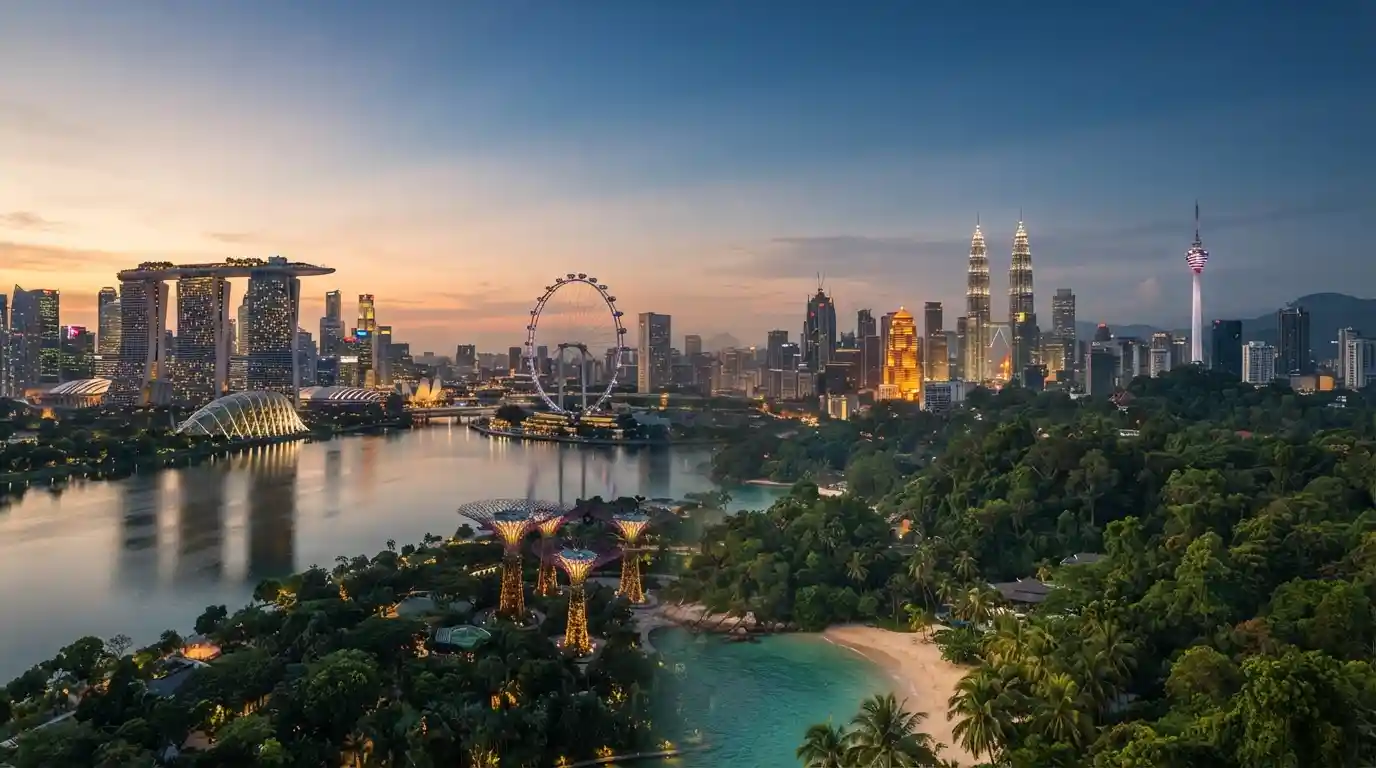
Singapore is known for its polished urban attractions, waterfront landmarks, gardens, museums, shopping districts, and family-friendly entertainment. Malaysia offers a much broader mix of large cities, historic towns, beaches, islands, rainforests, highlands, and culturally diverse communities.
If you are planning a trip that combines both countries, this guide highlights the best places to visit in Singapore and Malaysia, how to organize your itinerary, and what type of traveler each destination may suit.
Why Combine Singapore and Malaysia in One Trip?
The biggest advantage of combining Singapore and Malaysia is variety. A single trip can begin with Singapore’s futuristic skyline and carefully designed urban attractions before continuing into Malaysia for heritage neighborhoods, tropical islands, mountain landscapes, and regional cuisine.
Travelers interested in broader regional exploration can also use this itinerary as part of a larger Southeast Asia travel adventure. Singapore can work well as a starting point, while Malaysia provides numerous options for extending the journey.
Best Places to Visit in Singapore
1. Marina Bay
Marina Bay is one of the most recognizable areas in Singapore and a natural starting point for first-time visitors. The waterfront district brings together impressive architecture, entertainment, dining, shopping, museums, and spectacular city views.
Spend time walking around the waterfront and exploring nearby attractions. The area is particularly enjoyable around sunset when the skyline begins to light up.
2. Gardens by the Bay
Gardens by the Bay combines nature, architecture, and technology in an unusual urban setting. The famous Supertrees and conservatories make it one of the most distinctive attractions in Singapore.
It is a particularly useful addition to a family itinerary because visitors can combine gardens, indoor attractions, photography opportunities, and evening entertainment in the same general area.
3. Sentosa Island
Sentosa is the place to consider when you want to add beaches, entertainment, recreation, and resort-style activities to a Singapore itinerary. It provides a change of pace from the central business districts and dense urban neighborhoods.
Families, couples, and travelers looking for a relaxed day can build an entire day around Sentosa rather than trying to see it quickly between other attractions.
4. Chinatown
Singapore’s Chinatown provides a different perspective on the city. Historic architecture, cultural attractions, restaurants, shops, and traditional streets make the neighborhood useful for travelers interested in food and heritage.
It also works well as part of a walking-focused itinerary because several attractions can be explored within the same general area.
5. Little India
Little India adds color, character, food, religious architecture, and cultural variety to a Singapore visit. Travelers can explore its streets, browse shops, enjoy South Asian cuisine, and experience a neighborhood that feels noticeably different from Singapore’s modern waterfront districts.
6. Kampong Glam
Kampong Glam is another worthwhile neighborhood for visitors interested in Singapore’s cultural identity. The area combines heritage architecture, independent shops, cafés, restaurants, and the iconic Sultan Mosque.
7. Singapore Botanic Gardens
Travelers who prefer greenery over skyscrapers can add the Singapore Botanic Gardens to their itinerary. It offers a peaceful contrast to the city’s commercial districts and can be particularly appealing for visitors interested in plants, photography, and leisurely walks.
8. Orchard Road
Orchard Road is a natural choice for travelers who enjoy shopping. The famous retail corridor offers major shopping centers, restaurants, cafés, and entertainment options.
If shopping is an important part of your vacation, allow enough time to explore beyond a single mall rather than treating Orchard Road as a quick stop.
Best Places to Visit in Malaysia
1. Kuala Lumpur
Kuala Lumpur is one of the easiest places to begin exploring Malaysia. The capital combines modern skyscrapers with historic neighborhoods, shopping centers, food markets, cultural attractions, and green spaces.
The Petronas Twin Towers are the city’s most recognizable landmark, while areas such as Bukit Bintang, Chinatown, and the historic center offer different experiences.
For travelers who enjoy city breaks, Kuala Lumpur can also serve as a base for exploring attractions outside the central city.
2. George Town, Penang
George Town is an excellent destination for travelers who enjoy heritage, architecture, street food, and cultural exploration. Its historic streets and distinctive shophouses provide plenty of opportunities for walking and photography.
Penang also gives travelers an opportunity to combine urban exploration with beaches and other island experiences.
3. Langkawi
Langkawi is a strong choice for travelers who want to balance sightseeing with relaxation. The island is known for beaches, natural scenery, outdoor activities, and resort experiences.
It can be especially attractive after several busy days in Singapore and Kuala Lumpur because the pace can shift toward nature and leisure.
4. Malacca
Malacca, also known as Melaka, is ideal for travelers interested in history and multicultural heritage. Historic buildings, old streets, museums, markets, and local food make the city a rewarding addition to a Malaysia itinerary.
Its heritage atmosphere also provides a useful contrast to the modern skyline of Kuala Lumpur.
5. Cameron Highlands
Cameron Highlands offers cooler temperatures, rolling landscapes, tea plantations, gardens, and a quieter atmosphere. It is a useful option for travelers who want to escape the heat of the lowlands and experience a different side of Malaysia.
6. Perhentian Islands
The Perhentian Islands are worth considering if beaches, clear tropical waters, snorkeling, and island relaxation are priorities. They fit naturally into a longer Malaysia trip focused on coastal experiences.
7. Sabah and Kota Kinabalu
Travelers with additional time can consider Sabah in Malaysian Borneo. Kota Kinabalu provides access to beaches, islands, wildlife experiences, and outdoor adventures.
Because Borneo is geographically separate from Peninsular Malaysia, it is better suited to an extended itinerary rather than a rushed short trip.
Singapore or Malaysia: Which Should You Visit First?
There is no single order that works for every traveler. Your route can depend on flight availability, trip length, budget, and the type of experience you want at the beginning or end of your vacation.
Starting in Singapore can make sense if you want to begin with a compact urban destination before moving into Malaysia’s larger geographic variety. Starting in Malaysia may work better if you want to spend more time exploring beaches, heritage towns, or nature before finishing with Singapore’s city attractions.
If you are building a broader international itinerary, compare your plans with other places to visit in Asia before finalizing your route.
How Many Days Do You Need?
A short trip could focus on Singapore and Kuala Lumpur. With additional days, you can add Malacca, Penang, or Langkawi. Travelers with a longer vacation can expand the itinerary toward Cameron Highlands, the east coast islands, Sabah, or Sarawak.
A practical itinerary might look like this:
- 3–4 days: Singapore highlights.
- 5–7 days: Singapore plus Kuala Lumpur.
- 8–10 days: Singapore, Kuala Lumpur, and Malacca or Penang.
- 10–14 days: Add Langkawi, Cameron Highlands, or another major destination.
- Two weeks or more: Consider extending the trip into Malaysian Borneo or another Southeast Asian destination.
For travelers planning longer journeys, our tips for traveling the world can also help with broader itinerary planning.
Best Choices for Different Types of Travelers
For Families
Singapore is particularly convenient for families who want attractions, entertainment, gardens, shopping, and easy-to-organize sightseeing. Malaysia can then add beaches, nature, and cultural experiences.
Families comparing destinations can also explore our guide to places to visit with kids for additional family-trip planning ideas.
For Couples
Couples can combine Singapore’s skyline, waterfront evenings, restaurants, and gardens with Malaysia’s beaches, highlands, and heritage cities.
For additional seasonal inspiration, see our guide to summer places to visit for couples.
For Nature Lovers
Singapore’s gardens provide accessible green spaces within a highly urban environment, while Malaysia offers a much wider range of forests, islands, beaches, highlands, and outdoor destinations.
Travelers who prioritize landscapes can also explore our guide to the best nature places to visit for inspiration beyond Southeast Asia.
For Travelers Who Love Food
Food can be one of the strongest reasons to combine Singapore and Malaysia. Both destinations offer multicultural culinary traditions, street-food experiences, cafés, markets, and restaurants ranging from casual meals to sophisticated dining.
Instead of planning every meal in advance, leave some flexibility for neighborhood discoveries and local specialties.
For History and Culture Lovers
Singapore’s Chinatown, Little India, and Kampong Glam provide opportunities to explore different cultural influences within a compact city. Malaysia expands the experience through destinations such as Malacca, George Town, Kuala Lumpur, and other heritage-rich communities.
Travelers who enjoy heritage-focused vacations may also be interested in our guides to Old Quebec City and Scotland.
How to Travel Between Singapore and Malaysia
The two countries are geographically close, making combination trips practical. Your choice of transportation will depend on your itinerary, budget, luggage, and preferred travel experience.
Flights are useful when saving time matters. Overland travel can be attractive when you want to see more of the region between major destinations. Once in Malaysia, domestic flights, trains, buses, ferries, and other transportation options can help connect different parts of the country.
If transportation is an important part of your travel planning, consider building your schedule around fewer major transfers rather than attempting to cover too many destinations.
Tips for Planning a Singapore and Malaysia Trip
- Choose your priorities first. Decide whether your trip is mainly about cities, beaches, food, culture, nature, or a mixture.
- Avoid overpacking the itinerary. Singapore and Malaysia both offer enough attractions to justify slower travel.
- Group nearby attractions together. This reduces unnecessary travel time.
- Leave flexibility for weather. Tropical conditions can influence outdoor plans.
- Check entry requirements before departure. Requirements can change depending on nationality and current regulations.
- Consider regional travel time. Malaysia is much larger geographically than Singapore, so distances between destinations matter.
- Reserve extra time for popular attractions. Some major attractions may require advance planning.
- Plan your budget by destination. Accommodation, transportation, attractions, and dining costs can vary considerably.
More Travel Inspiration
If Singapore and Malaysia are part of a larger travel project, you can continue exploring destinations across Asia and beyond. Our guides to Thailand, the Philippines, and Switzerland provide additional ideas for future journeys.
You can also browse destinations for different travel styles, including peaceful places around the world, unique and exciting destinations, and places to visit with friends.
Final Thoughts
Singapore and Malaysia complement each other remarkably well for travelers who want variety. Singapore delivers a compact combination of modern architecture, gardens, cultural neighborhoods, shopping, entertainment, and waterfront attractions. Malaysia expands the journey with large cities, historic destinations, tropical islands, highlands, beaches, and nature.
Rather than trying to see everything, choose destinations that match your travel style and allow enough time to experience each place. Whether you are planning a family vacation, couples’ getaway, food-focused journey, cultural adventure, or extended Southeast Asian trip, combining Singapore and Malaysia can create a diverse and memorable itinerary.