Although Hawaii is widely associated with beaches, volcanoes, tropical landscapes, and island tourism, railroads played a significant role in shaping the development of the islands. The story of the Hawaiian Railway Society is therefore more than the history of an organization. It is also a story about sugar plantations, engineering, transportation, preservation, and the changing landscape of Oahu.
Today, preserved railway equipment and restored sections of historic track provide a tangible connection to a period when rail transportation was essential to everyday life and economic activity in Hawaii.
What Is the Hawaiian Railway Society?
The Hawaiian Railway Society is a nonprofit preservation organization dedicated to protecting and presenting Hawaii’s railroad heritage. Its work is closely connected with the surviving portions of the former Oahu Railway and Land Company, commonly known as OR&L.
The organization grew from the efforts of local railroad enthusiasts who wanted to save historic railway equipment from being discarded. One of the most important early preservation projects involved a locomotive from the Waialua Agricultural Company. That locomotive became a symbol of what could be achieved through volunteer restoration and community support.
The Society’s preservation work eventually expanded beyond individual locomotives to include historic railroad cars, equipment, track, and the broader story of railroad transportation in Hawaii.
The Beginning of Railroads on Oahu
To understand Hawaiian Railway Society history, it is necessary to look back to the late nineteenth century. Oahu was experiencing economic development, particularly around agriculture and sugar production. Moving crops and supplies efficiently across the island created a strong demand for dependable transportation.
Benjamin Dillingham became one of the central figures in the development of Oahu’s railroad system. His vision helped lead to the creation of the Oahu Railway and Land Company, which began operations in 1889.
The railroad initially connected Honolulu with communities west of the city and later expanded significantly. Over time, its network served agricultural areas, industrial operations, military facilities, passengers, and freight customers.
The development of the railroad transformed travel and transportation. Places that were difficult to reach by wagon or other land transportation became more closely connected to Honolulu and other communities.
The Oahu Railway and Land Company Era
The Oahu Railway and Land Company became one of the most important rail systems in Hawaii. Its narrow-gauge network eventually extended across significant portions of Oahu.
Sugar was one of the major forces behind railroad development. Trains could move harvested sugarcane from agricultural areas toward mills and transport equipment and supplies in the opposite direction. Rail transportation therefore became closely linked with the economic development of plantation communities.
However, the railroad was not limited to agricultural freight. Passengers also depended on the system, while mail, general freight, construction materials, and other goods moved along the railway.
The railroad connected communities that are now familiar destinations for visitors. This historical transportation network provides an interesting contrast with modern travel routes across Oahu and the wider Hawaiian Islands.
Railroads and Hawaii’s Plantation Economy
Hawaii’s plantation economy was one of the major reasons railway transportation became so important. Sugarcane production required an extensive system for moving crops from fields to processing facilities.
Railways offered an efficient solution. Specialized cars and locomotives could transport heavy agricultural loads over established routes, helping plantations coordinate harvesting and processing.
Rail transportation also supported the movement of workers, machinery, fuel, building materials, and other supplies. As plantation communities expanded, railways became part of the infrastructure that connected agricultural production with ports and markets.
The Hawaiian Railway Society helps preserve this aspect of history by maintaining equipment and telling the stories associated with Hawaii’s industrial railroads.
How Railroads Changed Travel on Oahu
Before modern highways and widespread automobile ownership, traveling around Oahu could be considerably slower and more difficult. Railways offered a structured transportation network that connected Honolulu with growing communities and agricultural districts.
For passengers, a railway journey was not simply about getting from one destination to another. It also created a way to experience the island’s changing landscapes.
Routes passed through agricultural areas, coastal landscapes, and communities that developed alongside transportation corridors. In this sense, the railroad became part of the social and geographic development of Oahu.
Travelers interested in destinations beyond Hawaii can also explore other historical and scenic journeys, such as places to visit in Norway, New Zealand destinations, and places to visit in Switzerland.
The Role of Rail During World War II
World War II significantly changed transportation requirements on Oahu. Because the island became a major military center, rail infrastructure was used for military-related transportation as well as existing commercial operations.
Railways helped move personnel, supplies, equipment, and other materials. The strategic importance of Oahu meant that transportation networks became increasingly important to military logistics.
The railroad’s wartime role is an important part of its historical significance because it demonstrates how infrastructure can take on new purposes during periods of national emergency.
Military railway operations also contributed to the survival of portions of the railway infrastructure after commercial passenger service had declined. Some routes remained useful because of their connection to military facilities and supply operations.
The Decline of Traditional Railroad Transportation
After World War II, transportation patterns changed rapidly. Improved roads, automobiles, buses, and trucks increasingly competed with traditional railroad service.
As highway transportation became more practical, passenger railway demand declined. Freight transportation also faced new competition from trucks that could travel directly between individual locations without depending on fixed rail routes.
The Oahu Railway and Land Company eventually ended its main-line operations in the late 1940s. Much of the historic railway infrastructure was subsequently removed, leaving only limited sections of the original system.
This transition is an important reason the preservation work of the Hawaiian Railway Society matters. Without organized preservation efforts, many locomotives, rail cars, and sections of historic right-of-way could have disappeared completely.
The Locomotive That Helped Start a Preservation Movement
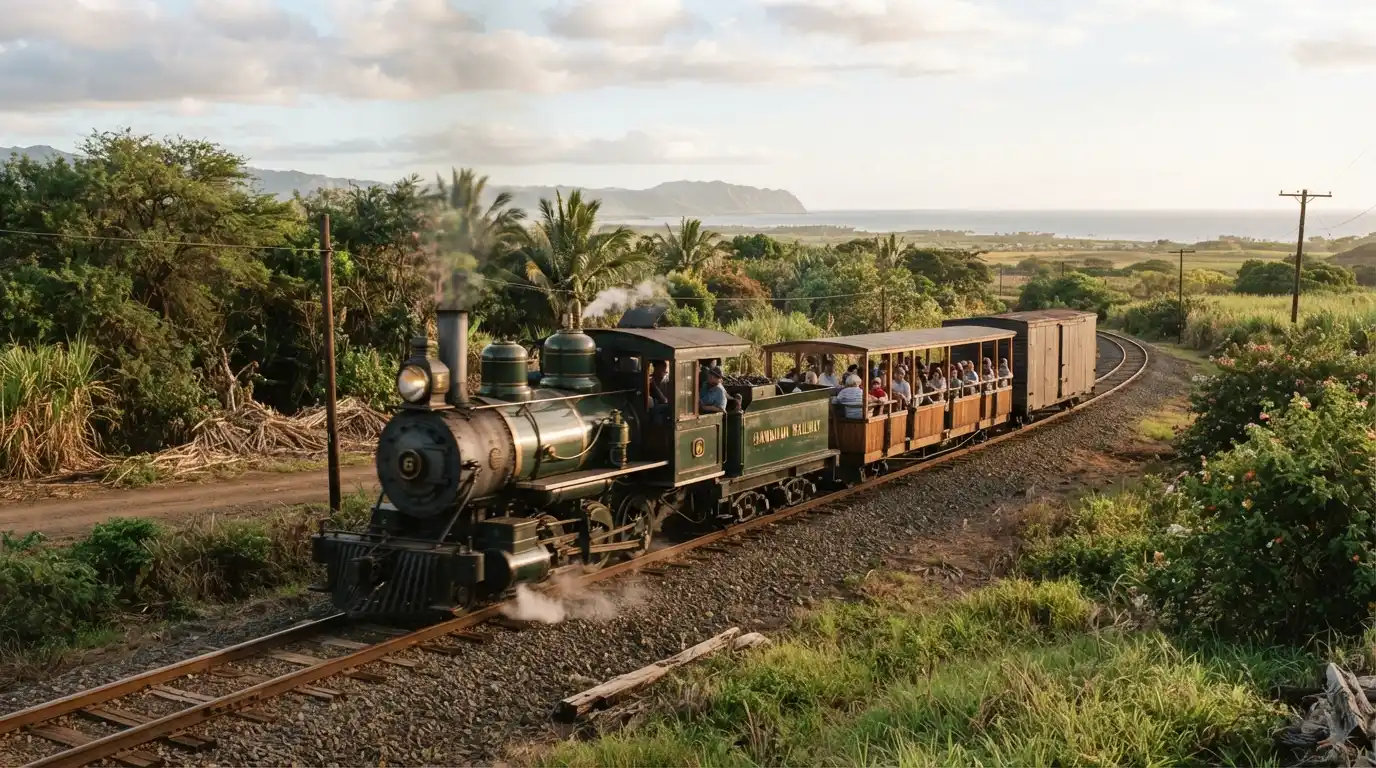
One of the defining moments in the Society’s history occurred in 1970 when the Waialua Agricultural Company planned to scrap an aging locomotive known as No. 6.
Rail enthusiast John Knaus became involved in efforts to save the locomotive. Rather than allowing it to disappear, local enthusiasts organized around the idea of preserving and restoring it.
The locomotive was eventually moved to Lualualei, where volunteers began the difficult restoration process. Skilled workers, including mechanics, welders, and other craftsmen, contributed their time and expertise.
The project demonstrated that preservation could be achieved through community involvement. The restoration of No. 6 became an important milestone and helped establish the foundation for a broader railroad preservation organization.
Formation of the Hawaiian Railway Society
In 1970, local railroad enthusiasts organized a Hawaii chapter of the National Railway Historical Society. The group continued developing its preservation mission during the following years.
The restoration of the historic locomotive provided an early focus for the organization. In 1971, the Hawaii chapter received its formal charter, strengthening its ability to pursue preservation activities.
By 1973, members adopted the name Hawaiian Railway Society. The new name more clearly reflected the organization’s focus on Hawaii’s railroad heritage.
The restoration of No. 6 was completed after extensive volunteer work. Its preservation became an early demonstration of the Society’s long-term commitment to protecting Hawaii’s railway history.
Preserving the Historic Railroad Right-of-Way
Preserving a railroad is about more than saving locomotives. Track, bridges, stations, maintenance facilities, passenger cars, freight cars, and the surrounding right-of-way all contribute to understanding how a railway operated.
The Hawaiian Railway Society worked to preserve a surviving section of the former Oahu Railway and Land Company route between the Ewa area and the leeward coast.
Parts of this historic corridor were placed on the State and National Registers of Historic Places during the 1970s. Recognition helped establish the historical importance of the remaining railway infrastructure.
The surviving corridor also provides an opportunity to experience the relationship between transportation history and Oahu’s landscape. Rather than viewing railway history only through photographs or written records, visitors can encounter portions of the physical environment in which the railroad once operated.
Moving the Society’s Collection to Ewa
As railroad operations at Lualualei changed, the Society needed a new base for its equipment and restoration work. The organization eventually established its operations near the historic OR&L right-of-way in Ewa.
Moving locomotives and railroad cars was itself a major logistical undertaking. Equipment accumulated by the Society included locomotives, freight cars, and other railroad machinery.
The Ewa location became an important center for continued preservation. From there, volunteers could maintain equipment while working on the surviving track and developing opportunities for public education.
Historic Locomotives and Railroad Equipment
The Society’s collection represents several different periods of Hawaiian railroad history. Steam locomotives demonstrate the technology used during the earlier railroad era, while diesel locomotives reflect later developments in railway operations.
Among the historically important equipment associated with the collection are former OR&L locomotives and railroad cars. Preserved equipment provides valuable insight into how railroads operated and the kinds of machinery required to maintain transportation networks.
The Society has also preserved passenger equipment, including historically significant cars associated with Oahu’s railroad era. Such cars help illustrate the difference between ordinary freight operations and the passenger experience of earlier generations.
Why Hawaiian Railway History Matters
Railroad history offers a different way to understand Hawaii. The islands are often presented primarily through tourism, beaches, resorts, and natural attractions, but their modern communities were also shaped by agriculture, transportation, industry, immigration, engineering, and military development.
The railway connects many of these subjects. A single rail line could carry sugarcane, workers, passengers, mail, machinery, military supplies, and everyday goods.
That makes railroad preservation valuable not only to railway enthusiasts but also to people interested in Hawaiian social and economic history.
Visitors interested in historical travel can also compare Hawaii’s railway story with destinations such as winter destinations across the USA, popular places in New York, and family destinations in Florida.
The Hawaiian Railway Society and Educational Preservation
One of the most valuable aspects of historic railways is their ability to make history tangible. A textbook can explain how transportation changed Hawaii, but standing beside an old locomotive creates a different kind of connection with the past.
Historic railway experiences can help younger generations understand mechanical engineering, industrial history, transportation planning, agriculture, and community development.
The Society’s preservation work therefore serves an educational purpose as well as a historical one. It keeps physical artifacts available for future generations while helping explain the people and industries behind them.
Railway Preservation as a Living Experience
Historic railway preservation is most effective when visitors can experience more than a static collection. A restored track, functioning locomotive, historic passenger car, and knowledgeable interpretation can collectively create a stronger understanding of the past.
This is one reason railway museums and heritage railways remain popular around the world. They combine transportation, history, engineering, scenery, and storytelling.
For travelers who enjoy historical and scenic destinations, PathVoice also features guides to Nova Scotia, West Virginia, and the Oregon Coast.
Hawaii’s Broader Railroad Heritage
The Hawaiian Railway Society’s story is only one part of a much larger railroad tradition. Railways operated on several Hawaiian islands, while numerous sugar plantations maintained private railway systems.
These plantation railways varied in size and purpose. Some were relatively small operations designed primarily to move sugarcane and plantation supplies, while larger systems became important components of regional transportation.
Railroads also supported military operations and industrial activity. As a result, Hawaii’s railroad history extends well beyond one company or one island.
The preservation of remaining artifacts is particularly important because much of the original railway infrastructure has disappeared. Surviving locomotives, cars, track, photographs, and documents can therefore provide evidence about an important period of Hawaiian development.
Connecting Railway History With Modern Travel
Modern visitors experience Oahu through highways, airports, buses, rental cars, and other transportation systems. These networks make it possible to move quickly between beaches, cultural attractions, neighborhoods, and resort areas.
The historic railway offers a different perspective. Instead of focusing only on speed and convenience, it highlights the landscape and infrastructure that supported earlier generations.
Travelers planning broader trips may also enjoy exploring Southern California, Key West, Texas, and San Juan and surrounding destinations.
What Makes the Society’s History Significant?
The Hawaiian Railway Society’s history can be understood through three interconnected themes: preservation, transportation, and community.
Preservation matters because historic railway equipment can easily disappear through deterioration or dismantling.
Transportation matters because railroads played a major role in connecting agricultural, residential, commercial, and military areas of Oahu.
Community matters because the Society itself grew from people who volunteered their time and skills to save equipment that might otherwise have been lost.
Together, these elements explain why the Society remains an important part of Hawaii’s heritage landscape.
A Journey Through Time
The history of the Hawaiian Railway Society begins with a much older story: the arrival and expansion of rail transportation in Hawaii. It continues through the growth of sugar plantations, the expansion of the Oahu Railway and Land Company, wartime transportation, the decline of traditional rail service, and the eventual preservation movement.
What began with efforts to save an aging locomotive developed into a broader mission to protect the physical remains and historical memory of Hawaii’s railroad era.
For visitors, the preserved railway provides a chance to see a side of Oahu that is easy to overlook. For historians and preservationists, it represents an important surviving connection to the island’s industrial past.
The story also demonstrates an enduring principle of historic preservation: sometimes a small group of committed people can make a lasting difference by recognizing the value of something before it disappears.
Final Thoughts
The Hawaiian Railway Society history is ultimately a story about keeping the past visible. Oahu’s railroads once carried agricultural products, passengers, freight, mail, equipment, and military supplies across the island. As transportation technology changed, much of that railway network disappeared.
Through restoration and preservation, the Society has helped retain important pieces of that history. Its locomotives, railroad cars, track, and educational activities offer a physical connection to the people and industries that shaped modern Hawaii.
For anyone interested in transportation history, industrial heritage, engineering, or a different perspective on Oahu, the Hawaiian Railway Society provides a fascinating journey through time.
Readers exploring other travel stories on PathVoice can continue with guides to California road trips, Ireland, and Kerala for more destination inspiration.