
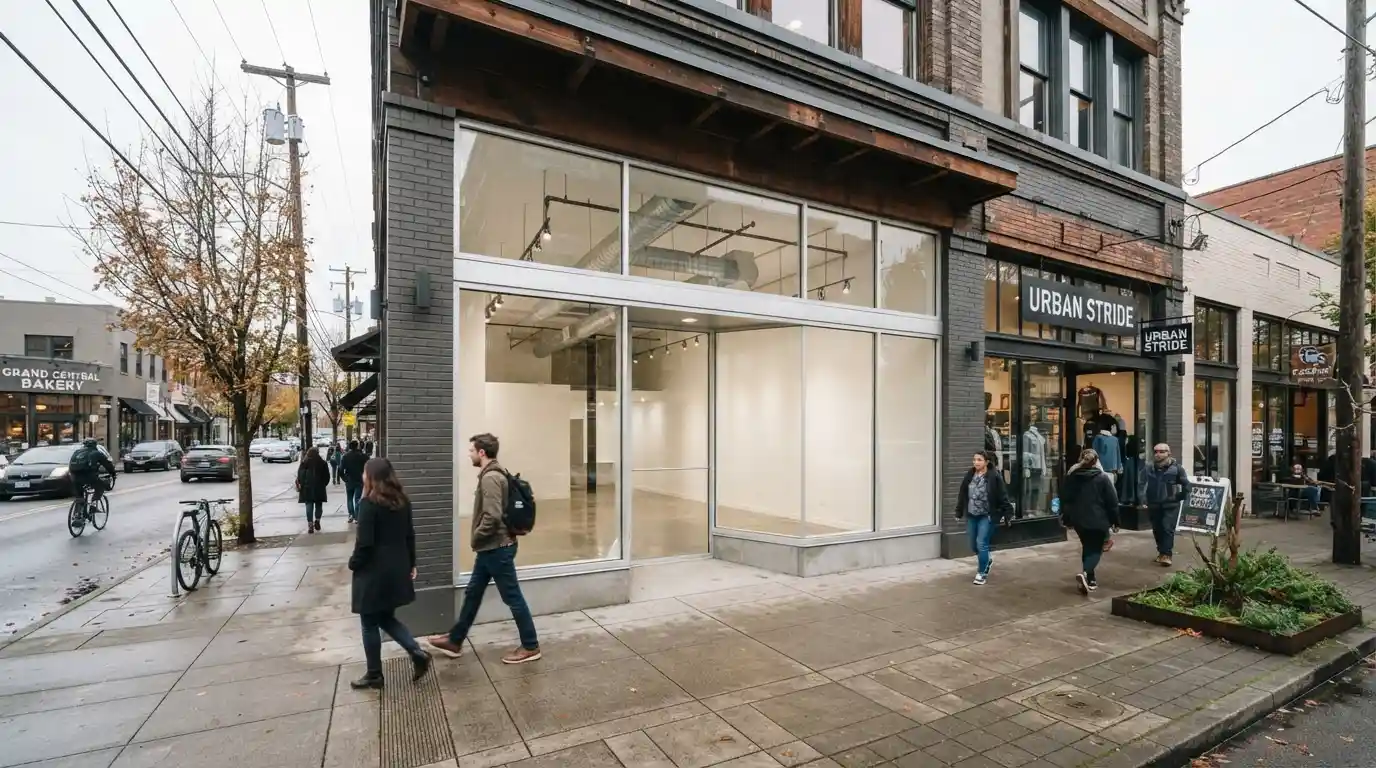
Portland remains a distinctive retail market because its neighborhoods have different customer profiles and commercial identities. A specialty retailer may benefit from a walkable neighborhood environment, while another business may need parking, larger floor space, strong vehicle access, or proximity to complementary businesses.
The bigger question is not simply whether Portland is a good place to lease retail space. It is whether a particular Portland location makes sense for your business model, target customer, budget, and growth strategy.
What Makes Portland an Interesting Retail Market?
Portland combines established commercial districts with independent businesses, restaurants, specialty retailers, service providers, and emerging entrepreneurial ventures. That creates opportunities for businesses that can identify a clearly defined customer base and choose a location that supports how those customers actually shop.
Retailers should also recognize that Portland is not one uniform market. Conditions can vary significantly between neighborhoods, commercial corridors, and suburban locations. A storefront that works well for an experiential retailer may not work equally well for a destination-based business.
This is especially important as traditional retail increasingly overlaps with ecommerce and changing consumer behavior. A physical store may now function as a showroom, pickup location, service center, community hub, or brand experience rather than simply a place where customers complete transactions.
Key Factors to Evaluate Before Leasing Retail Space
1. Location and Customer Access
Location should be evaluated according to the behavior of your target customer rather than reputation alone. A high-profile address can be expensive without producing the type of traffic your business needs.
Before signing a lease, examine pedestrian activity, vehicle access, parking availability, public transportation, nearby businesses, visibility from the street, and the surrounding customer profile.
For a local retailer, convenience may matter more than being in the most prestigious commercial district. For a destination retailer selling specialized products, customers may be willing to travel farther if the experience and product selection justify the trip.
2. Rent and Total Occupancy Costs
Monthly rent is only one component of the financial commitment. Prospective tenants should understand the full occupancy cost before comparing properties.
Depending on the lease structure, expenses can include common-area charges, property taxes, insurance, utilities, maintenance, repairs, security, improvements, signage, and other operating expenses.
A lower advertised rent does not necessarily mean a cheaper location if the space requires significant renovations or carries substantial additional expenses.
3. Size and Layout
The ideal square footage depends on the retail concept. A boutique retailer may prioritize an attractive customer-facing area, while an inventory-heavy business may need substantial storage and back-of-house space.
Consider the complete customer journey from entrance to checkout. A space that looks affordable on paper may become inefficient if customers cannot move comfortably through the store or employees have difficulty managing inventory.
Retail construction can also influence the total investment required to prepare a space. Businesses researching commercial development trends can review retail construction and modern shopping environments for additional perspective on how contemporary retail spaces are being designed.
Portland Neighborhood Considerations
One of the biggest advantages of Portland is the variety of commercial environments available to retailers. Different areas can support very different business concepts.
Pearl District
The Pearl District is associated with dense urban development, restaurants, residential buildings, offices, and a walkable environment. Businesses considering this type of location should carefully compare visibility, customer demographics, rent, and the competitive environment.
Alberta Arts District
Businesses with an independent, creative, specialty, or community-oriented identity may find neighborhood commercial corridors more relevant than traditional high-rent retail centers.
Northwest Portland
Northwest Portland provides another type of urban retail environment where neighborhood convenience and a mixture of residential and commercial activity can influence customer behavior.
The important lesson is that a retailer should not choose a neighborhood simply because it is considered popular. The location should match the company’s actual customer acquisition strategy.
How Retailers Can Balance Physical and Digital Sales
Modern retail leasing decisions should account for online business activity as well as physical foot traffic. A storefront can support online sales by creating a place where customers can see products, collect orders, receive service, or interact with the brand.
This makes digital strategy an important part of evaluating a physical retail investment. Businesses can explore ecommerce growth strategies to understand how online channels can complement a physical retail presence.
Retailers should also think about local search, social media, paid advertising, email marketing, online reviews, and customer retention. A store in a less expensive location can potentially build strong demand if the business has an effective digital acquisition strategy.
For broader context, digital marketing for business services provides useful insight into how businesses can connect their physical operations with digital customer acquisition.
Is Portland Suitable for Small Businesses?
Portland can be attractive to small businesses, but affordability and operational discipline matter. Entrepreneurs should calculate how much revenue the location needs to generate before treating a lease as financially sustainable.
A small retailer should create a realistic budget covering rent, payroll, inventory, utilities, insurance, marketing, maintenance, technology, taxes, and unexpected expenses.
It is also useful to compare the expected economics of several locations rather than becoming attached to one property. A less expensive storefront with strong customer access may ultimately make more sense than a premium location with substantially higher fixed costs.
Businesses can also study small-business digital marketing strategies as part of a broader customer acquisition plan.
Retail Leasing and Business Growth
A retail lease should support the company’s growth plan rather than restrict it. Before signing a long-term agreement, consider where the business is expected to be in three, five, or more years.
Important questions include:
- Will the space remain large enough if sales increase?
- Can the business operate profitably if customer traffic changes?
- Are there opportunities to expand or modify the premises?
- Does the lease provide appropriate renewal or expansion options?
- Can the business support the location during slower periods?
Businesses exploring long-term expansion can also examine ROI-focused business growth strategies and competitive advantage through digital marketing as part of their wider planning process.
Regulations, Permits, and Build-Out Requirements
Retail tenants should investigate zoning, permitted uses, signage requirements, accessibility requirements, building conditions, and necessary permits before committing to a property.
A space previously occupied by another retailer may still require modifications before it can support a new concept. Electrical work, plumbing, ventilation, accessibility improvements, fixtures, lighting, flooring, signage, and other changes can substantially affect the opening budget.
This is why tenant improvement negotiations should be considered before the lease is finalized. Depending on the property and landlord, the lease may address improvement allowances, construction responsibilities, approvals, and restoration obligations.
How Consumer Trends Affect Portland Retail
Retail customers increasingly expect convenience, useful experiences, strong product information, and flexible purchasing options. A physical store therefore needs to provide a reason for customers to visit rather than simply duplicate an online catalog.
Retailers can use physical locations to offer demonstrations, consultations, personalized service, product testing, workshops, events, and immediate fulfillment.
This trend is connected to broader changes in consumer product marketing strategies and the growing importance of consistent customer experiences across digital and physical channels.
Businesses can also examine consumer products and services trends when developing a retail proposition that differentiates the storefront from competing online options.
Marketing a Portland Retail Location
Signing a lease is only the beginning. Once the store opens, the business needs a strategy for generating awareness and repeat visits.
Local search optimization can help customers discover the business when they search for products or services nearby. Social media can showcase products and events, while email marketing can encourage existing customers to return.
Retailers can also create location-specific landing pages, publish neighborhood content, collaborate with complementary businesses, and promote local events.
For businesses developing a broader marketing plan, advanced digital marketing strategies and the future of digital marketing offer useful context for connecting customer acquisition with long-term growth.
When Portland Retail Leasing May Not Make Sense
Portland may not be the right choice for every retailer. A business with extremely thin margins may struggle with the combined cost of rent, labor, inventory, improvements, and marketing.
The same applies to businesses that require unusually large footprints or specialized facilities. If the available properties do not match operational requirements, forcing a concept into an unsuitable space can create unnecessary costs.
Businesses that depend heavily on destination traffic should also investigate customer travel patterns rather than assuming that general city activity will translate into store visits.
Before committing, compare the economics of Portland with alternative markets and consider whether your customer acquisition strategy works in each location.
How Digital Strategy Can Reduce Retail Location Risk
A strong digital presence cannot eliminate the risks associated with a retail lease, but it can help a business build demand before and after opening.
Retailers can use online advertising to test product demand, build email lists before launch, collect customer feedback, and measure which products generate the most interest.
Businesses can also evaluate digital marketing ROI and ecommerce marketing ROI to understand how marketing investment contributes to revenue.
This approach can make a physical storefront part of a larger customer acquisition system rather than an isolated expense.
Questions to Ask Before Signing a Portland Retail Lease
Before signing, prospective tenants should create a detailed checklist covering both the property and the lease.
- What is the complete monthly occupancy cost?
- What additional expenses are passed to the tenant?
- What improvements will the space require?
- Who pays for tenant improvements?
- What uses are permitted at the property?
- Are signage and exterior modifications restricted?
- How much parking and customer access is available?
- What businesses operate nearby?
- What is the expected customer profile?
- What happens when the initial lease term ends?
- Are renewal, expansion, or assignment provisions included?
- What happens if the business needs to leave before the lease expires?
What Retailers Should Measure After Opening
Choosing a location should be treated as an ongoing business decision. After opening, track measurable indicators rather than relying only on general impressions.
Useful metrics include store traffic, conversion rate, average transaction value, repeat purchases, customer acquisition cost, sales per square foot, online-to-store conversions, inventory turnover, and occupancy cost as a percentage of revenue.
These measurements can reveal whether the location is producing the expected commercial results and whether changes to pricing, merchandising, marketing, staffing, or operating hours are necessary.
Retailers interested in broader performance measurement can also explore ROI measurement for business services and digital marketing performance benchmarking.
So, Is Portland the Ideal Location for Your Retail Space?
There is no universal answer. Portland can provide opportunities for retailers that understand their customers, choose an appropriate neighborhood, control occupancy costs, and create a differentiated shopping experience.
At the same time, a recognizable city or popular neighborhood does not automatically guarantee retail success. The economics of the specific property matter, as do customer access, competition, regulations, build-out requirements, and the retailer’s ability to generate demand.
The strongest approach is to evaluate Portland as a collection of different retail opportunities rather than treating the entire city as one market. Compare several properties, calculate the complete cost of occupancy, investigate the surrounding customer base, and model conservative and optimistic sales scenarios before signing.
Finally, combine the physical storefront with a strong digital strategy. Retail success increasingly depends on how effectively a business connects its location, products, customer experience, ecommerce operations, and marketing channels.
For businesses considering a Portland storefront, the goal should not simply be finding any retail space for lease. The goal is finding a space that fits the business model well enough to support sustainable operations and future growth.










