
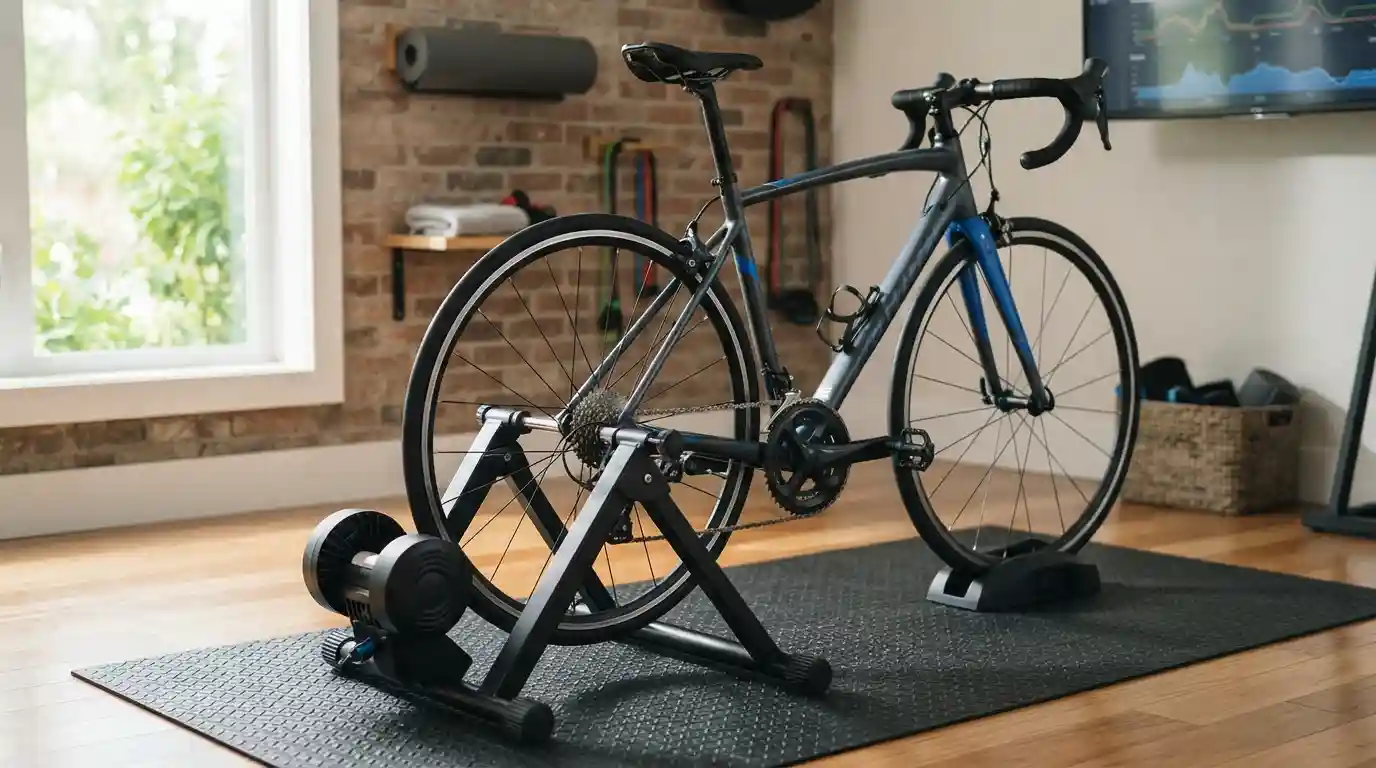
Its defining feature is a fluid-resistance system. As your pedaling speed increases, resistance rises, creating a more progressive feel than many basic indoor trainers. The design also folds for storage, making it useful for cyclists who need an indoor training setup without permanently dedicating an entire room to exercise equipment.
Although the Travel Trac Comp Fluid is no longer a current-production trainer, it can still attract interest from cyclists researching used equipment, comparing older fluid trainers, or trying to understand whether an existing unit is worth keeping. This guide explains what it offers, how it works, what to check before buying one used, and when a newer trainer may make more sense.
What Is the Travel Trac Comp Fluid Trainer?
The Travel Trac Comp Fluid Trainer is a rear-wheel bicycle trainer built for indoor cycling. Instead of riding on the road, you secure the rear portion of your bicycle in the trainer and allow the rear tire to contact a resistance roller.
The resistance mechanism uses fluid to create progressively harder resistance as you pedal faster. That characteristic makes a fluid trainer appealing to riders who want a more natural-feeling indoor workout rather than a completely fixed resistance level.
For cyclists building a regular exercise routine, an indoor trainer can complement other forms of training. You can combine indoor cycling with bodybuilding training, lean-body workouts, and morning jogging to create a more varied fitness schedule.
How Does a Fluid Bike Trainer Work?
A fluid trainer converts the movement of your bicycle’s rear wheel into resistance. When you pedal, the tire turns the trainer’s roller. That roller drives the internal resistance mechanism, and the fluid-based system progressively increases resistance as your speed rises.
This creates an important advantage for riders who want a workout that changes naturally with effort. Instead of manually selecting every resistance level, your gearing and pedaling speed influence how hard the trainer feels.
The result is particularly useful for endurance riding, steady-state workouts, warm-ups, and general cycling fitness. It can also provide a convenient indoor alternative when outdoor conditions make riding uncomfortable or impractical.
Key Features of the Travel Trac Comp Fluid
Progressive Fluid Resistance
The most important feature is the fluid-resistance system. Resistance increases as your wheel speed increases, giving the workout a progressive character that can feel closer to outdoor riding than some basic magnetic trainers.
Road-Like Riding Feel
Fluid resistance is often chosen because it provides a smoother transition as cycling speed changes. For riders who dislike the abrupt feeling of simple resistance settings, this can make indoor sessions more enjoyable.
Foldable Design
The trainer can be folded when it is not being used. That makes storage easier for cyclists who train indoors temporarily during bad weather or who do not want a permanent exercise setup.
Traditional Bicycle Compatibility
The Travel Trac Comp Fluid is a conventional wheel-on trainer rather than a direct-drive smart trainer. Your bicycle’s rear wheel remains installed while the bike is secured to the trainer.
Simple Indoor Training Setup
One of the appeal points of this type of trainer is simplicity. There is no need to build an elaborate indoor cycling environment simply to complete a basic workout. Once the bicycle is correctly secured and the roller is properly adjusted, you can begin riding.
Is the Travel Trac Comp Fluid Good for Indoor Cycling?
For straightforward indoor cycling, the Travel Trac Comp Fluid can still make sense if you already own one or find a well-maintained used unit at a reasonable price.
It is particularly suited to cyclists who want to maintain consistency when outdoor riding is difficult. Indoor training can help you maintain aerobic conditioning, keep your legs active, and build a routine that does not depend entirely on weather or daylight.
It can also work alongside other sports and fitness activities. If cycling is only one part of your routine, resources covering daring sports, women’s hockey, and cycling competitions can provide additional inspiration for staying active.
Travel Trac Comp Fluid for Winter Training
Winter is one of the clearest situations where an indoor bicycle trainer becomes useful. Snow, ice, heavy rain, freezing temperatures, and shorter daylight hours can all reduce the amount of time a cyclist wants to spend outside.
Instead of abandoning cycling completely, you can move selected sessions indoors. This can be especially valuable for riders preparing for spring events or trying to preserve their fitness through the colder months.
Indoor training can also complement seasonal travel planning. If your cycling goals include exploring destinations during warmer months, guides such as best places to visit in the USA in winter and Southern California during winter can help you think about when and where outdoor activities fit into your travel calendar.
What to Check Before Buying a Used Travel Trac Comp Fluid
Because the Travel Trac Comp Fluid is an older and discontinued model, buying used requires more care than purchasing a current trainer with active manufacturer support.
1. Inspect the Resistance Unit
Check the resistance mechanism for unusual noises, fluid leakage, damage, or signs of excessive wear. A trainer should operate smoothly rather than producing harsh mechanical sounds throughout a normal session.
2. Check the Roller
Inspect the roller surface for excessive wear. The roller makes direct contact with the bicycle tire, so its condition can affect both noise and riding performance.
3. Examine the Frame
Look carefully at the frame, hinges, feet, adjustment points, and mounting hardware. Avoid units with cracks, significant bending, or loose structural components.
4. Test the Bike Mounting System
Your bicycle should sit securely in the trainer. Check the mounting mechanism before riding hard, especially if the unit has been stored for an extended period.
5. Listen During a Workout
If possible, test the trainer before purchasing it. Listen for grinding, rattling, squealing, or other unusual sounds that become worse as resistance increases.
Does the Travel Trac Comp Fluid Work With Zwift?
The Travel Trac Comp Fluid is not a modern smart trainer with built-in electronic resistance control. That distinction matters if your goal is interactive indoor cycling.
Older wheel-on fluid trainers can potentially be used with cycling software when appropriate speed and cadence sensors are added, but the experience is different from a smart trainer that automatically communicates resistance changes to an application.
If your primary goal is online racing, automatic resistance control, structured power workouts, or highly accurate training data, a modern smart trainer may be a better long-term choice.
Travel Trac Comp Fluid vs. a Modern Smart Trainer
The biggest difference is technology rather than the basic concept of indoor cycling.
| Feature | Travel Trac Comp Fluid | Modern Smart Trainer |
|---|---|---|
| Resistance | Fluid-based progressive resistance | Electronically controlled resistance |
| Connectivity | Basic or sensor-dependent | Bluetooth/ANT+ connectivity is common |
| Virtual training | Limited compared with smart trainers | Designed for interactive platforms |
| Power control | Not electronically controlled | Often supports controlled power targets |
| Storage | Foldable wheel-on design | Varies by model |
| Best for | Simple indoor cycling | Connected and structured training |
If you only need a dependable way to ride indoors, the older trainer concept can still be useful. If you want a connected training ecosystem, however, newer equipment offers considerably more functionality.
How to Get a Better Workout on the Travel Trac Comp Fluid
A basic trainer does not prevent you from completing an effective workout. The quality of your session depends heavily on consistency, duration, intensity, and recovery.
- Warm up gradually: Begin with several minutes of easy pedaling before increasing intensity.
- Use your gears: Change gears to create different workload levels rather than relying on a single gear throughout the session.
- Maintain good form: Keep your cadence controlled and avoid unnecessary bouncing in the saddle.
- Stay hydrated: Indoor riding can produce significant heat because there is less natural airflow than outdoors.
- Use a fan: Strong airflow can make indoor sessions considerably more comfortable.
- Track your sessions: Record duration, perceived effort, cadence, or power when compatible sensors are available.
For cyclists interested in combining training with travel, the same consistency can make longer active trips more enjoyable. You can also explore tips for traveling the world and summer destinations for couples when planning trips around outdoor activities.
Can You Still Use One Today?
Yes, provided the trainer is in good working condition and your expectations match its capabilities.
The key is not to treat an older fluid trainer as if it were a current smart trainer. It can remain useful for basic indoor cycling, but it lacks many of the connected features available on newer equipment.
For someone who already owns a Travel Trac Comp Fluid, replacing it is not automatically necessary simply because it is an older design. If the frame is sound, the resistance unit works properly, and the bike mounts securely, it may continue to serve as a practical indoor training tool.
When Should You Choose a Different Trainer?
A newer trainer deserves serious consideration if you need automatic resistance changes, accurate power measurement, virtual-riding integration, structured workout control, or extensive app compatibility.
You may also want a replacement if an older unit develops significant mechanical problems or if replacement parts are difficult to locate.
The right decision depends on your training goals. A cyclist seeking simple exercise does not necessarily need the same equipment as someone training for competitive events.
Indoor Cycling and a Broader Fitness Routine
Indoor cycling works best when it is part of a balanced activity plan rather than the only form of movement. Riders can combine cycling sessions with strength training, mobility work, walking, jogging, and other recreational sports.
If you enjoy outdoor activities, you can also use indoor cycling as preparation for active trips. For example,