
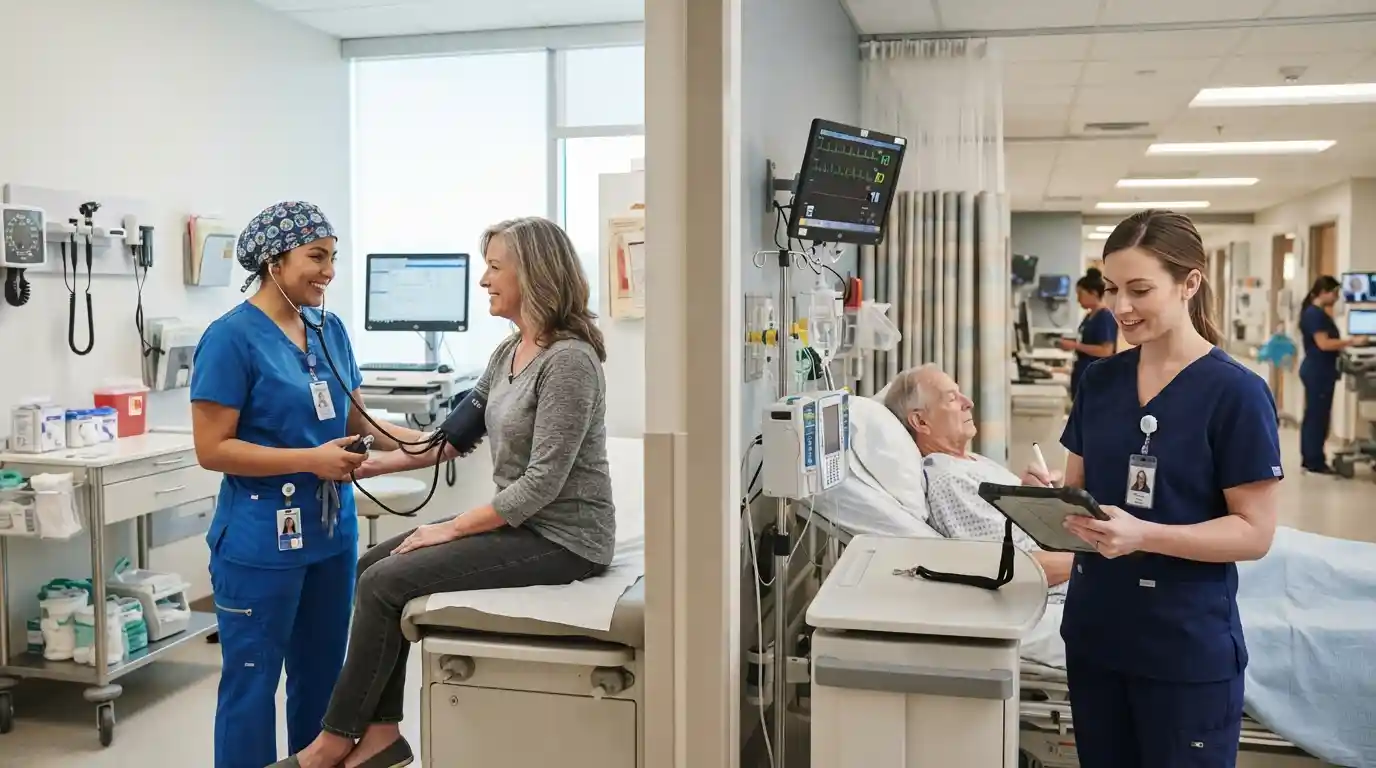
Medical assisting can provide an entry point into healthcare for people who want a combination of clinical and administrative responsibilities. Nursing, meanwhile, generally involves a broader scope of patient care, clinical decision-making, and opportunities for specialization. Understanding these differences can make it easier to identify which path fits your interests, educational plans, and preferred work environment.
Medical Assisting vs Nursing at a Glance
Medical assistants commonly work alongside physicians and other healthcare professionals in outpatient settings. Their responsibilities may include preparing patients for examinations, recording vital signs, assisting with basic clinical procedures, scheduling appointments, maintaining medical records, and handling other office-related tasks.
Nurses generally have a broader patient-care role. Depending on their license, education, specialty, and workplace, nurses may assess patients, administer medications, coordinate care, educate patients and families, monitor changes in health conditions, and collaborate with other members of a healthcare team.
The distinction is important because these careers are not simply different levels of the same job. They involve different scopes of practice, educational pathways, responsibilities, and professional opportunities.
What Does a Medical Assistant Do?
A medical assistant typically supports the daily operation of a medical practice. The role can combine front-office administration with clinical support, making it attractive to people who enjoy both patient interaction and organizational work.
Clinical responsibilities can include preparing examination rooms, taking patient histories, measuring vital signs, assisting healthcare providers during examinations, collecting specimens when permitted, and preparing patients for certain procedures.
Administrative responsibilities can include appointment scheduling, patient registration, maintaining records, processing paperwork, communicating with patients, and supporting the general workflow of a medical office.
Because medical assistants often work in outpatient environments, their schedules may be more closely connected to the operating hours of clinics and physician practices.
What Does a Nurse Do?
Nursing encompasses a much wider range of roles. Nurses can work in hospitals, outpatient clinics, long-term care facilities, specialty practices, community health programs, schools, rehabilitation settings, and other healthcare environments.
Depending on the nursing level and specialty, responsibilities may include patient assessment, medication administration, wound care, monitoring patient conditions, documenting clinical information, coordinating treatment, providing patient education, and supporting patients throughout different stages of care.
Nursing can also lead to specialized career paths. Professionals may eventually focus on areas such as emergency care, pediatrics, critical care, mental health, oncology, surgery, community health, or other specialties.
Education Requirements: Medical Assistant vs Nursing
One of the most significant differences between medical assisting and nursing is the educational pathway.
Medical assisting programs are generally shorter than nursing programs. Students may complete a certificate or diploma program, while some choose an associate-level medical assisting program. Coursework commonly covers subjects such as anatomy, medical terminology, clinical procedures, administrative procedures, and healthcare communication.
Nursing requires more extensive professional education. Depending on the nursing role, students may pursue an associate degree in nursing, a bachelor’s degree in nursing, or another approved educational pathway. Nursing education typically combines classroom instruction with clinical experiences.
Licensing and credentialing requirements also differ. Nursing roles are regulated through professional licensure, while medical assistant credentialing can vary according to employer, state requirements, and professional certification pathways.
Clinical Responsibilities and Scope of Work
Another major difference involves the scope of clinical responsibility.
Medical assistants support physicians, nurses, and other healthcare professionals, but they do not generally replace the professional responsibilities of licensed nurses or physicians. Their role is centered on assisting with permitted clinical and administrative tasks.
Nurses have a broader clinical role and are trained to evaluate patient needs, provide nursing interventions, monitor patient responses, and communicate important changes to the healthcare team.
For someone deciding between the two careers, thinking about desired responsibility is important. A person who prefers supporting clinical teams in an outpatient setting may find medical assisting appealing, while someone seeking a more extensive direct-patient-care role may want to explore nursing.
Work Environment Differences
Medical assistants frequently work in physician offices, outpatient clinics, specialty practices, and other ambulatory healthcare environments. The workplace can be relatively structured, with responsibilities divided between clinical support and administrative duties.
Nurses can work across a much wider range of healthcare environments. Hospitals may require nurses to work rotating shifts, weekends, holidays, or overnight schedules depending on the department.
Work environment therefore becomes an important consideration. Someone who prefers the routine of an outpatient practice may appreciate medical assisting, while someone interested in varied clinical environments may find nursing offers more possibilities.
Career Growth and Advancement
Career growth is another area where the two paths differ.
Medical assistants can build experience in areas such as specialty clinics, administrative healthcare roles, clinical support, patient coordination, and practice management. Additional education or certification may also help professionals pursue new responsibilities.
Nursing generally provides a broader ladder of professional advancement. Experienced nurses can pursue specialty certifications, leadership positions, advanced education, education-focused roles, care coordination, and other professional opportunities.
For people interested in healthcare leadership or advanced clinical roles, nursing can provide a foundation for continuing education and specialization.
Medical Assisting vs Nursing: Patient Interaction
Both professions involve significant interaction with patients, but the nature of that interaction can differ.
Medical assistants may greet patients, prepare them for examinations, collect information, explain basic administrative procedures, and help create an organized clinical experience.
Nurses often spend substantial time directly monitoring and caring for patients. They may communicate with patients and families about care plans, observe changes in condition, provide education, and coordinate different aspects of treatment.
If building patient relationships is a major career priority, it is worth considering the type and intensity of interaction associated with each profession.
Salary and Employment Considerations
Compensation varies by location, experience, employer, specialty, credentials, and level of responsibility. For that reason, salary should not be considered as a single fixed number when comparing medical assisting and nursing.
Nursing positions often have greater earning potential as professionals gain experience, specialize, accept additional responsibilities, or pursue advanced education. Medical assisting can provide a quicker entry into the healthcare workforce, which may be an important consideration for students who want to begin working sooner.
When evaluating compensation, prospective students should consider tuition costs, program length, certification or licensing requirements, work schedules, benefits, advancement opportunities, and local employment conditions rather than looking at salary alone.
Which Career Offers More Flexibility?
Flexibility depends largely on the type of flexibility you want.
Medical assisting may offer opportunities in outpatient environments with relatively predictable schedules. This can appeal to people who prefer regular clinic hours and a combination of clinical and administrative duties.
Nursing offers flexibility through the sheer number of specialties and workplace environments available. However, some nursing positions involve demanding schedules, shift work, weekends, and holidays.
Therefore, flexibility is not necessarily about one profession being universally more flexible. It depends on the setting, specialty, employer, and career stage.
Personality and Skills to Consider
Medical assisting may suit individuals who are organized, comfortable communicating with patients, detail-oriented, and interested in both administrative and clinical responsibilities.
Nursing may appeal to individuals who enjoy direct patient care, clinical problem-solving, teamwork, communication, and environments where patient needs can change quickly.
Strong communication skills are valuable in both professions. Healthcare workers also need professionalism, empathy, attention to detail, confidentiality awareness, and the ability to work effectively with a broader medical team.
Can Medical Assisting Lead to Nursing?
Medical assisting can provide exposure to the healthcare environment, but becoming a nurse requires completing the appropriate nursing education and meeting applicable licensing requirements. Working as a medical assistant does not automatically convert into a nursing license.
However, the experience gained in a medical practice can help someone become familiar with patient communication, healthcare terminology, clinical environments, documentation, and professional teamwork. These experiences may be useful when deciding whether to pursue further healthcare education.
How to Choose Between Medical Assisting and Nursing
Start by considering how quickly you want to enter the healthcare workforce. If a shorter educational pathway is important, medical assisting may deserve closer consideration.
Next, think about your desired level of clinical responsibility. If you want a broader patient-care role and are prepared for more extensive education and licensing requirements, nursing may align more closely with that goal.
Work environment should also influence the decision. Consider whether you prefer physician offices and outpatient clinics or whether you are interested in hospitals, specialty units, community settings, and other nursing environments.
Finally, investigate programs and employment opportunities in your area. Requirements, wages, job availability, and professional regulations can differ by state and employer.
The Luxurious Edge in Healthcare Careers: Looking Beyond Job Titles
The real advantage of either career is not simply the job title. It is the opportunity to build a sustainable professional future around your strengths, interests, and goals.
Medical assisting can offer an accessible route into healthcare while allowing professionals to develop practical experience in patient-facing and administrative environments. Nursing can provide a broader clinical pathway with opportunities for specialization, leadership, and continued education.
Both careers contribute to the healthcare system. The right choice depends on the responsibilities you want, the education you are prepared to complete, the environment in which you want to work, and the type of professional growth you envision.
Final Thoughts
Medical assisting vs nursing is ultimately a comparison between two distinct healthcare career paths rather than a simple question of which profession is better. Medical assistants often provide essential clinical and administrative support in outpatient practices, while nurses take on broader patient-care responsibilities across a wide range of healthcare environments.
Before making a decision, compare education requirements, licensing, daily responsibilities, workplace settings, career advancement, scheduling expectations, and local employment opportunities. A thoughtful comparison can help you select a healthcare pathway that fits your long-term professional goals.
For readers exploring related healthcare and professional topics, PathVoice also covers subjects ranging from the future of healthcare roles to mental health and wellness, providing additional context for understanding the evolving healthcare landscape.