
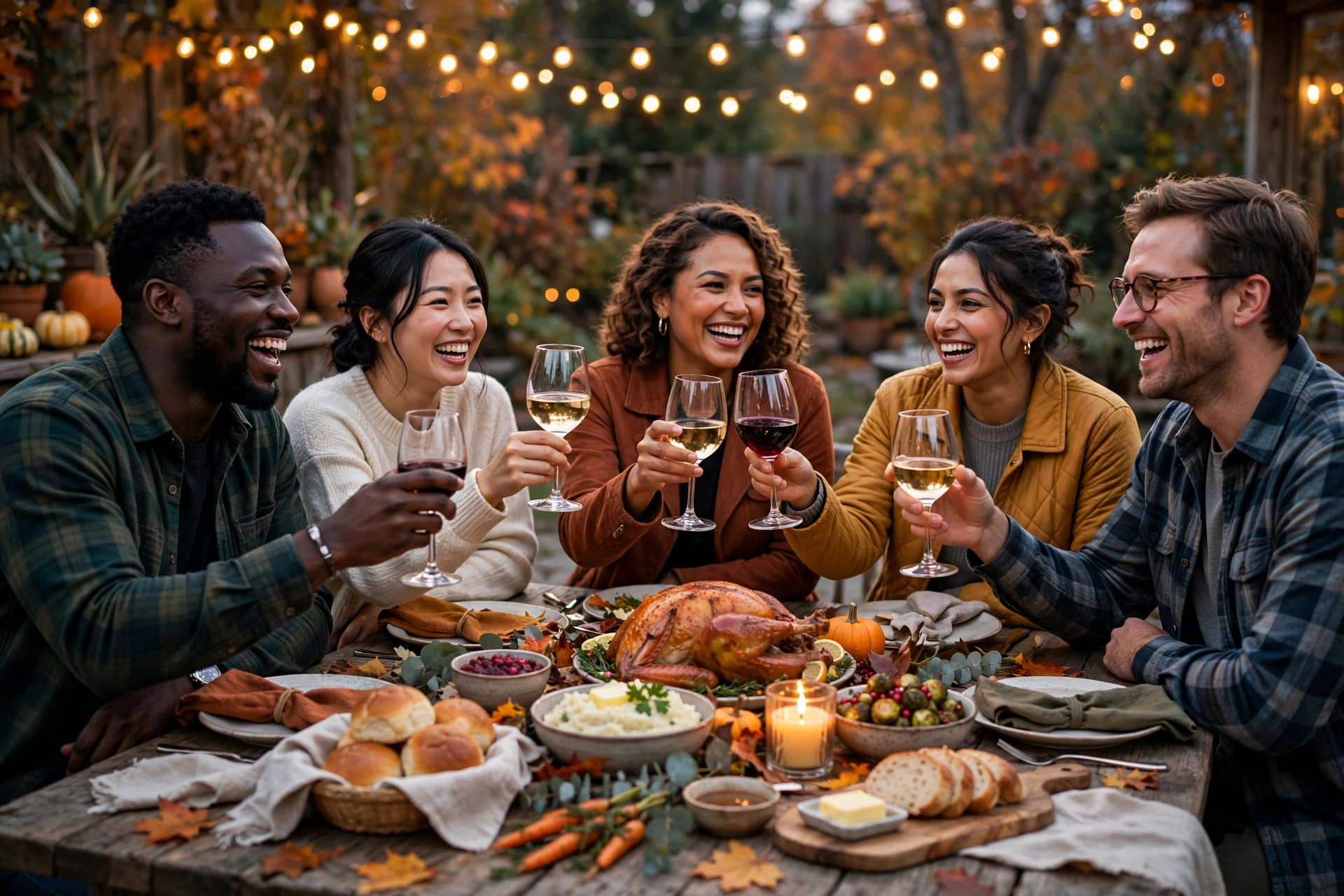
Learning how to build a chosen family is one of the most meaningful projects of adult life. The family you were born into gave you your start — but the family you choose gives you your home. A chosen family is the circle of friends who show up for the hard stuff, celebrate the good stuff, and love you with the steadiness people usually associate with blood. They are the ones with a key to your apartment and a standing invitation to your holidays.
You do not need a dramatic backstory to want this. Maybe your biological family is loving but distant, or difficult, or simply not enough. Maybe you just believe — correctly — that family is something you build, not just something you inherit. Whatever brought you here, this guide will show you how to intentionally create deep, family-like bonds: where to find your people, how to deepen friendships into kinship, the rituals that make it real, and how to sustain it for decades.
We will cover what chosen family actually means, the mindset shift it requires, where to find potential chosen family, how to turn good friends into family, the traditions and rituals that bind you, and how to navigate the tricky parts — including holidays, conflict, and the relationship with your biological family.
How to Build a Chosen Family: What It Really Means
A chosen family is not just a close friend group with a fancy name. It has specific qualities that distinguish it from even the best friendships — qualities worth understanding before you set out to build one.
Chosen family is intentional. Regular friendships often form by accident — proximity, convenience, shared activities. Chosen family is chosen: you look at someone and decide, consciously, “I want this person in my life permanently.” That intentionality changes everything. It means you invest when it is inconvenient, repair when it is hard, and show up when it would be easier not to. The commitment is the point.
Chosen family is unconditional-ish. No human love is truly unconditional, but chosen family aspires to the family standard: we do not cut people off over a bad year, a political disagreement, or a rough patch. The bond is meant to survive the things that end ordinary friendships. This does not mean tolerating abuse or endless one-sidedness — it means the default is repair, not replacement. Our guide to how to forgive someone who hurt you explores the inner work that makes this possible.
Chosen family is mutual:
This is the critical distinction from one-sided closeness. Chosen family is a mutual agreement — spoken or unspoken — that we are each other’s people. Both sides choose. Both sides invest. If you are doing all the choosing and they are just along for the ride, that is a close friendship, not a chosen family. The mutuality is what makes it feel like home.
Chosen family is practical. Families do things for each other: emergency contacts, hospital visits, help moving, childcare, elder care. Chosen family earns the name by showing up for the unglamorous logistics of life, not just the fun parts. If someone would drive to the ER at 2 a.m. for you — and you for them — you are probably already chosen family.
The Mindset Shift: From Finding Friends to Building Family
Most adults approach social life passively: they hope to meet people, enjoy the ones they click with, and let the rest happen. Building a chosen family requires flipping from passive to active — from finding to building. This shift has several parts.
Decide it matters. The first step is simply deciding that deep, family-like bonds are a priority worth real investment — of time, energy, vulnerability, and even money. In a culture that treats friendship as optional and secondary to romance and career, this decision is quietly radical. But everything flows from it: you cannot build what you have not decided to build. If you are starting from scratch socially, our guide to how to make friends as an adult covers the foundations.
Embrace slowness. Chosen family cannot be rushed. The trust, history, and mutual knowledge that make it feel like family accumulate over years, not weeks. This frustrates people who want deep connection immediately — but the slowness is the mechanism. Every shared crisis survived, every holiday celebrated, every ordinary Tuesday dinner adds a layer. You are building a cathedral, not pitching a tent.
Lead with vulnerability:
Family-level closeness requires family-level honesty — about your fears, your failures, your weirdness, your needs. Most adults keep friendships at a pleasant, surface level for years. Breaking through requires someone to go first: to share the real thing, ask the real question, admit the real struggle. Be that person. Vulnerability is the toll road to depth; there is no way around it, only through. The 36 questions for deeper connection are a structured way to accelerate this — surprisingly effective even between established friends.
Accept imperfection. Your chosen family will disappoint you sometimes, just as biological families do. Someone will forget the important thing, miss the crisis, say the wrong thing. The mindset shift is treating these as repairable ruptures rather than disqualifying failures. Families fight and stay; chosen families must learn the same skill. Our guide to repair attempts in relationships is the practical manual for this.
How to Build a Chosen Family: Where to Find Your People
You cannot choose family from people you never meet. The raw material of chosen family is simply: people you see repeatedly, in contexts that allow real connection. Here is where to look.
Start with who you already have. Before hunting for new people, audit your existing friendships. Is there a friend you already treat like family — the one you call in emergencies, the one who knows the real story? That person might be chosen family already, just unnamed. Naming it — “you are family to me” — can deepen the bond enormously. Sometimes building a chosen family is less about finding new people and more about promoting the right existing ones.
Follow your values, not just your interests. Shared hobbies make good friends; shared values make family. Look for people in value-aligned spaces: volunteer organizations, faith or spiritual communities, activist groups, parenting circles, creative collectives. When you meet someone whose why matches yours, the connection has family potential. Interest-based friendships are fun; value-based bonds endure.
Invest in repeated contact. The research is unambiguous: proximity and repetition build bonds. Join the thing that meets weekly, not the one-off event. The running club, the monthly dinner group, the coworking space, the neighborhood association — anywhere you will see the same faces for months. Chosen family is built in the boring middle of repeated contact, not in single magical encounters. If you recently relocated, our guide to how to rebuild your social life after moving cities is the full playbook.
Be the organizer:
Do not wait to be invited into someone else’s circle — build your own. Host the monthly dinner, start the group chat, plan the weekend trip. Organizers become the gravitational center of social circles, and gravitational centers accumulate chosen family naturally. Our how to host a dinner party guide makes the hosting part easy; the consistency is up to you.
Look sideways, not just forward. Potential chosen family is often hiding in plain sight: the coworker you actually like, the neighbor you wave at, the friend-of-a-friend you keep enjoying at parties. The upgrade from acquaintance to family member usually just requires one person to suggest the next step: coffee, dinner, the honest conversation. Be the one who suggests it.
Turning Good Friends Into Family: The Deepening Process
Meeting people is step one. The real art is deepening — moving a friendship across the threshold into family. This happens through specific, repeatable actions.
Increase the frequency and lower the stakes. Family-level closeness comes from ordinary time together, not just special occasions. Shift from “let us get dinner sometime” to “come over for tacos Tuesday.” The casual, recurring, low-effort hangout is the atomic unit of chosen family. It says: you are part of my regular life, not my special-occasions life.
Share the unglamorous parts of life. Let them see the messy house, the bad day, the takeout containers. Invite them into the real — the sick days, the moving days, the “can you sit with me while I wait for the test results” days. Vulnerability about logistics (“I need help”) builds trust faster than vulnerability about feelings alone, because it creates mutual dependence — the actual fabric of family.
Create shared history deliberately:
Families are built on shared stories: the disastrous camping trip, the legendary Thanksgiving, the inside jokes nobody else understands. Manufacture these on purpose. Take the annual trip. Start the ridiculous tradition. Do the thing that will become “remember when…” in five years. Shared history is the compound interest of relationships.
Show up for the hard stuff — every time. This is the non-negotiable core. When their parent dies, you are there. When they lose the job, you show up with food and no agenda. Crisis presence is the ultimate proof of family-level commitment, and it is almost always reciprocated. People remember who came. Be the one who comes.
Say it out loud. At some point, name what is happening: “You are family to me.” “I do not know what I would do without you.” “You are my emergency contact and my favorite person.” These declarations feel vulnerable, but they transform the relationship by making the implicit explicit. Many chosen families trace their true beginning to one such conversation. Do not assume they know. Tell them.
Rituals and Traditions: What Makes It Feel Like Family
Biological families have decades of rituals holding them together — the holiday routines, the birthday traditions, the way Dad always burns the toast. Chosen families need to build these from scratch, and the building itself is bonding.
Claim the holidays. Holidays are where chosen family becomes most real — and most healing for people whose biological holidays are difficult. Friendsgiving is the classic, but do not stop there: a chosen-family Christmas Eve, a New Year’s Day brunch, a Fourth of July tradition. The key is recurrence: same people, same roughly-planned event, every year. After three years, it is not an event anymore — it is a tradition, and traditions are family infrastructure. For navigating the biological-family side of holiday choices, see our holiday boundaries guide.
Create weekly or monthly rhythms. The Sunday dinner, the first-Friday drinks, the monthly hike — a standing date that survives busy seasons. Put it in the calendar as recurring. These rhythms do the quiet maintenance work that keeps chosen family close through life’s chaos, the same way weekly check-ins maintain couples.
Mark the milestones. Biological families mark births, graduations, and milestones automatically. Chosen families must do it deliberately — and should. Celebrate the promotion, the sober anniversary, the new apartment, the hard-won milestone nobody else understands. Being the people who notice is a family function. Keep a shared calendar of important dates (our remembering birthdays system works for chosen family too).
Develop the lore. Every family has lore — the stories told and retold, the nicknames, the catchphrases, the legendary disasters. Cultivate yours deliberately. Reference the stories. Use the nicknames. The lore is the family’s shared mythology, and it is what makes a group of friends feel like a tribe.
Navigating the Tricky Parts
Chosen family is beautiful, and it is not without complications. Here is how to handle the common ones.
Your biological family’s reaction. Some biological families feel threatened by chosen family — as if love were a finite resource. It is not, but the feeling is real. Handle it with reassurance, not apology: “I love you, and I also have close friends who are like family to me. Both can be true.” You do not need permission. If holidays become a battleground, our family drama at holidays guide has survival strategies.
Uneven investment. In any chosen family, someone is always the organizer, the rememberer, the reacher-outer. If that is you, watch for burnout and resentment. It is okay to say, “I need you all to plan the next one” or “I need more reciprocity here.” Chosen family should be mutual — if it is not, name it kindly before resentment names it for you. The expressing needs skills apply fully here.
Conflict within the circle. When two chosen family members clash, the whole circle feels it. Resist the urge to take sides immediately; instead, encourage direct conversation between them. You can be a bridge without being a judge. And if the conflict is with you, repair fast — chosen family is too valuable to lose to pride. The fight fair rules were made for exactly this.
Life changes the shape.
People move, marry, have kids, change. Chosen family, like all families, must flex. The weekly dinner might become monthly; the group chat might go quiet for a season. Flexibility is not failure — it is how families survive decades. The ones that last are the ones that bend without breaking, as our guide to friendships across life stages explores.
Grief and loss. Chosen family members get sick, drift away, and die — and the grief is real family grief, sometimes without the social recognition biological family gets. Honor it fully. You do not need a blood tie for your loss to matter. And consider the practical side: chosen family members can be designated as emergency contacts, medical proxies, and will beneficiaries. Making it official is the ultimate chosen-family act.
Final Thoughts
Learning how to build a chosen family is really about deciding that deep, committed, family-level friendship is worth building on purpose — then doing the unglamorous work: showing up repeatedly, being vulnerable first, creating rituals, surviving crises together, and saying “you are family to me” out loud. It takes years. It is worth every one of them.
So look at your life and identify the candidates — the friend who already feels like family, the neighbor you keep meaning to know better, the coworker who gets you. Then take one step this week: the invitation, the honest conversation, the standing dinner date. Families are not found. They are built, one intentional act at a time. Start building yours.
Related reading: habits for a happier life.
Keep reading: overcome loneliness.
You cannot build a chosen family on a shaky foundation — sometimes you must end toxic friendships first to make room for the people who feel like home.










