
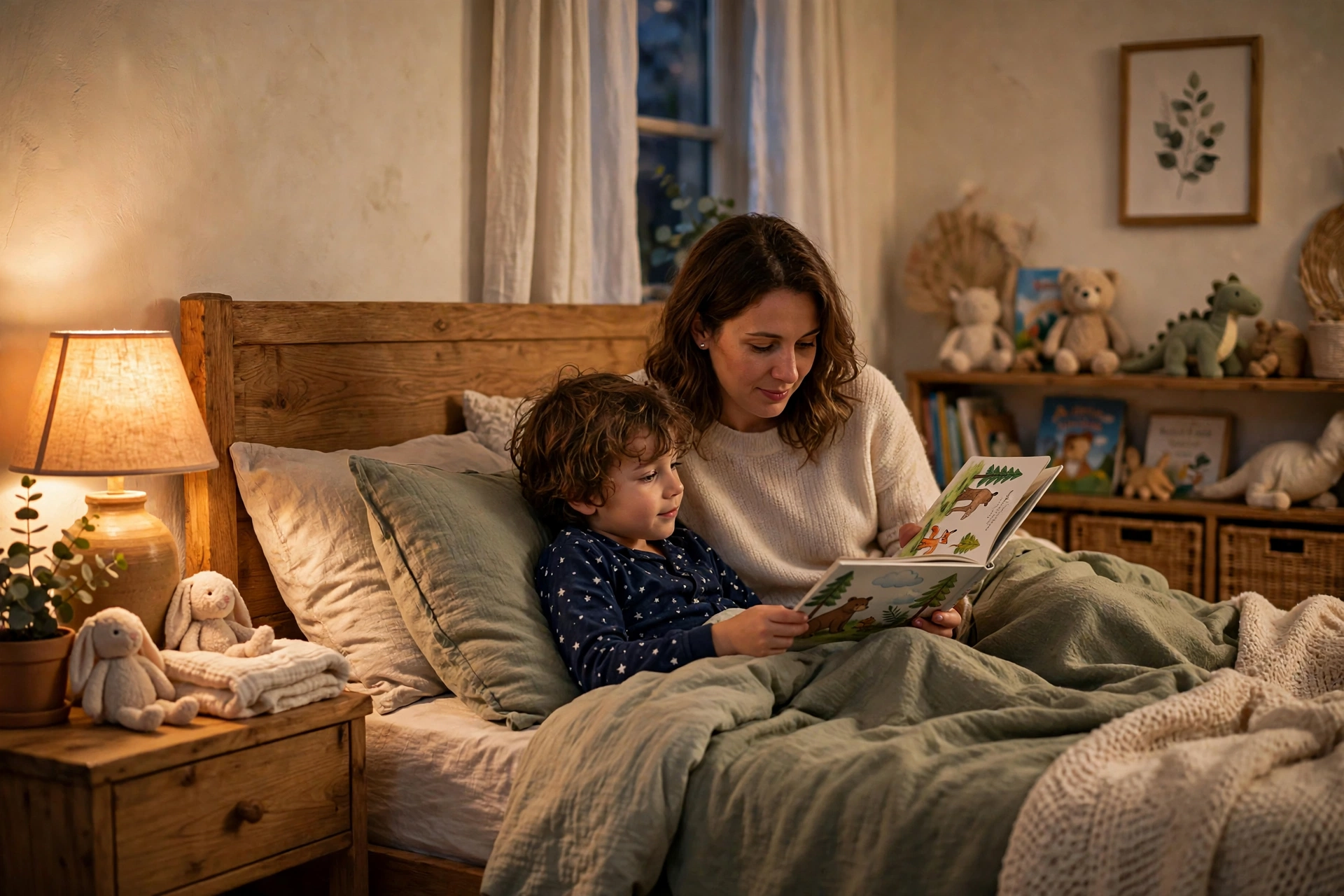
If bedtime at your house feels like a nightly negotiation summit — one more story, one more drink of water, one more trip to the bathroom — you are not alone. The secret to peaceful evenings is not stricter rules; it is a consistent bedtime routine for kids that signals to their brains and bodies that sleep is coming.
This guide gives you a calm, realistic nighttime plan — plus sample schedules by age and fixes for the most common bedtime battles — that real parents can actually follow.
Why a Bedtime Routine Works So Well
Children thrive on predictability. A consistent sequence of calming activities lowers cortisol, eases separation anxiety, and creates powerful sleep cues: when the same steps happen in the same order each night, your child’s brain starts producing melatonin before their head hits the pillow.
Research consistently links regular bedtime routines to faster sleep onset, fewer night wakings, and better daytime behavior. It is one of the highest-impact parenting habits you can build — and a beautiful part of caring for kids with intention.
The Ideal Bedtime Routine: 7 Calm Steps
Aim for 30–45 minutes total. Keep the order identical every night — consistency matters more than perfection.
Step 1: Wind Down Active Play (30–45 Minutes Before Bed)
Transition from high-energy to calm. Put away stimulating toys — even fun brother and sister playing with toys time should wind down now — and switch to quiet activities like coloring or puzzles.
Step 2: Warm Bath or Wash-Up (25 Minutes Before Bed)
A warm bath relaxes muscles and the subsequent drop in body temperature naturally promotes sleepiness. No time for a full bath? A warm washcloth on the face and hands works too.
Step 3: Brush Teeth and Pajamas (20 Minutes Before Bed)
Keep it businesslike and boring — this is a transition, not playtime. Let toddlers “help” to build independence without extending the process.
Step 4: Quiet Connection Time (15 Minutes Before Bed)
This is the heart of the routine. Cuddle, talk about the day’s best moment, or share three gratitudes. Filling your child’s emotional cup now prevents attention-seeking later.
Step 5: Read Together (10 Minutes Before Bed)
One or two short books — your child chooses from a small pre-selected set to avoid stalling. Reading together builds language skills and creates cherished memories.
Step 6: Lights Low, Final Reassurance
Dim the lights, offer a final hug, and use the same loving phrase every night (“Sleep tight, I love you, see you in the morning”). Ritual phrases become powerful sleep cues.
Step 7: Leave Calmly and Confidently
Say goodnight once, warmly, and leave. Lingering or repeated returns teach kids that protest extends your stay. Confidence is contagious — if you act like sleep is safe and normal, they will believe it.
Sample Bedtime Schedules by Age
Toddlers (1–3 Years): 7:00–7:30 PM Bedtime
Young toddlers need 11–14 hours of total sleep. Start the routine by 6:45 PM. Keep steps short and physical — rocking, patting, and simple books. Expect some protest; stay boring and consistent.
Preschoolers (3–5 Years): 7:30–8:00 PM Bedtime
Preschoolers need 10–13 hours. This age brings big imaginations — and big stalling tactics. Offer limited choices (“two books or three?”), use a visual routine chart, and address fears (monsters, darkness) during the day, not at bedtime.
School-Age Kids (6–12 Years): 8:00–9:00 PM Bedtime
School-age kids need 9–12 hours. Shift toward independence: they can shower and read solo, but keep the connection step — a few minutes of chatting about their day keeps you close as they grow.
Fixing the Most Common Bedtime Battles
“I’m Not Tired!”
Move bedtime 15 minutes earlier — overtired kids actually fight sleep harder. Ensure enough daytime physical activity and no naps past mid-afternoon for preschoolers.
The Endless Requests (Water, Bathroom, Hugs)
Build one “bedtime pass” into the routine: a single ticket for one extra request. Once it is used, requests wait until morning. Most kids stop cashing it in within a week.
Stalling With Questions and Fears
Answer briefly, reassure once, and keep the lights low. Save big conversations for daytime — bedtime curiosity is usually a delay tactic, not genuine inquiry.
Early Morning Wake-Ups
Use an “okay to wake” clock that changes color at an acceptable hour. Treat 5 AM wake-ups as a scheduling issue: bedtime may need to shift later, or room darkening may help.
Tips to Make Any Routine Stick
- Start on a weekend: Launch the new routine when nobody is rushed or exhausted.
- Keep wake time consistent: A steady morning anchor — ideally followed by healthy breakfast ideas — regulates the whole sleep cycle better than bedtime alone.
- Dim the whole house: Lower lights 30 minutes before bed to boost natural melatonin.
- Cut screens an hour before: Blue light and exciting content both delay sleep. Replace with calm play.
- Stay calm yourself: Your serenity sets the tone. Think of bedtime as unwinding at the beach — slow, warm, and unhurried.
- Be consistent for 2 weeks: Most routines click within 10–14 consistent nights. Do not quit on night four.
The Bottom Line
A calm bedtime routine for kids is not about perfection — it is about predictability, connection, and calm. Thirty to forty-five minutes of the same soothing steps each night teaches your child’s body when to sleep and their heart that they are safe. Pair restful nights with active days — even morning jogging energy for older kids — and the whole family sleeps better. Start tonight; future well-rested you will be grateful.










