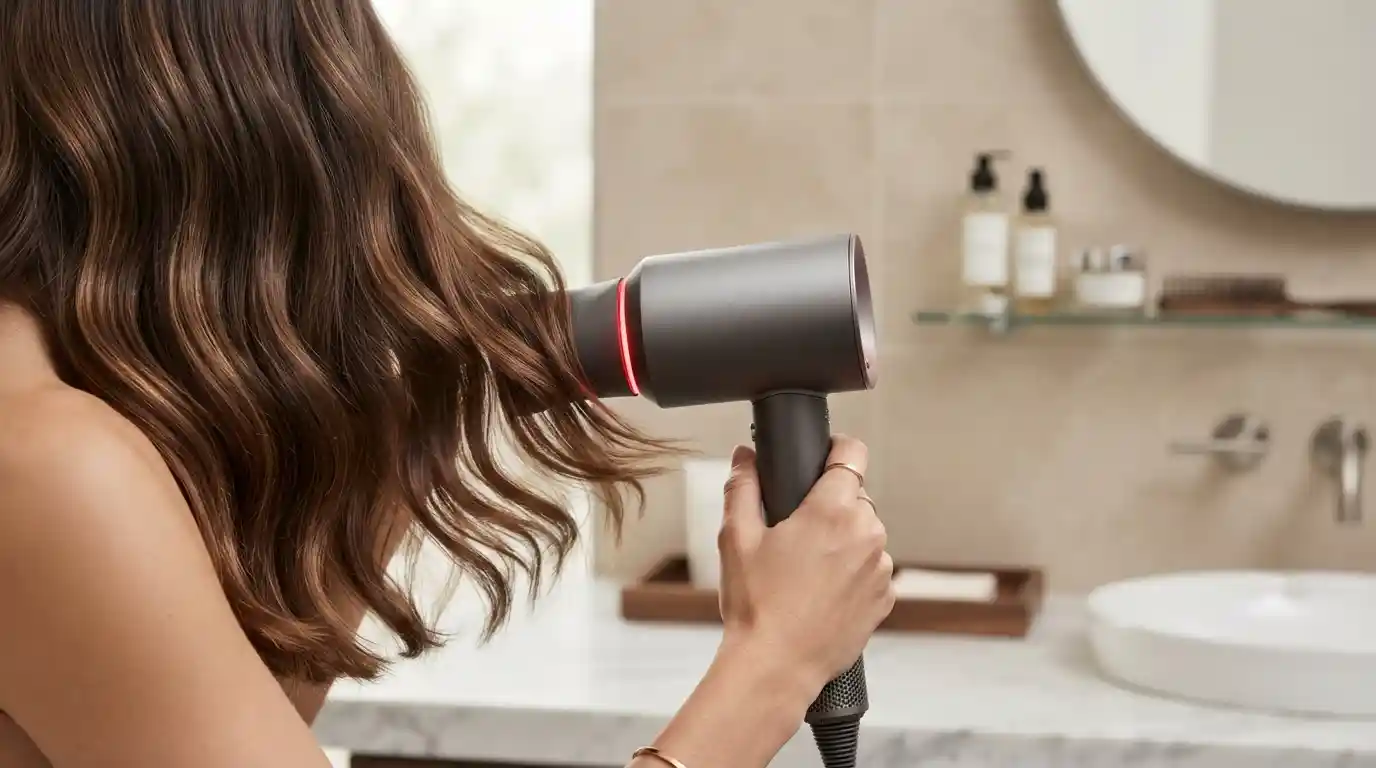
A red light technology hair dryer combines modern drying technology with red or infrared light-based features designed to make everyday hair care more efficient. Unlike a conventional dryer that mainly relies on heated airflow, newer models may combine controlled heat, airflow, ionic technology, and light technology in a single styling tool.
What Is a Red Light Technology Hair Dryer?
A red light technology hair dryer is a hair-drying device that incorporates red or infrared light technology into its drying system. Depending on the model, the light may be combined with airflow and controlled heat to support a faster and more comfortable styling routine.
The terminology can be confusing because manufacturers may use terms such as red light, infrared light, infrared heating, photobiomodulation, or red light therapy differently. These terms should not automatically be treated as interchangeable. Some products primarily use infrared technology as part of their heating system, while others incorporate dedicated light sources intended to provide additional hair or scalp benefits.
That distinction matters when comparing products. Instead of choosing a dryer simply because the packaging mentions red light, look at the actual specifications, heat controls, airflow settings, attachments, and the way the manufacturer describes the light technology.
How Does Red Light Technology Work in a Hair Dryer?
The basic purpose of any hair dryer is to remove moisture from wet hair using airflow and heat. A red light or infrared model adds another technological component to that process.
Infrared-based systems are designed to transfer energy efficiently and can distribute heat differently from conventional heating elements. Some manufacturers also incorporate specific wavelengths of red or near-infrared light into the appliance. These features are marketed as a way to support hair appearance while reducing reliance on excessive surface heat.
The practical result depends heavily on the individual dryer. A well-designed device should still provide adjustable temperature and airflow controls because light technology does not eliminate the need for sensible heat management.
Potential Benefits of a Red Light Hair Dryer
1. Faster and More Efficient Drying
One of the most appealing reasons to consider an advanced hair dryer is efficiency. Powerful airflow combined with carefully managed heat can shorten drying sessions, which is particularly useful for people with thick, long, or dense hair.
Some infrared systems are designed to distribute heat more efficiently through the hair rather than concentrating excessive heat on the outer surface. However, drying performance still varies between models, so motor power and airflow design remain important specifications.
2. Better Heat Management
Repeated exposure to excessive heat can contribute to dryness, roughness, and breakage. A modern dryer with multiple temperature settings can make it easier to use the minimum amount of heat needed for effective drying.
Intelligent heat control is particularly useful because it can help prevent the dryer from continuously exposing the same area of hair to very high temperatures. For people who blow-dry frequently, this feature may be more important than simply choosing the device with the highest wattage.
3. Smoother-Looking Hair
Many advanced hair dryers combine light or infrared technology with ionic technology. Negative ions can help reduce static and make hair appear smoother during styling.
This can be especially useful for people who regularly deal with frizz. The combination of appropriate airflow, controlled heat, and ionic technology can produce a more polished finish without requiring as much additional styling.
If you are interested in broader beauty technology, you may also want to explore our guide to modern beauty routines and innovative beauty technology.
4. Support for Dry or Damaged Hair
People with dry or heat-stressed hair should pay close attention to temperature control. The main advantage of an advanced dryer may not necessarily come from the red light itself, but from the appliance’s ability to dry efficiently while reducing unnecessary heat exposure.
Using a lower temperature, keeping the dryer moving, and avoiding prolonged exposure to one section of hair remain important regardless of the technology inside the appliance.
5. Potential Scalp and Hair-Follicle Applications
Red light technology is also associated with photobiomodulation, an area of research involving specific wavelengths of light and biological tissues. Some dedicated red-light devices are designed specifically for scalp and hair-related applications.
However, consumers should distinguish between dedicated light-therapy devices and hair dryers that happen to include red or infrared light. The amount of light, wavelength, exposure time, distance from the scalp, and device design can all influence what the technology is capable of doing.
A hair dryer should therefore not automatically be considered a replacement for a dedicated hair-loss treatment device simply because it uses red light.
Red Light Hair Dryer vs. Traditional Hair Dryer
A conventional hair dryer generally focuses on three core functions: airflow, heat, and temperature control. A red light technology model can add infrared or red-light functionality, ionic technology, intelligent heat management, and specialized attachments.
The difference is best understood by looking at the overall system rather than one feature.
- Traditional dryer: Primarily uses heated airflow to remove moisture.
- Infrared dryer: Uses infrared technology as part of the heating and drying process.
- Red light dryer: May incorporate dedicated red-light technology alongside drying functions.
- Advanced ionic dryer: Uses negative ions to help reduce static and improve the appearance of smoothness.
- Smart dryer: May automatically regulate temperature or combine several technologies.
If you are comparing technology-focused consumer products more broadly, our guide to choosing gadgets that suit your budget can help with the same value-versus-features approach.
Important Features to Look For
Multiple Heat Settings
Temperature flexibility is one of the most important features. Fine or fragile hair may require a gentler setting, while thick hair may need stronger airflow and moderate heat.
Multiple Speed Settings
Different airflow speeds give you more control during the drying and finishing stages. Higher airflow can help remove moisture quickly, while lower airflow can be useful when shaping or finishing the hairstyle.
Intelligent Heat Control
Advanced temperature management can help reduce unnecessary heat exposure. If you use a dryer frequently, this feature may have more practical value than decorative technology.
Ionic Technology
Ionic systems are commonly included in premium dryers because they can help manage static and improve the appearance of frizz-prone hair. When combined with controlled airflow, they can make the final styling process easier.
Attachments
Look for useful attachments rather than simply counting how many accessories come in the box. A concentrator nozzle can help direct airflow, while a diffuser can be useful for curly or wavy hair.
Consumers interested in other specialized equipment can also explore our hair technology guide alongside other technology-focused articles on PathVoice.
Weight and Ergonomics
A powerful motor is not very useful if the dryer becomes uncomfortable after several minutes. Lightweight construction, a balanced handle, accessible controls, and a practical cord can make a major difference during everyday use.
Noise Level
Noise is another overlooked factor. People who dry their hair early in the morning, late at night, or in shared living spaces may prefer a model engineered for quieter operation.
How Much Does a Red Light Technology Hair Dryer Cost?
Prices vary considerably depending on the motor, materials, light technology, heat controls, attachments, and brand positioning.
Entry-Level Models
Lower-priced models may provide basic infrared or red-light functionality alongside conventional drying features. These can be suitable for buyers who want to experiment with the technology without making a major investment.
Mid-Range Models
Mid-range dryers often add stronger motors, improved temperature controls, multiple speeds, ionic technology, and better construction. This category can provide a balance between advanced features and cost.
Premium Models
Premium devices may include sophisticated heat management, high-performance motors, specialized light systems, multiple attachments, lightweight construction, and travel-friendly designs. The higher price can make sense for people who use a dryer frequently and value convenience, performance, and additional controls.
When comparing premium technology products, focus on measurable features rather than marketing language. Our technology innovation guide provides another example of why understanding the actual technology matters when evaluating modern products.
Is a Red Light Hair Dryer Worth It?
The answer depends on what you expect from the device.
If your primary goal is simply to dry your hair quickly, a high-quality conventional or infrared dryer with strong airflow and good temperature control may already meet your needs.
If you regularly style your hair and want additional features such as ionic technology, intelligent heat management, lightweight construction, and red or infrared light functionality, an advanced model may provide more value.
The most important point is to avoid buying the product solely because of the words red light. The complete design matters. Motor performance, airflow, heat regulation, ergonomics, attachments, warranty, and build quality should all be considered.
Who May Benefit Most?
A red light technology hair dryer may be particularly appealing to:
- People who blow-dry their hair regularly.
- People who want better temperature control.
- Users dealing with frizz and static.
- People who want a lightweight styling tool.
- Users interested in emerging beauty technology.
- Travelers looking for compact styling equipment.
- Consumers who want several styling technologies in one device.
For readers interested in technology across different areas, our technology trends guide explores how emerging innovations are changing everyday products and experiences.
Who Should Be More Cautious?
People with significant hair loss, scalp conditions, or persistent changes in hair density should not assume that a red light hair dryer is a medical treatment. A styling appliance and a purpose-built therapeutic device are not necessarily equivalent.
Likewise, consumers with very fine or fragile hair should prioritize temperature control and gentle airflow. More powerful does not automatically mean better for every hair type.
If you are researching products that combine technology with personal care, compare their actual specifications and intended use instead of relying entirely on promotional claims. Our overview of scientific technologies in everyday life provides useful broader context for understanding how emerging technology becomes part of consumer products.
Tips for Using a Red Light Hair Dryer Safely
- Start with a moderate temperature rather than maximum heat.
- Keep the dryer moving instead of concentrating heat on one area.
- Use the appropriate attachment for your hair type and styling goal.
- Hold the dryer at a sensible distance from the scalp and hair.
- Use a heat-protective product when appropriate for your hair routine.
- Clean the filter regularly to maintain airflow.
- Do not assume red-light technology eliminates the risks associated with excessive heat.
- Follow the manufacturer’s instructions for operation and maintenance.
For additional lifestyle and wellness ideas, you can also read our guide to building healthy daily habits and our healthy breakfast tips.
How to Choose the Right Model
Before buying, create a short checklist based on your actual needs. If speed is your priority, focus on airflow and motor performance. If hair protection is more important, prioritize temperature control. If frizz is your main concern, investigate ionic technology. If you are specifically interested in red light, check whether the manufacturer provides meaningful information about the light system rather than using the term as a generic marketing label.
Budget should also be considered. A more expensive dryer is not automatically the right choice. The best purchase is the one whose features match your hair type, styling habits, and expectations.
Our guide to upcoming gadgets and responsive device testing guide offer additional perspectives on evaluating modern technology and consumer devices.
The Future of Hair-Drying Technology
Hair dryers are becoming more sophisticated as manufacturers combine sensors, intelligent heat management, high-speed motors, ionic systems, infrared technology, and light-based features.
The next stage of innovation will likely focus on making these technologies work together more efficiently. Instead of simply increasing heat or motor power, manufacturers can improve drying performance through airflow engineering, temperature monitoring, lightweight materials, and more precise control.
This broader movement is part of the continuing development of consumer technology. Our look at the future of information technology and digital transformation analysis explore how technology continues to reshape different industries.
Final Thoughts
A red light technology hair dryer represents an interesting evolution of a familiar household appliance. By combining drying power with technologies such as infrared light, red light, ionic conditioning, and intelligent heat control, these devices aim to deliver more than basic moisture removal.
However, buyers should look beyond the headline feature. The real value of a hair dryer comes from the complete package: efficient airflow, sensible heat management, useful attachments, comfortable handling, reliable construction, and technology that genuinely matches the user’s needs.
Red light functionality can be an interesting addition, but it should be viewed as one component of the overall product rather than a guarantee of dramatic hair-growth or health results. For everyday styling, a thoughtfully designed dryer that minimizes excessive heat while delivering consistent performance may offer the most practical value.
As beauty technology continues to develop, consumers will have more opportunities to combine convenience, styling performance, and advanced features in a single device. The smartest approach is to compare the technology, specifications, intended use, and price before making a purchase.