
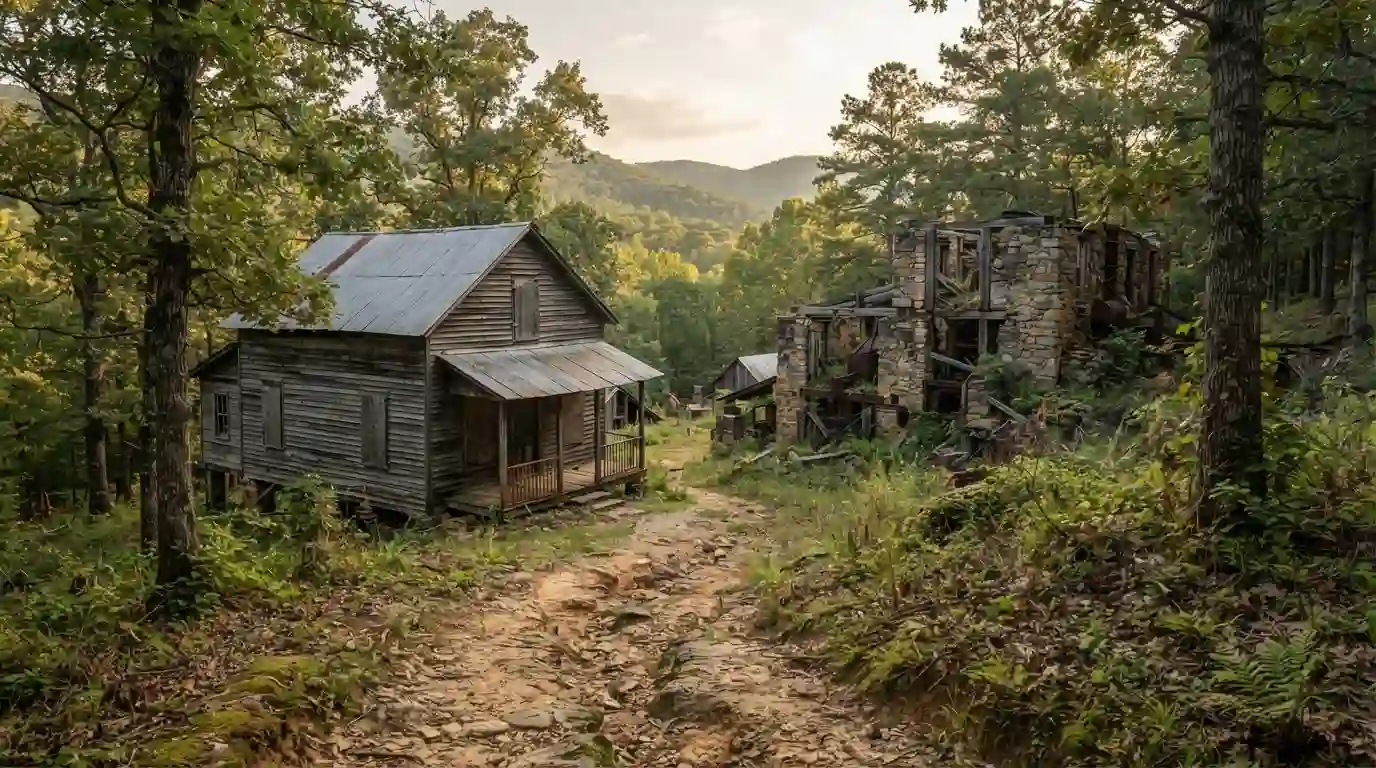
If you enjoy traveling beyond the usual attractions, exploring abandoned places in Arkansas can add an entirely different dimension to a road trip. Some locations are preserved historic sites that visitors can explore safely, while others are private properties or unstable structures that should only be viewed from permitted areas.
From the historic mining community of Rush to the partially submerged ruins of Monte Ne, Arkansas offers plenty of opportunities to see how nature and time have transformed once-busy places. Here are some of the most interesting abandoned and nearly abandoned places to put on your Arkansas travel list.
1. Rush Historic District
Rush is one of the most recognizable ghost towns in Arkansas and one of the best places to experience the remains of the state’s historic mining industry.
The community developed around zinc mining in the Ozark Mountains during the late nineteenth century. At its height, Rush attracted thousands of residents, workers, merchants, and families. Mining eventually declined, and the community gradually lost its population.
Today, the Rush Historic District contains remnants of homes, commercial buildings, mining structures, and other features associated with the former mining community. The surrounding landscape has reclaimed much of the settlement, creating the quiet atmosphere that makes the site especially interesting for history enthusiasts and photographers.
Rush is particularly appealing because it combines abandoned-history exploration with an outdoor setting. Visitors can experience the historic landscape while also enjoying the surrounding Buffalo River region.
2. East Calico Rock Historic District
East Calico Rock provides a rare opportunity to explore an old commercial district without traveling deep into a remote wilderness area. The historic section contains numerous surviving structures from an earlier period of Calico Rock’s development.
Old storefronts, former commercial buildings, and other historic structures help illustrate how the community looked when river transportation, railroads, and regional commerce played a much larger role in local life.
Unlike many abandoned locations, East Calico Rock has been interpreted as a historic attraction. That makes it a more accessible option for travelers who want to photograph historic architecture without attempting unsafe urban exploration.
If you enjoy historic communities, you may also want to explore other destination-focused guides such as popular places to visit in New York and places to visit in Phoenix.
3. Monte Ne Ruins
Monte Ne is one of the most unusual abandoned places associated with Arkansas. The former resort community was established near Rogers in the early twentieth century and became known for its ambitious development and distinctive architecture.
Much of Monte Ne’s original landscape was eventually affected by the creation of Beaver Lake. As water levels change, portions of the old structures can become visible, giving the location an unusual combination of abandoned history and waterfront scenery.
The story of Monte Ne is especially interesting because it was not originally created as a mining settlement or industrial town. It was designed as a destination, which makes its eventual decline an intriguing example of how communities can disappear when economic and environmental circumstances change.
4. Dogpatch USA
Dogpatch USA is one of Arkansas’s most famous abandoned attractions. The former theme park near Marble Falls was inspired by the comic strip Li’l Abner and once welcomed visitors looking for a quirky Ozarks entertainment experience.
After the park closed, its buildings and attractions gradually deteriorated. The site became well known among photographers, abandoned-place enthusiasts, and people interested in unusual pieces of Arkansas history.
However, Dogpatch USA is not a typical public attraction. Property access and conditions can change, so visitors should never assume that entering abandoned structures is permitted. Enjoying the site’s history from legal viewing areas is very different from trespassing.
5. Arkansas Tuberculosis Sanatorium
Near Booneville, the former Arkansas Tuberculosis Sanatorium represents an important chapter in the state’s medical history. The facility treated tuberculosis patients for decades before eventually closing.
Large institutional buildings and the site’s history have contributed to its reputation as one of Arkansas’s more intriguing abandoned locations. For travelers interested in historic hospitals, architecture, and medical history, the property provides an unusual perspective on how healthcare facilities operated during an earlier era.
Because abandoned institutional buildings can contain structural, environmental, and other hazards, travelers should treat restricted areas seriously and avoid entering buildings without permission.
6. Old Davidsonville
Old Davidsonville is an excellent example of a settlement that disappeared long ago while leaving behind an archaeological record. Established during Arkansas’s early territorial period, Davidsonville became an important community before its fortunes declined.
Today, the historic site provides visitors with an opportunity to learn about early settlement, transportation, commerce, and daily life in nineteenth-century Arkansas.
It is not the kind of abandoned location where visitors should expect dramatic ruined buildings everywhere. Instead, the value comes from understanding what once occupied the landscape and seeing how the site has been preserved for historical interpretation.
7. Forgotten Railroad Sites and Depots
Arkansas was once heavily shaped by railroads. Towns developed around stations, freight routes, bridges, and rail connections, while some communities declined after transportation patterns changed.
Old railroad corridors and surviving depot structures can therefore provide a glimpse into the state’s industrial and transportation history. Some historic railroad properties have been restored or repurposed, while others retain a more weathered appearance.
For travelers who enjoy combining transportation history with road trips, these locations can be particularly rewarding. They also provide excellent opportunities for architectural photography without requiring an interest in conventional tourist attractions.
8. Former Mining Communities in the Ozarks
Rush is the best-known example, but Arkansas’s Ozark region contains traces of numerous former mining communities. Zinc and other mineral resources attracted workers and businesses during periods of rapid industrial development.
When mineral production declined, many settlements could no longer support the populations that had grown around them. Buildings deteriorated, businesses closed, and residents moved elsewhere.
The remaining landscapes can include stone foundations, old roads, industrial remnants, and other traces of mining activity. These sites are valuable because they show how closely economic development was connected to natural resources.
Anyone visiting old mining areas should stay on permitted routes and avoid entering shafts, tunnels, unstable structures, or restricted property.
9. Historic Ruins Around Hot Springs
Hot Springs is not an abandoned city, but its historic architecture provides an interesting alternative for travelers fascinated by places that have changed dramatically over time.
The area contains preserved historic buildings and former tourism infrastructure connected to Arkansas’s famous thermal springs. Some structures have been restored or repurposed, allowing visitors to see how an older destination has adapted rather than disappeared completely.
This makes Hot Springs useful for travelers who want the atmosphere of historic architecture and changing communities without seeking unsafe abandoned buildings.
If you enjoy destinations with distinctive landscapes and history, you can also explore nature-focused places to visit and U.S. destinations for winter travel.
10. Abandoned and Forgotten Places Along Arkansas Back Roads
Some of the most interesting abandoned structures in Arkansas are not famous attractions at all. Old farmhouses, barns, stores, churches, bridges, and roadside businesses can appear along rural roads throughout the state.
These structures often reflect the history of communities that changed because of new highways, economic shifts, population movement, or changes in agriculture.
However, discovering an abandoned-looking building does not mean it is abandoned legally. Many rural properties remain privately owned. Travelers should never enter a property simply because it appears empty.
Why Are So Many Places Abandoned in Arkansas?
Several forces have contributed to the abandonment of communities and buildings across Arkansas.
- Declining industries: Mining communities often depended on the continued profitability of local mineral resources.
- Transportation changes: Railroads and highways could redirect commerce away from older communities.
- Economic changes: Businesses and residents sometimes moved when local employment opportunities disappeared.
- Changing tourism patterns: Resorts and roadside attractions could lose visitors as travel preferences changed.
- Natural changes: Reservoir construction and environmental changes have transformed some historic locations.
- Population movement: Rural communities sometimes declined as residents relocated to larger towns and cities.
Best Time to Explore Abandoned Places in Arkansas
Spring and fall are generally comfortable seasons for exploring outdoor historic areas in Arkansas. Temperatures can be more manageable than during the hottest part of summer, while changing foliage can make historic landscapes especially scenic.
Winter can also offer advantages because vegetation is reduced in many areas, potentially making old structures easier to see. However, shorter daylight hours and changing weather require additional planning.
Before setting out, check local access conditions, weather, road conditions, and any seasonal restrictions. A historic site that is accessible during one season may have different conditions at another time of year.
Safety Tips for Visiting Abandoned Places
Exploring abandoned history can be fascinating, but safety should always come first. Old buildings may contain unstable floors, broken glass, exposed nails, wildlife, mold, contaminated materials, or other hazards.
- Never enter a building marked as closed or restricted.
- Do not trespass on private property.
- Stay on established trails and permitted routes.
- Never enter abandoned mine shafts or tunnels.
- Check weather conditions before visiting remote areas.
- Bring adequate water, navigation tools, and basic outdoor supplies.
- Tell someone where you are going if traveling into a remote area.
- Respect historic structures and do not remove artifacts.
- Follow posted rules and instructions from site managers.
How to Plan an Arkansas Abandoned-Places Road Trip
A road trip focused on abandoned places works best when you group destinations by region instead of attempting to cover the entire state in one trip.
The Ozarks are a natural starting point because of their mining history, historic communities, and scenic roads. You can combine historical stops with outdoor attractions, photography opportunities, and nearby towns for food and lodging.
For broader road-trip inspiration, consider reading about long-weekend destinations, places near Orange County, or places near San Juan when planning future travel.
Photography Tips for Historic and Abandoned Locations
Abandoned places can be excellent photography subjects because weathered buildings, old roads, vegetation, and natural light create strong visual contrasts.
Early morning and late afternoon often provide softer light and longer shadows. A wide-angle lens can help capture architecture and surrounding landscapes, while a standard lens can emphasize individual details such as doors, windows, stonework, or old machinery.
Always photograph from legal and safe locations. Do not cross barriers or enter restricted buildings simply to obtain a better photograph.
More U.S. Travel Inspiration
If abandoned Arkansas locations are part of a broader interest in unusual destinations, there are plenty of other U.S. travel ideas worth exploring. You can discover U.S. destinations for fall, explore places in the Northeast, or plan a trip around the Oregon Coast.
Travelers interested in seasonal destinations can also explore Southern California in winter, the Poconos in winter, and West Virginia in fall.
Frequently Asked Questions
What is the most famous abandoned place in Arkansas?
Rush Historic District is one of the state’s best-known abandoned communities. Its history is closely connected to Arkansas’s nineteenth- and early twentieth-century zinc-mining industry.
Can you visit abandoned places in Arkansas?
Yes, some abandoned and historic locations can be visited legally because they are preserved or have designated public access. Other properties are privately owned or restricted. Always verify access before entering an area.
Is Rush Ghost Town open to visitors?
The Rush Historic District is a publicly managed historic landscape where visitors can experience remnants of the former mining community. Certain mines, tunnels, and structures are restricted for safety, so visitors should follow posted rules and designated routes.
Is Dogpatch USA open to the public?
Dogpatch USA is a former theme park and should not be treated as an open public attraction simply because it is abandoned. Property access can be restricted, so visitors should not trespass or enter closed structures.
What should I bring when exploring historic abandoned areas?
For legal outdoor sites, bring water, suitable footwear, weather-appropriate clothing, navigation tools, a charged phone, and any supplies appropriate for the terrain. Avoid entering unstable structures or restricted areas.
Final Thoughts
The abandoned places in Arkansas tell stories that conventional tourist attractions sometimes overlook. Mining towns such as Rush reveal the rise and fall of resource-based communities, while places such as Monte Ne show how tourism and changing landscapes can transform an entire destination.
Whether you are interested in history, architecture, photography, road trips, or unusual travel experiences, Arkansas has plenty of forgotten places worth learning about. The best approach is to explore responsibly, respect property boundaries, follow site rules, and focus on understanding the history behind what remains.
For travelers willing to look beyond the standard itinerary, these forgotten corners of Arkansas can turn an ordinary road trip into a memorable journey through the state’s past.










