
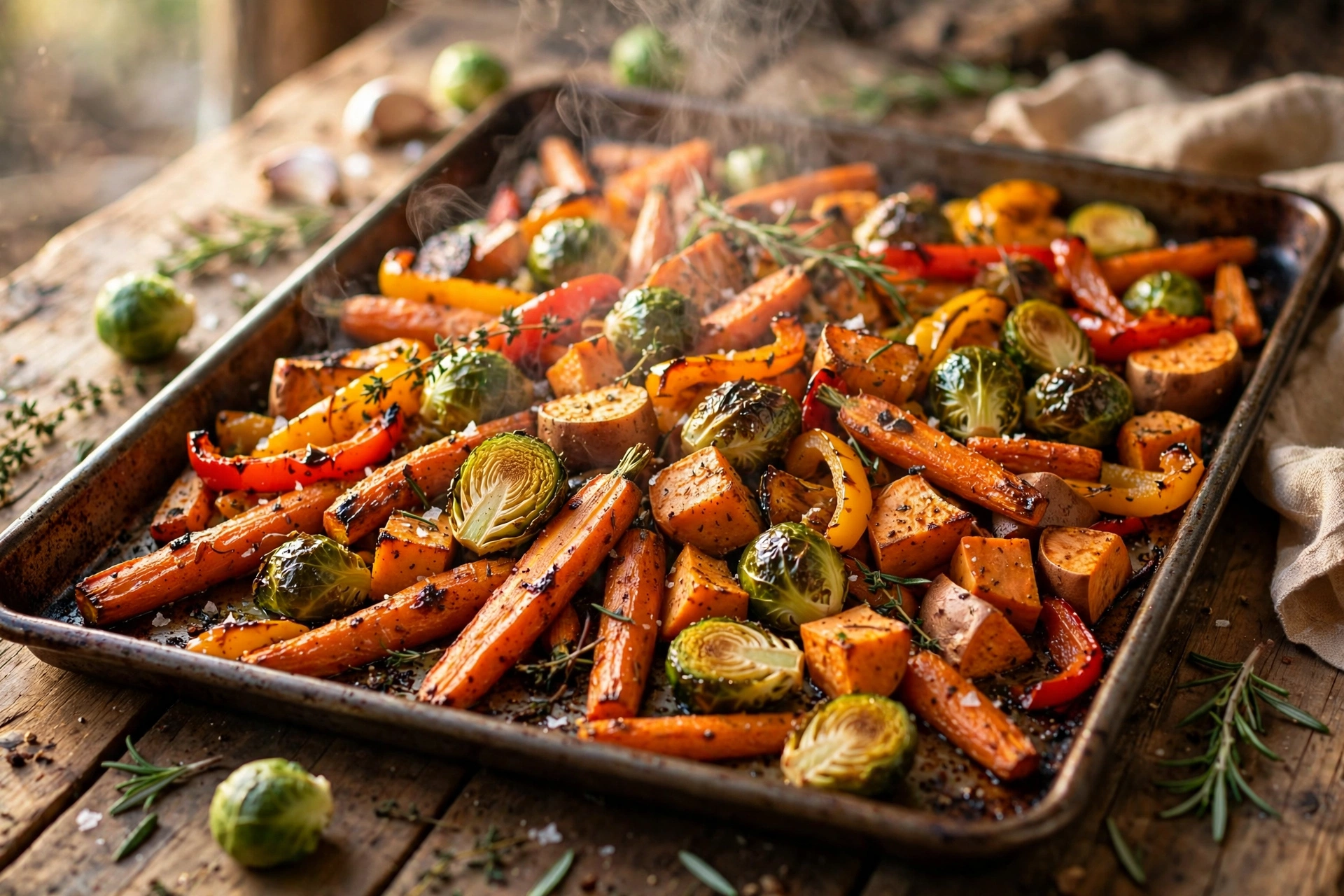
You know vegetables are good for you. You buy them with the best intentions. And then they wilt in the crisper drawer while you eat around them for a week. The problem is not your willpower — it is the strategy. Nobody sustains a diet of sad side salads eaten out of obligation. But how to eat more vegetables daily without the misery? These sneaky tricks work, because they do not ask you to become a different person — just a slightly craftier cook.
The philosophy here is simple: instead of treating vegetables as a separate chore, weave them into foods you already love. Blend them into sauces, fold them into familiar dishes, roast them until they caramelize into candy, and keep them so ready-to-eat that grabbing them is easier than grabbing chips. This guide shows you how to eat more vegetables daily with practical, genuinely tasty tricks — plus a full week of painless veggie wins to get you started.
Why “Just Eat More Vegetables” Advice Fails
The standard advice — “eat more vegetables” — fails for predictable reasons. First, it is vague: it tells you the destination without the route. Second, it usually comes with an unspoken image of steamed broccoli and undressed salads, which is about as motivating as a tax form. Third, it ignores the real barriers: vegetables require washing, chopping, and cooking; they spoil quickly; and many people genuinely never learned to make them taste good.
The research on vegetable consumption tells an interesting story: people do not avoid vegetables because they hate all of them — most people like several vegetables prepared well. They avoid them because of friction (prep work, perishability) and bad past experiences (mushy school-cafeteria broccoli trauma is real). Remove the friction and fix the preparation, and consumption rises without any lecturing.
That is the entire premise of the sneaky approach. You are not going to start loving kale salads through moral effort. But you might love roasted sweet potato wedges, vegetable-loaded pasta sauce, or a smoothie with hidden spinach — and each of those counts fully. Meet yourself where you are, and let the vegetables come to you.
How to Eat More Vegetables Daily: The Core Strategies
Before the meal-by-meal tricks, here are the five master strategies that make everything else work.
Strategy 1: Make them invisible. Finely chopped, grated, or blended vegetables disappear into sauces, soups, meatballs, smoothies, and baked goods. You get the nutrition without the negotiation — ideal for picky eaters, kids, and vegetable skeptics of all ages.
Strategy 2: Make them the path of least resistance. Washed, chopped, ready-to-eat vegetables in the front of the fridge get eaten. Whole vegetables buried in the crisper do not. Spend ten minutes on prep day making vegetables grabbable, and consumption takes care of itself. This is meal prep basics applied to produce.
Strategy 3: Roast everything. Roasting is the great vegetable equalizer. High heat caramelizes natural sugars, creating crispy edges and deep flavor that steaming and boiling never achieve. Vegetables you thought you hated — Brussels sprouts, cauliflower, carrots — become genuinely craveable roasted. If you only adopt one cooking technique from this guide, make it this one.
Strategy 4: Pair vegetables with foods you already love. Vegetables do not need to be the main event. Tuck them into tacos, pile them on pizza, fold them into omelets, layer them in sandwiches. The familiar food carries the vegetable along — and you discover combinations you actually look forward to. It is the same upgrade-not-overhaul logic behind easy food swaps for a healthier diet.
Strategy 5: Double the vegetables in recipes you already make. Whatever vegetables a recipe calls for, double them. Pasta sauce, stir-fry, soup, chili, curry — all improve with more vegetables, and the recipe still tastes like itself. This single habit can easily add two servings a day with zero new cooking.
Breakfast Veggie Hacks
Breakfast is the most vegetable-neglected meal, which makes it the biggest opportunity.
Spinach in smoothies. A large handful of fresh spinach blended into any fruit smoothie disappears completely — no taste, no texture, just color (which the berries mask). This is the gateway vegetable hack, and it is genuinely undetectable. Our healthy breakfast ideas for busy mornings include smoothie packs built for exactly this.
Veggie-loaded eggs. Scrambles, omelets, and frittatas accept enormous quantities of vegetables: spinach, mushrooms, bell peppers, tomatoes, zucchini, onions. Sauté the vegetables first, then add eggs. Two or three handfuls of vegetables vanish into a satisfying breakfast.
Vegetables on toast. Avocado toast with sliced tomato and sprouts. Hummus toast with cucumber and grated carrot. Cream cheese toast with sliced cucumber and dill. Toast is a vegetable delivery vehicle disguised as breakfast.
Savory oatmeal. Oatmeal topped with a fried egg, sautéed spinach or kale, and soy sauce or hot sauce. It sounds unusual until you try it — then it becomes a regular. One bowl delivers a full vegetable serving before 8 a.m.
Breakfast burritos and sandwiches. Peppers, onions, spinach, and salsa folded into egg burritos or breakfast sandwiches. The handheld format makes vegetables feel like part of the package, not an add-on.
Lunch and Dinner Veggie Hacks
Midday and evening meals offer the most room for vegetable creativity.
Bulk up every sauce. Marinara with extra zucchini, carrots, and spinach blended in. Curry with double the vegetables. Chili loaded with bell peppers. The sauce still tastes like itself — just more nutritious and more filling per calorie. This is also a cornerstone of easy healthy one-pot dinners.
Grate them into everything. Zucchini and carrots grated into meatballs, meatloaf, burgers, and pasta sauce add moisture and nutrients invisibly. Cauliflower rice mixed half-and-half with regular rice cuts carbs while nobody notices. Grated vegetables are the stealth bombers of the produce world.
Soup is a vegetable Trojan horse. A hearty soup can hold five or six different vegetables without anyone counting. Minestrone, lentil soup, chicken vegetable soup, pureed butternut squash soup — all deliver massive vegetable servings in comforting form. Batch-cook on weekends for the week’s easiest vegetable insurance.
Stir-fry and sheet-pan math. When stir-frying or roasting, use a 2:1 vegetable-to-protein ratio instead of the reverse. The dish still feels substantial and satisfying — vegetables roasted alongside protein absorb all the savory flavors. Follow the plate method and the half-plate of vegetables builds itself.
Taco, bowl, and pizza bars. Set out generous vegetable toppings and let everyone build their own: shredded lettuce, diced tomatoes, peppers, onions, corn, avocado, slaw. People pile on far more vegetables when they are choosing and assembling — autonomy is a powerful seasoning.
Snack-Time Vegetables (That You’ll Actually Eat)
Vegetable snacking fails when it means sad celery sticks eaten alone. It succeeds when the vehicle is delicious.
The dip makes the vegetable. Hummus, tzatziki, guacamole, bean dip, or Greek-yogurt ranch — a good dip transforms raw vegetables from obligation to craving. Keep single-serve dip cups with pre-cut vegetables for the ultimate grab-and-go. Our healthy desk snacks guide is built around this exact combination.
Roasted vegetable snacks. Roasted chickpeas, kale chips, sweet potato wedges, roasted seaweed snacks — crunchy, savory, and genuinely snackable. Roast a batch on the weekend and portion for the week.
Vegetables with cheese. Cherry tomatoes with mozzarella, bell pepper strips with cheese cubes, cucumber with cream cheese — the fat-protein pairing makes vegetables satisfying in a way plain crudités never achieve.
Ants on a log, upgraded. Celery with peanut butter and raisins is a classic for a reason. The adult version: celery or apple with almond butter and dark chocolate chips. Nostalgia plus nutrition.
Make Vegetables Taste Great: The Flavor Playbook
Let us address the elephant in the room: many people do not eat vegetables because nobody ever made them taste good. The flavor playbook fixes that permanently.
Fat is flavor’s vehicle. Vegetables roasted with olive oil, finished with butter, or paired with cheese and nuts taste dramatically better than their steamed, naked counterparts — and the fat helps your body absorb fat-soluble vitamins. Do not fear the drizzle; it is what makes the vegetables get eaten.
Salt properly, acid brightly. Under-salted vegetables taste flat and sad. Salt confidently, then finish with lemon juice or vinegar — acid makes vegetable flavors pop the way nothing else does. This two-step finish elevates even simple steamed broccoli.
Caramelize with high heat. Roast at 425°F (220°C) until edges brown and crisp. Caramelization creates sweetness and complexity — roasted carrots taste like candy, Brussels sprouts become nutty and crisp, cauliflower turns golden and rich. Give vegetables space on the pan (crowding steams instead of roasting) and do not flip too often.
Season boldly. Garlic, smoked paprika, cumin, chili flakes, curry powder, everything-bagel seasoning, parmesan — vegetables are flavor sponges that reward bold seasoning. The bland-vegetable era ends the day you start seasoning like you mean it. This is the everyday spirit of cooking with whole foods: real ingredients, bold flavor, nothing fussy.
Try them again as an adult. Taste preferences change over time, and preparation matters enormously. The Brussels sprouts you hated at eight (boiled to gray mush) are not the Brussels sprouts of today (roasted crispy with bacon or balsamic). Give every vegetable a second chance, prepared well. You will be surprised how many conversions happen.
Smart Shopping and Storage: Vegetables That Don’t Go to Waste
The crisper-drawer graveyard is the enemy. Win the shopping and storage game and the eating takes care of itself.
Buy frozen without guilt. Frozen vegetables are picked ripe and flash-frozen — nutritionally equal (sometimes superior) to fresh, pre-washed, pre-chopped, and immune to spoilage. Keep five varieties in the freezer always: peas, corn, broccoli, spinach, and a stir-fry blend. Check that the ingredient list shows just the vegetable (a two-second label-reading habit — some blends sneak in sauces). They are the ultimate sneaky-vegetable insurance policy.
Shop with a plan. Buy vegetables for specific meals, not aspirational ones. “Broccoli for Tuesday’s stir-fry” gets eaten; “vegetables for health” rots. Our healthy grocery shopping on a budget guide covers planning that prevents waste.
Prep immediately. The ten minutes after grocery shopping determine the week’s vegetable fate. Wash lettuce, chop crudités, portion snacks — before everything goes in the fridge. Future you, opening the fridge at 6 p.m., will reach for what is ready.
Learn the rescue moves. Wilting vegetables are not dead — they are soup, stir-fry, frittata, or smoothie ingredients. Slightly soft peppers roast beautifully; limp spinach wilts perfectly into pasta; aging carrots become soup. Rescue cooking is both frugal and virtuous — see reducing food waste at home for the full playbook.
How to Eat More Vegetables Daily: A 7-Day Plan
Here is a concrete seven-day plan. Each day adds vegetables without a single sad side salad.
Monday: Spinach in your morning smoothie (invisible). Double the vegetables in tonight’s pasta sauce.
Tuesday: Veggie-loaded omelet for breakfast. Baby carrots and hummus as your afternoon snack.
Wednesday: Big sheet-pan roast — broccoli, sweet potatoes, peppers, red onion — alongside your usual protein. Leftovers become tomorrow’s lunch.
Thursday: Taco night with double the vegetable toppings. Grated zucchini hidden in the taco meat.
Friday: Stir-fry with a 2:1 vegetable-to-protein ratio. Cauliflower rice mixed into the regular rice.
Saturday: Hearty soup day — minestrone or lentil with six different vegetables. Freeze half for later.
Sunday: Roast-a-batch prep: two sheet pans of mixed vegetables for the week’s bowls, lunches, and snacks. Ten minutes of active work, a week of vegetables on autopilot.
Notice what did not happen: no juice cleanses, no raw-vegetable punishments, no foods you hate. Just familiar meals with more vegetables woven in. That is the whole method — and it is sustainable because it never asks you to suffer.
Final Thoughts
Sneaky ways to eat more vegetables every day are not about tricking yourself — they are about removing every barrier between you and the vegetables you already buy. Make them invisible in sauces and smoothies, make them ready-to-eat in the fridge, roast them until they caramelize, pair them with foods you love, and double them in every recipe. No willpower required.
Start with just one strategy this week: the sheet-pan roast, the smoothie spinach, or the doubled vegetables in your usual pasta sauce. Notice how easy it feels. Then add another. Within a month, you will be eating more vegetables than you ever thought possible — without a single sad side salad.










