
Open any utility bill and you are looking at two things: the cost of the energy and water you actually needed, and the cost of the energy and water you wasted without realizing it. Learning how to lower utility bills is mostly about eliminating the second category — and the savings are real. The average household can cut 10–25% off combined utility costs with changes that require no sacrifice in comfort.
This guide covers twelve proven tips across electricity, heating, cooling, and water. They are ordered roughly by impact, starting with the moves that save the most for the least effort. None require major renovations or expensive equipment — just smarter habits and a few cheap upgrades that pay for themselves within months.
Tip 1: Program Your Thermostat (Biggest Single Win)
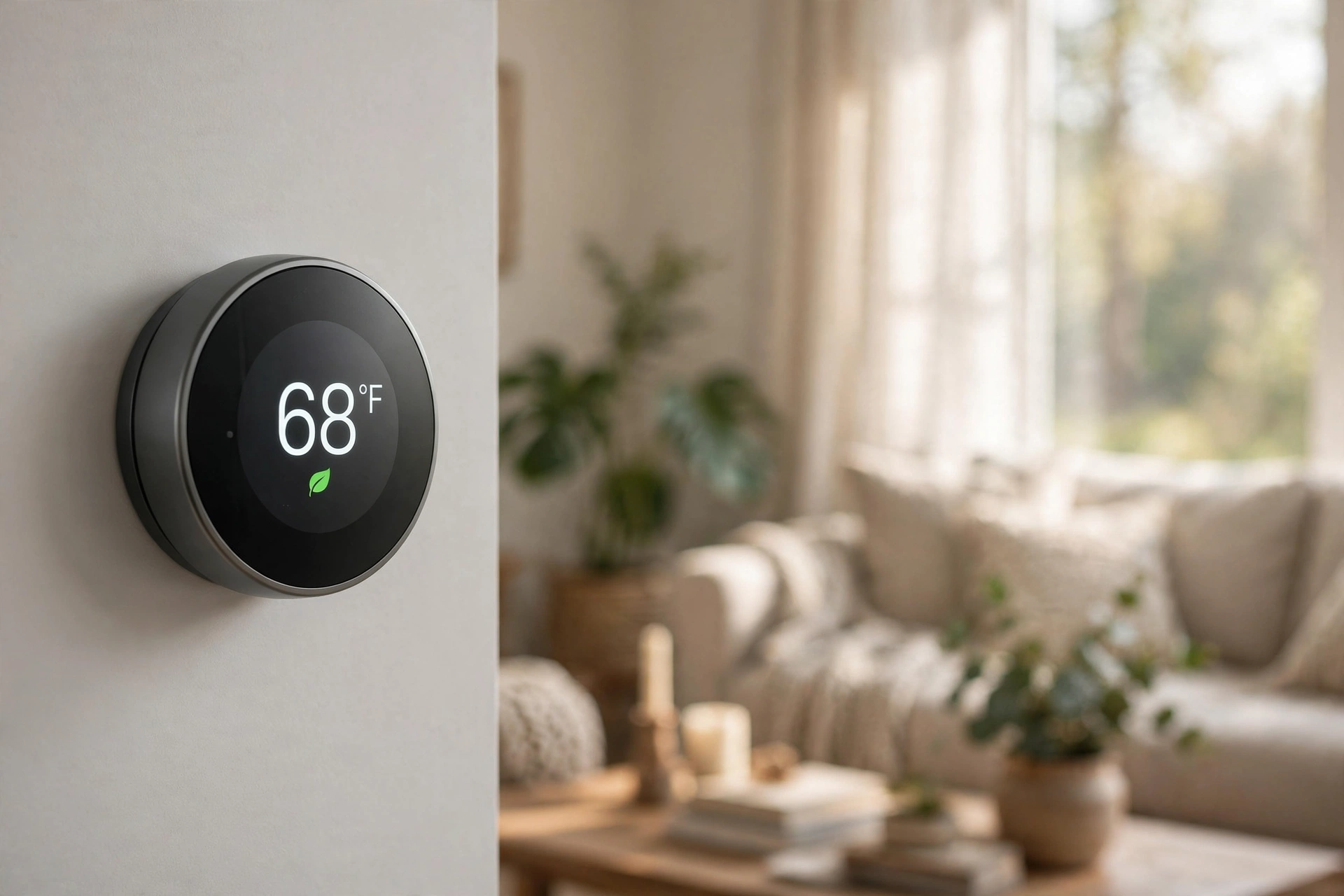
Heating and cooling typically account for about half of a home’s energy use, which makes the thermostat the highest-leverage device in your house. The U.S. Department of Energy estimates you can save up to 10% a year on heating and cooling by turning the thermostat back 7–10°F for 8 hours a day — while you sleep and while you are at work.
A programmable or smart thermostat does this automatically, so you never have to remember or sacrifice comfort — the house is warm when you wake up and cool when you return, because the thermostat planned ahead. If you do not have one, even manual setbacks help: put on a sweater, grab a blanket, and nudge the thermostat down a few degrees. Most people cannot tell the difference between 70°F and 68°F once they are dressed for it, but the bill absolutely can.
In summer, the same logic applies in reverse: 78°F when you are home and higher when you are away, supplemented by fans (tip 4). Each degree you raise the summer setting saves roughly 3% on cooling costs.
Tip 2: Seal Air Leaks Around Doors and Windows
Heating and cooling the outdoors is pure waste, and most homes leak an astonishing amount of conditioned air through gaps around doors, windows, and other openings. On a windy day, hold a lit incense stick or a thin piece of toilet paper near door frames and window edges — where it flutters, air (and money) is escaping.
The fixes are cheap and DIY-friendly: adhesive weatherstripping for doors, caulk for window frames, foam gaskets behind outlet covers on exterior walls, and door sweeps for gaps under exterior doors. A weekend and under $50 in materials can seal the worst offenders. This is also core home maintenance — our seasonal home maintenance checklist includes air-sealing in its fall prep for exactly this reason.
Tip 3: Service Your HVAC System Regularly
A neglected heating and cooling system works harder, uses more energy, and dies sooner. The single most important maintenance task is also the simplest: replace or clean the air filter every one to three months. A clogged filter chokes airflow, forcing the system to run longer to do the same job — and it degrades your home’s indoor air quality at the same time.
Once a year, have a professional service the system: cleaning coils, checking refrigerant, and catching small problems before they become efficiency-killing big ones. Keep outdoor condenser units clear of leaves, grass, and debris with at least two feet of clearance on all sides. A well-maintained system can use 15% less energy than a neglected one doing the same work.
Tip 4: Use Fans Strategically
Ceiling fans do not cool rooms — they cool people, by moving air across skin. That distinction matters: a fan lets you raise the thermostat 3–4°F with no loss of comfort, because moving air feels cooler. But a fan cooling an empty room is pure waste, so turn fans off when you leave — unlike air conditioning, they do nothing for the room itself.
Direction matters too: in summer, fans should spin counterclockwise (looking up) to push air downward; in winter, clockwise at low speed to gently push warm air down from the ceiling without creating a draft. Most fans have a small direction switch on the motor housing. Portable fans aimed at your seating or sleeping area let you keep the whole-house temperature a few degrees higher while staying perfectly comfortable.
Tips 5–6: Master Your Water Heating
Tip 5: Turn down the water heater to 120°F. Most water heaters ship set at 140°F, which is hotter than anyone needs for showers and dishes — and every extra degree costs money around the clock, because the tank reheats continuously. Dropping to 120°F saves energy, reduces scalding risk, and slows mineral buildup that shortens the tank’s life. The dial is usually behind an access panel; the whole job takes five minutes.
Tip 6: Use less hot water, not just cooler water. Shorter showers are the obvious move — cutting two minutes off a daily shower saves hundreds of gallons of heated water a month. Low-flow showerheads (under $20, installable without tools) cut hot water use nearly in half with no noticeable difference in shower quality. And washing laundry in cold water, covered in our easy ways to save money every month, eliminates one of the biggest hot-water draws in the house entirely.
Tips 7–8: Lighting and Electronics
Tip 7: Switch every bulb to LED. LEDs use about 75% less energy than old incandescent bulbs and last 15–25 times longer. Prioritize the lights that burn the most hours — kitchen, living room, porch — where the payback is fastest. And build the habit of turning lights off when leaving rooms; it sounds trivial, but in a house with kids it adds up to real money.
Tip 8: Kill phantom loads with power strips. TVs, game consoles, chargers, printers, and cable boxes draw power around the clock even when “off” — so-called vampire or phantom loads that can account for 5–10% of home electricity use. Plugging entertainment centers and computer setups into switched power strips lets you kill them all with one flip. Smart power strips do it automatically, cutting power to peripherals when the main device turns off.
How to Lower Utility Bills: Tips 9–10 for Water
Tip 9: Fix leaks promptly — especially toilets. A running toilet can waste 200+ gallons a day, and a dripping faucet wastes thousands of gallons a year. The toilet test is easy: put food coloring in the tank, wait 15 minutes without flushing, and check whether color appears in the bowl. If it does, the flapper needs replacing — a $5 part and a ten-minute job. Most faucet drips are similarly cheap fixes with outsized water savings.
Tip 10: Water your lawn and garden smartly. Outdoor watering is a huge summer water bill driver. Water early in the morning (less evaporation), water deeply but infrequently (encourages deep roots), and let the lawn go dormant in peak summer rather than fighting nature with sprinklers. A rain barrel for garden watering and mulch around plants to retain moisture cut outdoor water use dramatically — and native or drought-tolerant landscaping cuts it permanently.
Tip 11: Run Big Appliances Efficiently
Dishwashers, washing machines, and dryers are the heavy hitters after HVAC and water heating. Run them full — a half-empty dishwasher uses nearly as much water and energy as a full one. Use the eco or energy-saver cycles, which clean just as well with less water and heat. Skip heated drying on the dishwasher; air-drying works fine.
For laundry, cold water washing (tip 6’s companion) plus high spin speeds (which extract more water, shortening dryer time) make each load cheaper. Clean the dryer’s lint filter every load — a clogged filter can double drying time — and consider air-drying when weather allows. When appliances eventually need replacing, the yellow EnergyGuide label lets you compare real operating costs, not just purchase prices; the cheapest sticker price is rarely the cheapest decade of ownership.
Tip 12: Audit, Compare, and Negotiate
Get a free home energy audit. Many utilities offer free or subsidized energy audits — a professional walks through your home with diagnostic tools and hands you a prioritized list of improvements, sometimes with rebates attached. It is the highest-information move on this list: instead of guessing where your waste is, you will know.
Compare electricity providers if your state allows choice. In deregulated markets, switching suppliers can cut your per-kilowatt-hour rate significantly with zero change in service — the same wires, the same reliability, a lower price. Even where choice is limited, ask your utility about time-of-use rates: shifting big appliance use to off-peak hours can lower the effective rate.
Negotiate the negotiable bills. While electricity and water rates are usually fixed, the “utility-adjacent” bills — internet, phone, trash service — often are not. Our scripts for negotiating lower bills walk through exactly what to say. And run a subscription audit on anything utility-like that auto-renews, from water delivery to filter subscriptions.
How to Lower Utility Bills With Smarter Daily Habits
Beyond the big fixes, small daily habits compound into meaningful savings. Make the thermostat check part of your morning: nudge it to your away setting as you leave and back to comfort when you return — or better, let the programmable schedule handle it while you build the manual habit as backup.
Adopt a lights-off reflex. The last person out of any room kills the lights — no exceptions, no debate. Add a 60-second energy sweep to your 15-minute daily cleaning routine: lights off in empty rooms, vents and radiators unblocked by furniture, and a glance at the thermostat to confirm the schedule is running. These micro-checks take seconds and prevent the slow creep of wasteful defaults.
Time your hot water use. Shorter showers get all the attention, but the supporting habits matter too: run the dishwasher only when full, wash laundry in cold water, and fix that dripping hot-water tap — a single drip of hot water wastes both water and the energy used to heat it, around the clock.
Unplug the obvious vampires nightly. Phone chargers, gaming consoles, and countertop appliances with glowing standby lights all draw power while you sleep. A switched power strip by the entertainment center and another at the computer desk turn the nightly shutdown into two flicks of a switch.
None of these habits is heroic on its own. Together, practiced daily, they shave a steady 5–10% off the bill — and every dollar saved can be captured permanently with automatic savings transfers so lower bills become higher savings without a second thought.
Track Your Progress and Keep the Gains
Utility savings fade when attention fades, so make the results visible. Most utilities show usage history on your bill or online portal — check it monthly and compare to the same month last year (weather-normalized comparisons are fairest). Watching the kilowatt-hours drop is motivating, and a sudden spike is an early warning of a problem: a failing appliance, a new leak, or a teenager’s space heater.
Fold utility review into your regular money routines. A monthly goal review is the natural home for a two-minute bill check, and building a budget you actually stick to ensures the savings get redirected to goals instead of evaporating into general spending. Consider the monthly life admin session for batching the annual tasks: filter changes, provider comparisons, and insurance reviews.
One final multiplier: if you rent, share the wins. Landlords often split or cover the cost of cheap efficiency upgrades (weatherstripping, LED bulbs, low-flow fixtures) because they protect the property too — and renters who ask usually get further than renters who assume the answer is no.
Final Thoughts
Learning how to lower utility bills every month is not about sitting in the dark or taking cold showers. It is about a dozen small, intelligent optimizations — thermostat programming, air sealing, filter changes, LED bulbs, leak fixes, and smarter appliance use — that together cut 10–25% off your bills with no loss of comfort.
Pick three tips and implement them this weekend: program the thermostat, replace the HVAC filter, and switch your most-used bulbs to LED. Check next month’s bill against last year’s. Once you see the drop in black and white, you will be motivated to work through the rest — and every month after that, the savings show up automatically.










