
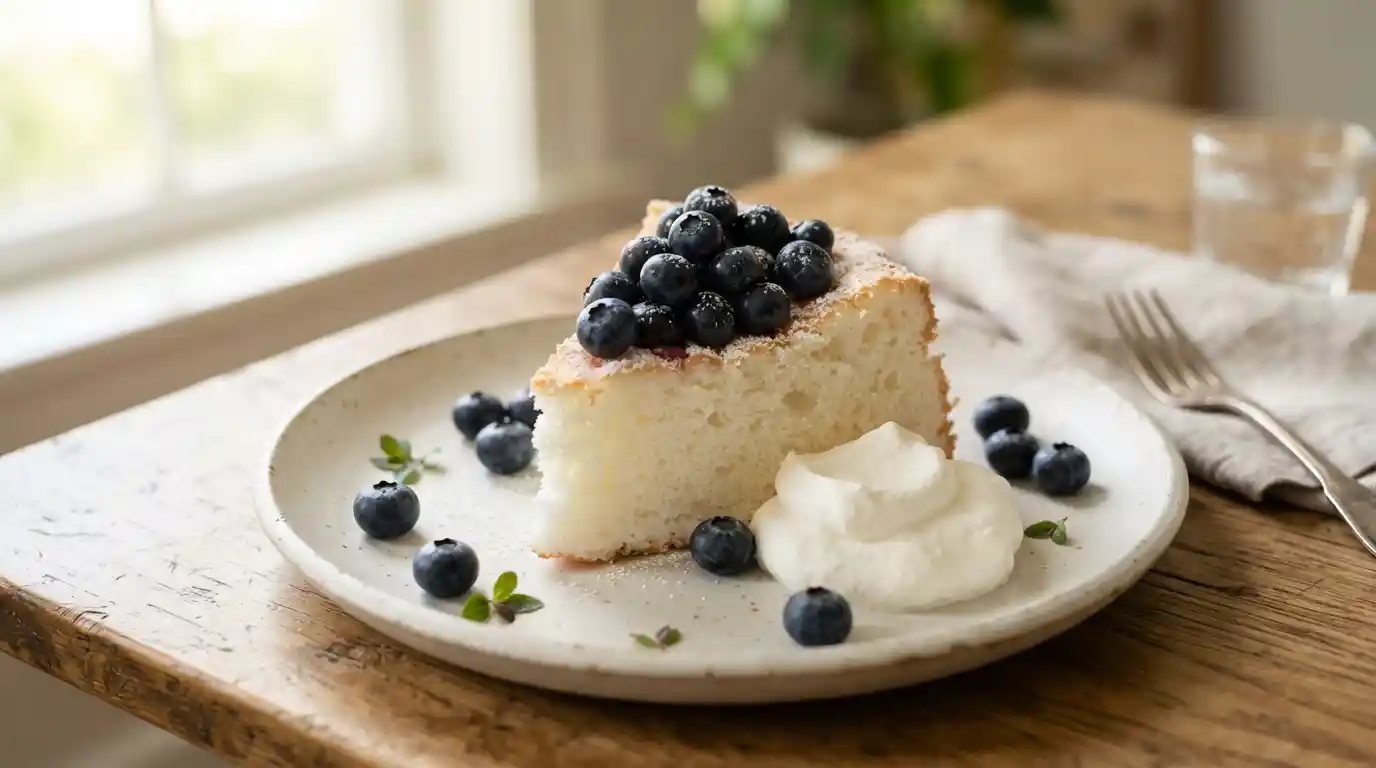
But does that lighter character make it a genuinely memorable dessert, or does it leave people wanting something richer? The answer depends largely on what you expect from a sweet treat. For some, the combination is an ideal summer dessert. For others, the airy cake may seem too delicate compared with richer options.
This guide explores what makes blueberry and angel food cake so appealing, how to prepare it successfully, what toppings work best, common mistakes to avoid, and whether the dessert deserves its growing popularity.
What Makes Blueberry and Angel Food Cake So Appealing?
The appeal starts with contrast. Angel food cake is known for its light, sponge-like texture and mild sweetness. Blueberries provide a completely different experience, bringing moisture, fruitiness, and a slightly tart flavor.
That contrast makes every bite more interesting. Instead of combining several rich ingredients, the dessert relies on a small number of components that complement each other.
For readers who enjoy experimenting with homemade desserts, this approach also provides plenty of room for customization. The basic concept can be served with fresh berries, a simple glaze, yogurt, whipped cream, or a small dusting of powdered sugar.
If you are building your collection of homemade baking ideas, you can also explore this homemade cake recipe guide for another starting point.
Angel Food Cake: The Key to the Dessert
Angel food cake is different from many traditional cakes because its signature texture depends heavily on whipped egg whites. Instead of relying on a rich, buttery batter, the cake develops its airy structure from carefully incorporated air.
This makes technique especially important. Egg whites need to be whipped properly, while dry ingredients must be folded gently enough to preserve the volume. Overmixing can reduce the cake’s characteristic lightness.
The cake should also be cooled correctly after baking. Allowing it to cool completely helps preserve its structure and makes it easier to slice without crushing the delicate crumb.
Anyone new to baking can benefit from understanding the fundamentals explained in this guide to making homemade cake from scratch, particularly the importance of accurate measurements, proper baking temperature, and cooling.
Fresh or Frozen Blueberries: Which Works Better?
Blueberries are the second major component, and the choice between fresh and frozen fruit can affect the final result.
Fresh Blueberries
Fresh blueberries are excellent when you want a clean, bright fruit flavor. They can be scattered over individual slices or gently combined with a simple blueberry topping. Their firm texture also provides a pleasant contrast to the soft cake.
Frozen Blueberries
Frozen blueberries can be useful when fresh berries are unavailable or when you want to prepare a cooked fruit sauce. However, frozen berries release more liquid as they thaw, so they should be handled carefully when used around a delicate cake.
If you are using frozen fruit, cooking it briefly into a thick topping can be more practical than placing thawed berries directly onto the cake.
How to Make a Blueberry and Angel Food Cake Dessert
The easiest approach is to prepare or purchase a plain angel food cake and concentrate your attention on the blueberry topping and final presentation.
1. Prepare the Cake
Use a completely cooled angel food cake. If making the cake yourself, allow enough time for it to cool before adding fruit or toppings.
2. Prepare the Blueberries
Wash fresh blueberries and remove any damaged berries or stems. Pat them dry before using them as a topping so excess water does not make the cake soggy.
3. Create a Simple Blueberry Topping
You can serve the berries whole, lightly mash some of them, or prepare a quick blueberry sauce. A small amount of lemon juice can add brightness and balance the sweetness.
4. Slice the Cake Carefully
Use a sharp serrated knife and gentle sawing motions. Avoid pressing down too firmly because angel food cake can compress easily.
5. Add the Fruit
Place blueberries over each slice immediately before serving. This keeps the cake lighter and reduces the amount of moisture absorbed during storage.
6. Finish With a Light Topping
Whipped cream, plain yogurt, powdered sugar, lemon glaze, or a small amount of vanilla sauce can all work well. The goal is to complement the cake and fruit rather than cover their flavors.
For more general baking guidance, including pan preparation, mixing, baking, and cooling techniques, see this complete homemade cake guide.
Best Toppings for Blueberry Angel Food Cake
The right topping can change the character of the dessert considerably. Fortunately, angel food cake is mild enough to work with several options.
- Whipped cream: Adds creamy richness without overpowering the berries.
- Greek yogurt: Provides a tangy contrast and works well for a less sweet presentation.
- Lemon glaze: Brings citrus brightness that complements blueberries.
- Powdered sugar: Creates a simple finish when you want the fruit and cake to remain the focus.
- Blueberry sauce: Intensifies the berry flavor and adds moisture.
- Fresh mint: Can provide a refreshing finishing touch.
If you enjoy building meals around fresh ingredients, these topping ideas can also fit naturally into a broader balanced eating approach. For practical everyday guidance, see these tips for eating properly.
Is This Dessert Actually Healthier?
It is tempting to describe angel food cake with blueberries as a “healthy dessert,” but that description needs some context. The dessert can be lighter than some rich cakes, particularly when it is served with fresh fruit and modest toppings. However, it is still a sweet food containing sugar.
The most useful way to think about it is as one option within an overall eating pattern rather than as a food that automatically becomes healthy because it contains fruit.
Portion size, toppings, and the rest of the meal all matter. A slice topped with fresh blueberries is quite different from a large serving covered in sweetened cream and sugary sauce.
For broader guidance on balanced meals, fruit, portions, and everyday eating habits, explore these simple healthy eating habits.
Why It Works Well as a Summer Dessert
Blueberry and angel food cake is particularly appealing during warmer months because it does not have the dense character associated with many chocolate, caramel, or cream-heavy desserts.
Fresh blueberries bring seasonal color, while the airy cake can be served chilled or at a cool room temperature. A small amount of whipped cream or yogurt completes the dessert without making the presentation excessively heavy.
It can also be prepared for casual family meals, afternoon gatherings, brunches, or outdoor occasions. If you are planning a complete summer menu, lighter recipes and fresh ingredients can make the overall meal feel more balanced.
For another breakfast-oriented approach to combining fresh ingredients, see these healthy breakfast ideas.
Common Mistakes to Avoid
Using Wet Blueberries
Excess water on the berries can quickly soften the cake. Always rinse and dry fresh blueberries thoroughly before placing them on the dessert.
Adding Too Much Sauce
A heavy layer of liquid blueberry sauce can turn an airy slice into a soggy one. Add sauce gradually and serve extra sauce on the side when possible.
Overloading the Cake With Toppings
Angel food cake has a delicate flavor. Too much frosting, cream, or syrup can hide the characteristics that make the dessert appealing.
Slicing With Excessive Pressure
Pressing a knife directly downward can compress the cake. A serrated knife and gentle sawing motion generally produce cleaner slices.
Serving It Too Far in Advance
Once fruit and wet toppings are added, the cake can gradually absorb moisture. For the best texture, assemble individual servings relatively close to serving time.
How to Make It More Indulgent
Not everyone wants a minimalist dessert. If you prefer a richer experience, there are several ways to increase the indulgence without losing the blueberry-and-cake identity.
- Add a generous layer of lightly sweetened whipped cream.
- Combine blueberries with a homemade lemon or vanilla sauce.
- Add white chocolate shavings for additional richness.
- Serve with vanilla ice cream for a colder, creamier dessert.
- Layer cake cubes, blueberries, and cream in individual dessert glasses.
If you like experimenting with homemade food beyond desserts, you can also explore these grilled chicken recipe tips for a savory meal to pair with a lighter dessert.
How to Keep the Dessert More Balanced
A balanced dessert does not require removing everything enjoyable. Instead, consider how the components work together.
Fresh blueberries can provide fruit flavor and color, while the cake supplies sweetness and texture. Choosing unsweetened or lightly sweetened whipped cream can prevent the dessert from becoming excessively sweet.
Serving a moderate slice alongside a balanced meal is another practical approach. If you are working on general eating habits, these everyday eating tips offer useful context for portion awareness and meal variety.
Blueberry Angel Food Cake vs. Heavier Desserts
The biggest difference between this dessert and richer cakes is texture. Cheesecake, chocolate cake, and heavily frosted desserts tend to provide a dense, creamy, or rich bite. Angel food cake takes the opposite approach.
That does not necessarily make one style better than another. It simply means the blueberry version fits different occasions and preferences.
If you want something refreshing after a substantial meal, the lighter cake may be appealing. If you are specifically looking for a rich celebratory dessert, you may prefer something denser.
For people who enjoy cooking at home, the comparison also demonstrates why learning a basic cake technique is valuable. Once you understand the fundamentals, you can experiment with different fruit, toppings, and presentations.
Other Homemade Food Ideas to Explore
A dessert does not have to exist separately from the rest of your cooking routine. Learning a few dependable recipes can make it easier to plan complete meals at home.
For another homemade baking resource, explore the homemade cake recipe. If you are planning morning meals, the healthy breakfast guide offers ideas for building more balanced breakfasts.
For savory cooking, you can also browse the chicken roll recipe idea or learn more from these chicken grilling tips.
These recipes illustrate how different preparation techniques can create variety without requiring complicated ingredients or professional kitchen equipment.
Serving Ideas for Different Occasions
Family Dinner
Serve individual slices with fresh blueberries and a small spoonful of whipped cream. This simple presentation works well after a regular home-cooked meal.
Brunch
Keep the portions smaller and serve the cake alongside fruit, yogurt, and other breakfast foods. For more ideas, see the guide to making a healthy breakfast.
Summer Gathering
Prepare the cake ahead of time but add the berries and cream close to serving. Individual portions can make outdoor serving easier.
Special Occasion
Layer slices with blueberry sauce and whipped cream for a more decorative presentation. Garnish with a few whole berries and a small amount of lemon zest.
Can You Prepare It Ahead of Time?
Yes, but the components are best stored separately. The cake can be prepared in advance, while blueberries and wet toppings can be refrigerated until shortly before serving.
Keeping the components separate helps preserve the cake’s airy texture. Once fruit sauce or cream is added, moisture begins to migrate into the cake, so assembled portions are best enjoyed relatively soon.
Is Blueberry and Angel Food Cake Overrated?
Calling the dessert overrated would depend largely on personal expectations. It is not designed to deliver the dense richness of a chocolate torte or cheesecake. Its appeal comes from something else: an airy texture, fresh fruit, mild sweetness, and flexibility.
For someone who enjoys light fruit desserts, those characteristics may be exactly what makes it appealing. Someone who expects a deeply rich dessert may find it less satisfying.
The strongest argument for the dessert is therefore not that it replaces every other type of cake. Instead, it offers a different experience that works particularly well when fresh fruit and a lighter finish are desired.
Final Verdict on This Blueberry Dessert
Blueberry and angel food cake dessert earns attention because it combines simplicity with contrast. The soft, airy cake gives blueberries room to stand out, while the fruit adds freshness and color without requiring a complicated recipe.
Its success depends on execution. A properly cooled cake, dry fresh berries, restrained toppings, and careful assembly can produce an elegant dessert. Too much moisture or too many toppings can quickly overwhelm its delicate structure.
Ultimately, this is not a dessert that needs to compete with rich cakes on their own terms. Its strength lies in being light, adaptable, fruit-forward, and easy to customize. If that is the kind of dessert you enjoy, blueberry and angel food cake is well worth trying.
And if you want to expand your home-cooking repertoire, continue exploring simple recipes, practical eating habits, and approachable homemade baking techniques to create a wider range of meals and desserts.